

Key Takeaways
Buying a gearbox in Australia starts with fit, not brand recognition or the lowest listed price. Assess the application, supplier capability, documentation, and ownership costs together.
- Match the gearbox type and ratio to the driven equipment.
- Confirm torque, speed, duty cycle, environment, and mounting details.
- Compare stock, delivery, technical advice, warranty terms, and parts access.
- Judge value through installation, maintenance, freight, and service-life costs.
- Request written specifications and compatibility checks before ordering.
Identify the right gearbox for your application
The right gearbox transfers power at the speed and torque your equipment needs while fitting the available space. Start with the driven machine, its duty cycle, and the conditions around it. A gearbox that appears suitable on paper may still fail if its mounting, shaft arrangement, or thermal capacity is wrong. This first stage makes the question of where to buy quality gearboxes in Australia much easier to answer.
Match the gearbox type to the equipment
Different equipment calls for different gearbox arrangements. A conveyor, mixer, pump, agricultural machine, and vehicle transmission may each require a different combination of reduction ratio, shaft orientation, mounting method, and output configuration. Identify whether the application needs a worm, bevel, helical, planetary, parallel-shaft, shaft-mounted, or automotive gearbox before comparing suppliers.
The equipment manual and the existing unit can provide useful starting points, but do not assume that a similar-looking replacement will fit. Record the input and output shaft positions, flange or foot mounting, keyway details, and available clearance. These details narrow the search far more effectively than a broad product category.
Calculate torque, speed, and service requirements
Torque and speed determine whether a gearbox can handle the load continuously, intermittently, or only under light duty. Gather motor power, input speed, desired output speed, starting load, shock loading, operating hours, and the expected number of starts per hour. Include a suitable service factor for applications with reversing, vibration, frequent starts, or sudden load changes.
A supplier should be able to explain the assumptions behind its selection. Ask for the rated output torque, permissible overhung load, thermal rating, ratio, and efficiency rather than relying on a catalogue photograph. Correct sizing protects uptime because it reduces the risk of overheating, premature tooth wear, and overloaded bearings.
Choose between standard and custom gearboxes
Standard gearboxes are usually the practical choice when the ratio, mounting, shaft arrangement, and load are well understood. They can simplify replacement and may be easier to source. Custom work becomes more relevant when the machine has unusual dimensions, a specialised shaft, a difficult duty cycle, or limited installation room.
Ask whether a proposed modification is a standard option or a genuine engineering change. Confirm drawings, tolerances, lead time, testing, and responsibility for final approval. A low-cost alteration is not necessarily economical if it creates a difficult-to-service assembly or delays commissioning.
Consider operating conditions and installation space
Temperature, dust, water, washdown, corrosion, altitude, and outdoor exposure all affect gearbox selection. So do the orientation of the unit and the method of lubrication. Check enclosure protection, seal arrangements, breather position, oil grade, and whether the housing can dissipate heat in its proposed location.
Measure the space around the gearbox, not just the housing envelope. Couplings, guards, inspection covers, drain plugs, and service tools all need room. Give the supplier photographs, sketches, and the machine layout when possible; practical context often reveals an installation problem before the order is placed.
Compare Australian gearbox suppliers
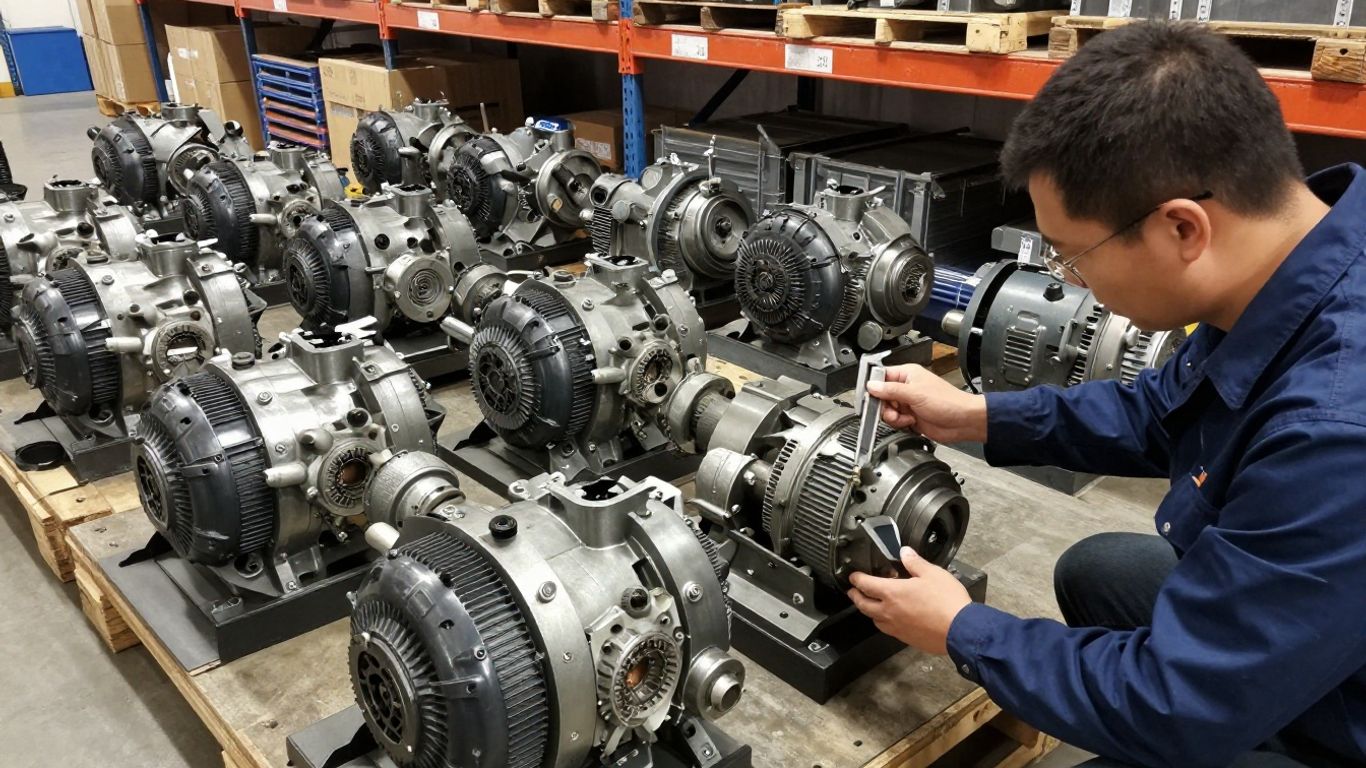
Australian buyers can choose among manufacturers, authorised distributors, specialist repairers, and general power-transmission suppliers. Their strengths are not identical: one may hold local stock, another may offer engineering support, and another may specialise in a particular vehicle or industrial application. Compare the service surrounding the gearbox as carefully as the unit itself.
Review specialist manufacturers and distributors
A specialist supplier should be able to discuss selection, mounting, lubrication, and replacement parts in practical terms. Look for clear product data, identifiable manufacturers, technical drawings, and a process for checking the application. Statewide Bearings describes itself as an independent specialist in power transmission and provides industrial gearbox, maintenance, and rebuilding information through its industrial gearbox range.
Do not treat a long catalogue as proof that every model suits your machinery. A useful conversation ends with a documented recommendation, not just a product link. Ask which information the supplier used and what remains to be confirmed.
Assess local stock and delivery coverage
Stock can matter more than a small difference in purchase price when a failed gearbox has stopped production. Ask whether the exact ratio and mounting arrangement are available in Australia, where the unit will ship from, and whether parts are held locally. Confirm the dispatch window in writing rather than assuming that “available” means ready for immediate delivery.
For a planned replacement, compare quoted lead times with your maintenance window. For an emergency, ask about equivalent models, repair exchange options, and freight arrangements. Delivery coverage should include rural and regional destinations if the machine operates outside a capital city.
Check technical support and engineering expertise
Technical support is most valuable before the order, when a wrong selection can still be corrected. Ask whether the supplier reviews drawings, checks load calculations, assists with alignment, and can advise on commissioning. Also clarify whether support comes from an engineer, a product specialist, or a general sales desk.
A supplier that documents the selection gives you something useful to pass to your installer and maintenance team. Keep the quotation, datasheet, drawing, and correspondence together. That record can shorten troubleshooting later.
Compare industrial, automotive, and agricultural suppliers
Industrial, automotive, and agricultural gearboxes have different selection priorities. Industrial buyers may focus on continuous duty, thermal capacity, and plant integration; automotive buyers may need vehicle compatibility and transmission-specific parts; agricultural users may prioritise contamination resistance, serviceability, and seasonal availability.
Keep the comparison within the correct category. A specialist automotive source such as Subaru gearbox information may be relevant to a vehicle transmission search, while a general industrial distributor may be more suitable for plant machinery. Other research pages, including IPTV Nordic, gummy supplier qualification, and hotel selection guidance, are unrelated to gearbox selection and should not influence a technical buying decision.
Evaluate gearbox quality and specifications
Quality is not a single marketing adjective. It is reflected in the materials, tooth geometry, bearings, seals, lubrication system, manufacturing controls, and evidence supplied with the unit. Compare like with like, and ask what the quoted ratings mean in the operating conditions you have described.
Inspect materials, gearing, and manufacturing standards
Request information about housing material, gear materials, heat treatment, bearing arrangements, and shaft construction. You may not need every internal drawing, but you should be able to understand the rated load and the assumptions supporting it. Ask whether the stated rating relates to continuous operation, peak torque, or a particular service factor.
Manufacturing standards and quality systems can add confidence, but they do not replace application sizing. A well-made gearbox can still be unsuitable if its ratio, loading, or mounting is wrong. Treat certification as one part of the evidence rather than the entire decision.
Check efficiency, noise, and thermal performance
Efficiency affects energy use and heat generation, especially when a gearbox operates for long hours. Ask for efficiency information at the intended ratio and load, along with any thermal rating or cooling requirements. Noise and vibration data may also matter in occupied buildings, workshops, and equipment used near operators.
The figures should be tied to a test method or defined operating point. If two suppliers quote different numbers, ask them to explain the difference instead of choosing the larger figure automatically. Installation, alignment, oil level, and loading can all influence real-world performance.
Review sealing, lubrication, and environmental protection
Seals and lubrication deserve close attention in dusty, wet, corrosive, or washdown environments. Confirm the recommended lubricant, fill quantity, change interval, breather arrangement, seal material, and permissible mounting orientation. If the gearbox is exposed to contamination, ask how the proposed protection addresses that specific risk.
Maintenance instructions should be clear enough for the people who will service the machine. A unit that requires an unusual lubricant or difficult access may cost more to operate even if its purchase price looks attractive. Include those practical details in the comparison.
Confirm testing, certification, and quality controls
Ask what testing is performed before dispatch and what documentation accompanies the gearbox. Depending on the application, useful records may include a test report, dimensional drawing, material information, serial number, installation instructions, and certificate of conformity.
The goal is traceability, not paperwork for its own sake. A batch-specific supplier qualification guide or a methylene blue quality guide may illustrate documentation principles in other industries, but gearbox buyers should request evidence specific to the mechanical product and its intended duty.
Understand pricing and total ownership costs
A gearbox quote is only the first line in the budget. Freight, coupling changes, installation, alignment, oil, guards, commissioning, downtime, and future parts can materially change the final cost. Compare suppliers using the same specification and the same delivery assumptions.
Compare purchase prices across suppliers
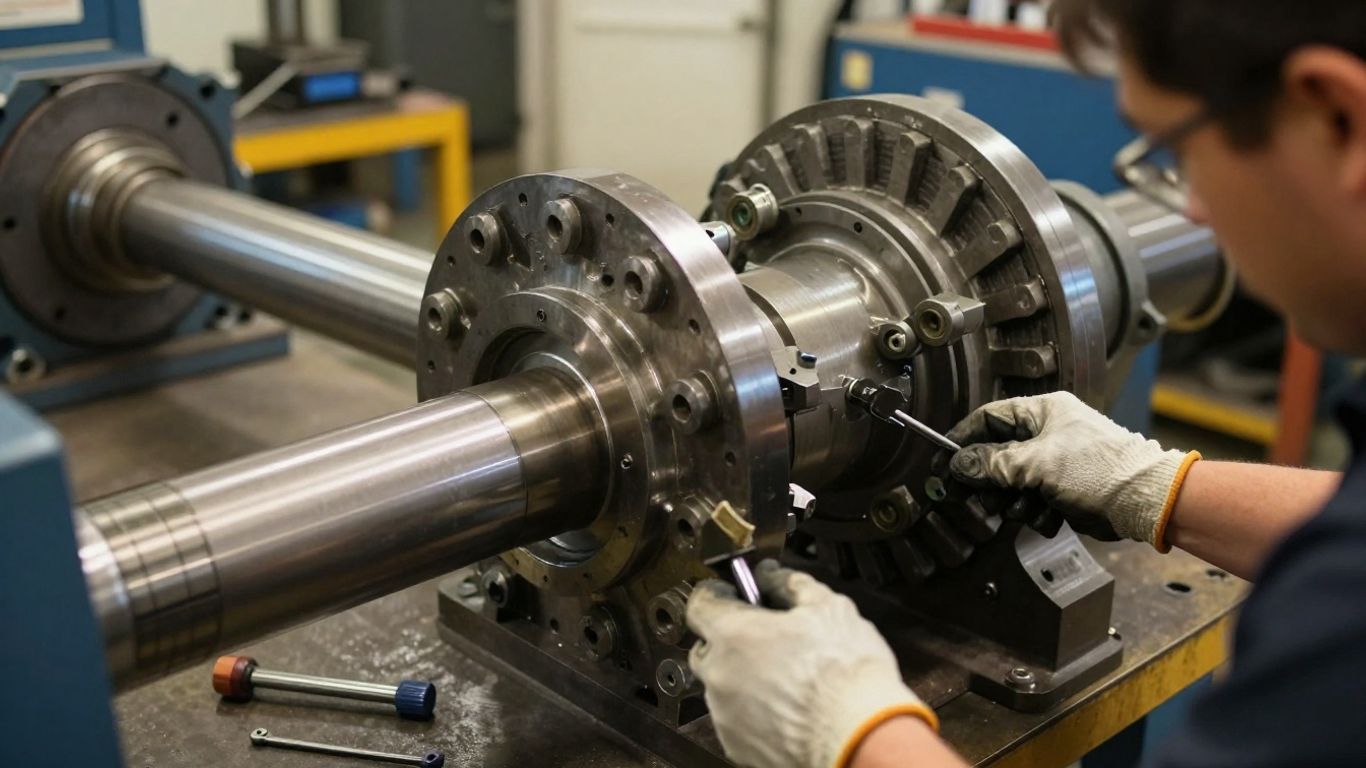
Request itemised quotes that state the model, ratio, mounting, shaft details, accessories, currency, taxes, freight basis, and validity period. A cheaper quote may omit a motor adaptor, brake, torque arm, coupling, or protection that another supplier has included.
Use a comparison sheet rather than relying on memory. If a supplier proposes an equivalent model, ask for a written explanation of the equivalence and any changed ratings. Price differences are meaningful only after the technical scope is aligned.
Include freight, installation, and setup costs
Heavy mechanical components can be expensive to move, and remote delivery may require special arrangements. Add unloading, lifting equipment, installer time, alignment, coupling work, guards, oil, and commissioning. If production must stop, include the estimated cost of the maintenance window or lost output.
These costs are often easier to control when discussed before purchase. Ask the supplier what installation assumptions appear in the quotation and which tasks remain with your team. Clarifying that boundary prevents unpleasant surprises at delivery.
Estimate maintenance and replacement expenses
Review inspection intervals, lubricant changes, seal replacement, bearing access, and the likely availability of wear parts. Ask whether the gearbox can be repaired locally and whether a replacement cartridge or complete unit is the normal service approach. Keep a record of operating hours and maintenance findings from the first day.
A simple maintenance plan can include:
- Recording the model, serial number, ratio, and lubricant used.
- Checking alignment, mounting bolts, seals, temperature, and unusual noise.
- Scheduling oil inspections and changes according to the supplier’s instructions.
- Storing critical spare parts when downtime would be costly.
That information turns maintenance from a reaction to a planned activity. It also gives the supplier better evidence if a fault develops.
Balance upfront cost against service life
The lowest purchase price may not be the lowest ownership cost. Compare expected service life, efficiency, repairability, parts access, warranty support, and the consequences of an unplanned failure. A more expensive gearbox may be sensible when installation is difficult or downtime is particularly disruptive.
Keep the calculation realistic and avoid assuming a supplier’s case-study result will repeat in every installation. A useful decision compares documented ratings and costs for your machine, not a general promise of savings.
Verify supplier support and warranty coverage
Support becomes part of the product once the gearbox is installed. Before ordering, establish who handles technical questions, warranty claims, spare parts, repairs, and field problems. Written terms are more useful than an informal assurance that help will be available.
Check warranty terms and exclusions
Read the warranty period, start date, claim process, and exclusions. Look for conditions concerning installation, lubrication, alignment, overload, unauthorised modifications, storage, and maintenance records. Confirm whether labour, freight, inspection, and removal are covered or charged separately.
Ask what evidence is required for a claim and whether the supplier expects the failed unit to be returned. These details affect the real value of the warranty, particularly when the gearbox is large or installed in a remote location.
Confirm spare parts availability
Ask for a parts list and identify items that commonly wear, such as seals, bearings, couplings, or breather components. Confirm whether parts are stocked in Australia, ordered from overseas, or interchangeable with a later revision. Record part numbers before the gearbox is commissioned.
Parts availability should match the machine’s risk profile. A low-cost spare may be unnecessary on a lightly used unit, while a critical production drive may justify holding essential components on site.
Review repair and servicing options
Find out whether the supplier offers inspection, strip-down, rebuild, alignment advice, or exchange units. Ask where the work is performed and whether repair reports include measurements, photographs, and recommended follow-up actions. A clear repair pathway can be more valuable than a marginal discount on the original purchase.
For specialist applications, verify that the service provider has experience with the gearbox type and the failure mode involved. Do not assume that every workshop can repair every design.
Assess response times for technical assistance
Ask how technical requests are submitted and what response time is typical during business hours and shutdowns. Give the supplier the model, symptoms, operating conditions, photographs, and maintenance history when seeking help. Good information makes a faster answer more likely.
If the machinery is critical, put escalation contacts and after-hours arrangements into the purchasing record. This is a small step, but it can prevent confusion when a fault occurs under pressure.
Buy gearboxes online or directly from a supplier
Online catalogues are useful for initial research, model discovery, and price comparison. Direct contact is usually more valuable when the application is unusual, the load is high, or the replacement must integrate with existing machinery. The best buying route depends on how much technical uncertainty remains.
Compare online catalogues with in-person advice
An online catalogue can quickly show ratios, dimensions, mounting styles, and indicative availability. It cannot always reveal whether the listed rating suits your duty cycle or whether an accessory is required. Use the catalogue to form a shortlist, then ask a supplier to validate the selection.
In-person or live technical advice can also expose installation constraints that a product filter misses. If you need a specialist automotive or 4WD discussion, a focused source such as 360 Gearboxes & Diffs may be more relevant than a broad industrial catalogue, based on the scope described in its source page.
Verify product compatibility before ordering
Before paying, send the supplier the existing model number, photographs, shaft measurements, mounting dimensions, motor details, and application data. Ask for a drawing or compatibility statement that identifies the exact unit being supplied. Check rotation direction, ratio, shaft diameter, keyway, flange, and accessories.
Never rely on the phrase “direct replacement” without checking the details. Small differences in shaft height or mounting can create expensive installation work. Keep the approved drawing with the purchase order.
Check freight, returns, and delivery conditions
Confirm dispatch location, delivery method, insurance, unloading requirements, packaging, inspection obligations, and the process for reporting transit damage. Read the return policy carefully, especially for modified, commissioned, or special-order gearboxes. A return may be restricted once oil has been added or the unit has been installed.
When the delivery arrives, inspect the package and gearbox before fitting it. Photograph damage, check the model and serial number, and report discrepancies promptly. This protects both the schedule and any later claim.
Use quotes and product documentation to make the final decision
Ask for at least two comparable written quotes when time allows, but do not turn the exercise into a simple price contest. Review the technical schedule, delivery promise, warranty, parts plan, and support contact alongside the total cost. The decision should be easy for another engineer or manager to audit.
The broader principle also applies to unrelated purchasing research: documentation matters more than polished presentation, whether reviewing fine art photography or selecting a mechanical component. For gearbox buying, however, the final decision must rest on engineering fit, supplier reliability, and clear commercial terms.
A short technical video can help explain gearbox terminology, but it should supplement—not replace—the manufacturer’s drawings, ratings, and installation instructions. Use the written documents to approve the order and the video only as background for the team.
Conclusion
The safest way to decide where to buy quality gearboxes in Australia is to start with the machine, verify the engineering details, and compare the complete ownership picture. A supplier that can support selection, delivery, installation, parts, and warranty questions is often worth more than one offering the lowest initial quote.
Frequently Asked Questions
What information should I give a gearbox supplier?
Provide the equipment type, motor power, input and output speeds, required torque, duty cycle, mounting arrangement, shaft details, operating environment, and available space. Photos, drawings, and the existing model number are also helpful.
How do I know which gearbox type I need?
Start with the machine’s required ratio, torque, shaft orientation, mounting method, duty cycle, and environmental conditions. A qualified supplier can then compare suitable gearbox arrangements and confirm the selection against the application.
Is the cheapest gearbox usually the best choice?
Not necessarily. Compare the complete cost, including freight, installation, energy use, maintenance, spare parts, warranty support, and downtime risk. A lower purchase price can become expensive if the unit is difficult to service or poorly matched.
Should I buy a gearbox online?
Online purchasing can work when the model and compatibility are already certain. For unusual loads, custom dimensions, or critical machinery, direct technical advice is safer before placing the order.
What documents should come with a gearbox?
Useful documents include a product datasheet, dimensional drawing, installation instructions, lubrication details, warranty terms, serial information, and any relevant test or conformity documentation.
How can I reduce gearbox maintenance problems?
Follow the supplier’s lubrication and inspection instructions, maintain correct alignment, monitor temperature and noise, check seals and mounting bolts, and keep records of service work and operating conditions.
When should I consider a custom gearbox?
Consider custom work when a standard unit cannot meet the required ratio, torque, shaft arrangement, mounting dimensions, environmental protection, or installation constraints. Request drawings, lead times, testing details, and a clear approval process before proceeding.