

Key Takeaways
Transmission slipping can begin with a fluid problem, an electrical fault, or worn internal parts. Recognizing the pattern early helps you choose the safest and most economical next step.
- Slipping often feels like rising engine speed without matching acceleration.
- Low, degraded, or leaking fluid can reduce hydraulic pressure and increase heat.
- Solenoids, sensors, valve bodies, clutches, bands, and gears can all be involved.
- A proper diagnosis should combine fluid checks, code scanning, inspection, and road testing.
- Continued driving can turn a manageable repair into a rebuild or replacement.
What transmission slipping means and how to recognize it
Transmission slipping happens when the selected gear does not hold or engage as it should. The engine may rev freely while the vehicle gains speed slowly, or the transmission may hesitate before suddenly catching. The symptoms can appear during acceleration, uphill driving, gear changes, or when the vehicle is hot. Understanding the pattern is the first step in sorting transmission slipping causes and fixes.
How slipping feels while driving
A slipping transmission may feel as though the vehicle briefly shifts into neutral. You might press the accelerator, hear the RPM rise, and notice little change in road speed. Some drivers feel a flare between gears, a sudden surge when a gear finally engages, or a loss of pulling power under load. These sensations are different from ordinary smooth shifting because engine speed and vehicle speed stop matching normally.
Warning signs on the dashboard
A check-engine light or transmission warning light may appear when the control system detects an electrical, pressure, or ratio problem. The light does not identify the failed part by itself, so it should be treated as a prompt for diagnosis rather than proof of a specific repair. Other clues can include a flashing warning, a temperature alert, or a vehicle that enters a limited operating mode. If the warning appears alongside slipping or a burning smell, arrange an inspection promptly.
Slipping versus delayed or harsh shifting
Delayed engagement means the vehicle takes too long to move after Drive or Reverse is selected. Harsh shifting feels like a hard bump or abrupt gear change, while slipping is more closely associated with free-revving, a flare, or a gear that fails to hold. The conditions can overlap, particularly when fluid pressure or electronic controls are involved. A clear description of when each symptom occurs gives a technician more useful information than simply saying the transmission feels bad.
Why early symptoms matter
Small changes are worth recording because intermittent slipping can become constant as friction material wears or fluid temperature rises. Write down the gear, speed, engine temperature, road grade, and whether the vehicle was towing anything. Early diagnosis can limit damage by separating a serviceable fluid or control issue from internal wear. A symptom guide such as automatic slipping signs can also help you organize observations before booking an appointment.
The most common causes of transmission slipping
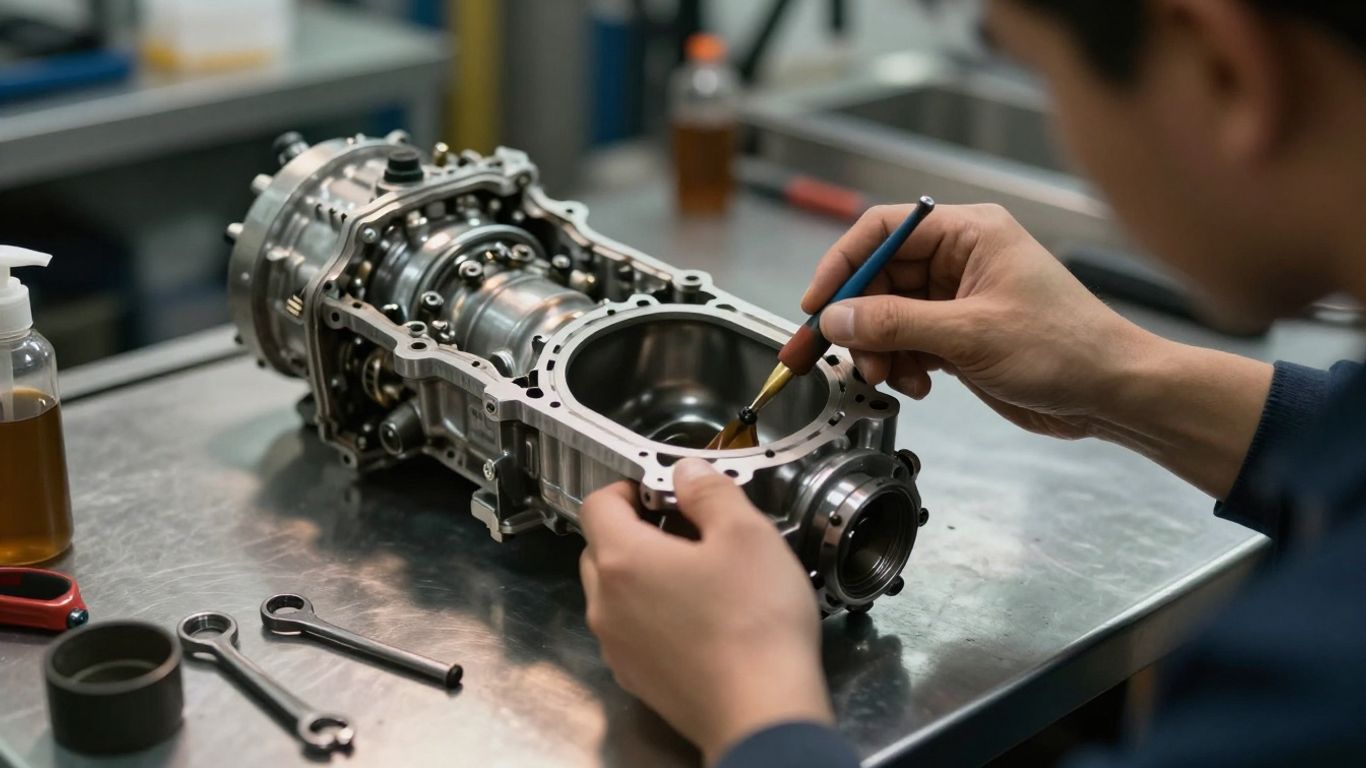
Transmission slipping has no single universal cause. Fluid condition, hydraulic pressure, friction components, electrical controls, heat, and even engine performance can all affect how a gear holds. The likely cause depends on the vehicle, transmission design, maintenance history, and exact symptoms. The following image illustrates the kinds of physical areas a technician may inspect, from the pan and fluid to the transmission case.
Low or contaminated transmission fluid
Fluid that is low, degraded, or contaminated may fail to maintain the pressure and lubrication the transmission needs. A leak can lower the level gradually, while old fluid may carry debris or lose some of its ability to control heat. Some vehicles have a dipstick, but others require a specific procedure for checking level and temperature. The transmission fluid guide offers another useful overview of leaks, fluid condition, and when professional help is appropriate.
Worn clutch packs, bands, or gears
Automatic transmissions use clutch packs and, in some designs, bands to hold selected gearsets. As friction material wears, the components may struggle to hold torque, especially during acceleration or when the unit is hot. Damaged gear teeth can also create noise, poor engagement, or an inability to stay in gear. Internal wear usually cannot be corrected by simply adding fluid.
Faulty solenoids and valve body problems
Solenoids regulate fluid flow, while the valve body directs that flow through passages and valves. A sticking valve, worn passage, failed solenoid, or damaged separator surface can reduce or misdirect the pressure needed for a clean shift. Electronic faults may produce intermittent symptoms and diagnostic codes. This is why a transmission that slips only in one gear still deserves a complete control-system check.
Overheating and excessive transmission wear
Heat accelerates fluid degradation and can damage seals, friction material, and other internal parts. Repeated towing, heavy loads, stop-and-go traffic, or inadequate cooling can raise operating temperatures. Once overheating has affected internal surfaces, replacing fluid may improve behavior without reversing the underlying wear. A technician should look for both the source of excess heat and its consequences.
Engine or sensor issues that mimic slipping
An engine misfire, throttle problem, incorrect speed signal, or communication fault can feel like a transmission problem. The engine may stumble during acceleration, or the control module may command an unusual shift because it is receiving unreliable information. That is why diagnosis should include the engine and related sensors rather than assuming every drivability complaint begins inside the transmission. A broader slipping gears reference can help distinguish revving, surging, jerking, and warning-light symptoms.
How to diagnose a slipping transmission
Good diagnosis follows the evidence instead of jumping straight to a rebuild. The process usually combines a fluid check, an electronic scan, a search for leaks, a road test, and—when needed—pressure or internal inspection. No single symptom confirms a failed clutch pack or valve body. The goal is to identify the cause, estimate the remaining damage, and avoid replacing parts that are still functioning.
Checking the fluid level, color, and smell
A technician checks the level using the vehicle maker’s specified procedure because temperature, engine state, and surface level can matter. Fluid that is unusually dark, contaminated, or strongly burnt-smelling can indicate overheating or friction wear, although appearance alone is not a final diagnosis. The inspection should also consider the pan, magnet, and any visible debris. Never overfill a transmission in an attempt to cure slipping.
Scanning for diagnostic trouble codes
A scan tool can reveal ratio errors, speed-sensor faults, solenoid circuits, temperature readings, and communication problems. Codes narrow the search, but they do not automatically identify the part that must be replaced. A stored code should be compared with live data and the driver’s description of the event. Clearing codes without finding the cause may only hide the pattern temporarily.
Inspecting for leaks and visible damage
Leaks commonly appear around the pan, cooler lines, axle seals, input or output seals, and electrical connectors, depending on the design. The color and location of a fluid mark can help, but a leak may travel along a case before reaching the ground. A shop may clean the area and use a controlled inspection to locate the source. A significant leak should be treated as a reason to stop driving rather than simply topping up repeatedly.
Testing shift performance and transmission pressure
A road test helps reproduce the symptom under controlled conditions, including light acceleration, stronger throttle, hills, and warmed-up operation. Pressure testing can show whether the hydraulic system is producing the pressure required for a clutch or gear application. The technician may compare commanded gear, actual ratio, engine speed, and input or output speed. This combination is far more informative than a quick drive around the block.
When professional diagnosis is necessary
Professional help is appropriate when the vehicle cannot hold a gear, fluid is leaking heavily, warning lights appear with poor operation, or the symptom returns after a fluid service. Modern transmissions can require scan equipment, pressure gauges, service information, and model-specific procedures. A practical diagnostic workflow includes:
- Confirming the complaint and recording when it occurs.
- Checking fluid level, condition, leaks, and temperature-related clues.
- Scanning all relevant control modules for codes and live data.
- Road-testing and pressure-testing before recommending major work.
That sequence keeps the repair conversation grounded in evidence. For comparison, a general transmission diagnosis guide also explains why symptoms, repair costs, and replacement decisions should be considered together.
Transmission slipping fixes and repair options
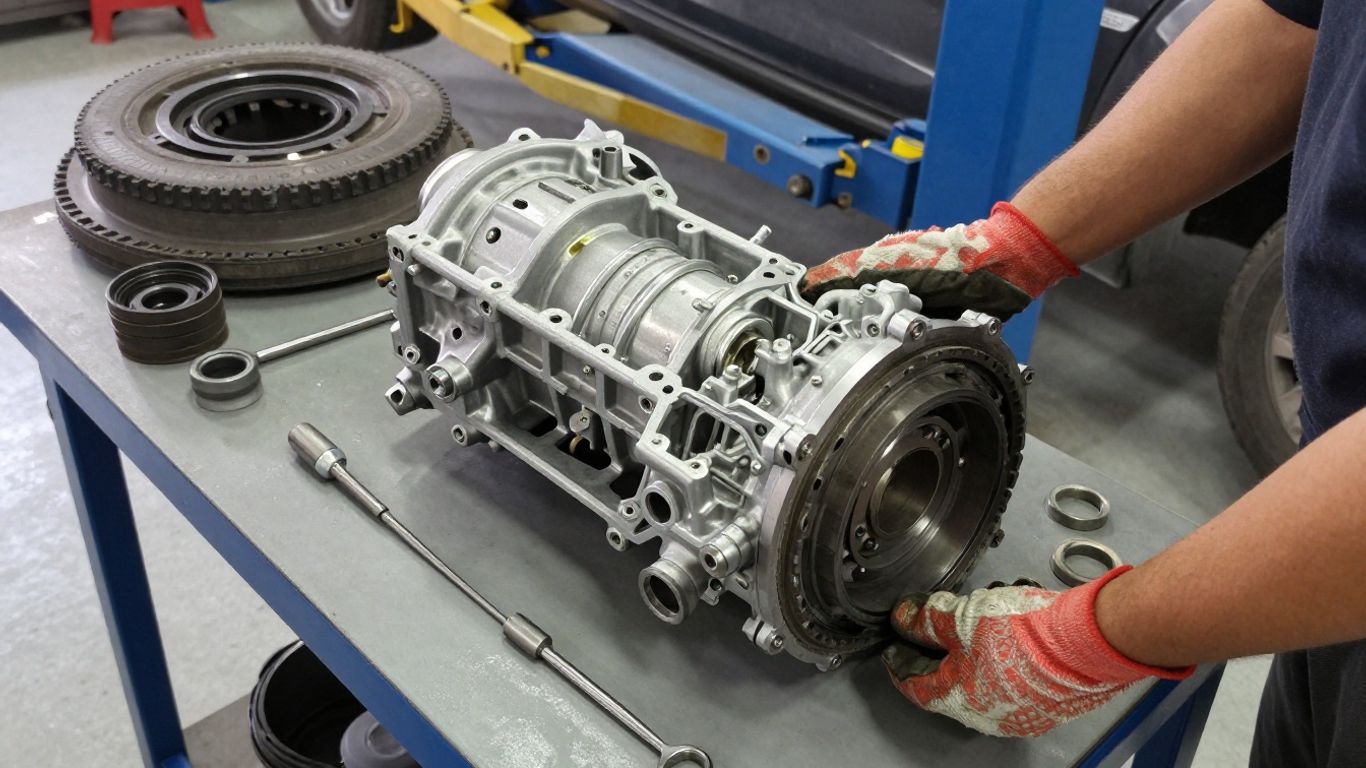
The correct fix depends on what the diagnosis finds. A low fluid level may require leak repair and a carefully measured refill, while worn friction components may require removal and rebuilding. Electrical or hydraulic problems can sometimes be repaired without replacing the entire unit. Repairs should address the cause of the slipping, not merely make the symptom disappear for a short time.
Correcting the fluid level or replacing old fluid
If the fluid is low and the transmission has not suffered substantial damage, correcting the level with the specified fluid may restore proper operation. Old or contaminated fluid may call for a drain-and-refill or another service method suited to that transmission. A fluid change cannot rebuild worn clutches, and aggressive flushing is not appropriate for every vehicle. The technician should explain which service is recommended and why.
Repairing leaks and replacing damaged seals
A lasting fluid repair may involve a pan gasket, cooler line, axle seal, electrical connector seal, or another sealing surface. The leak source must be confirmed before parts are ordered because fluid can spread from a higher point. After repair, the level should be set according to the correct temperature and procedure. Driving with a substantial leak risks rapid pressure loss and severe internal damage.
Servicing solenoids, sensors, or the valve body
A failed solenoid or sensor may be replaceable after testing confirms the fault. Valve body work can range from cleaning and replacing individual components to correcting worn bores or damaged plates. The repair should include an inspection for debris and a check that the original pressure problem has been resolved. Replacing an electronic part without verifying wiring, fluid condition, and hydraulic behavior can lead to repeat trouble.
Rebuilding or replacing worn internal components
When clutch packs, bands, bearings, seals, or gears are worn, the transmission may need to be removed and opened. A rebuild typically replaces damaged wear components and inspects hard parts for reuse. A replacement unit may be considered when damage is extensive, parts availability is limited, or the vehicle’s condition makes a different solution more sensible. The written estimate should state what is included, along with warranty terms.
When a software update or relearn procedure can help
Some shift complaints result from calibration, adaptive values, or a control module that needs updated programming. A software update or relearn procedure can help when technical information identifies that remedy and mechanical checks do not show major damage. It will not repair a burned clutch or broken gear. The procedure should be performed with the correct scan equipment and followed by a confirmation road test.
Transmission repair costs and replacement decisions
Repair prices vary widely because “slipping transmission” describes a symptom, not a single job. A fluid service, seal replacement, solenoid, valve body, rebuild, and replacement unit involve very different labor and parts. Vehicle age, transmission design, local labor rates, and warranty coverage also matter. Ask for diagnosis before comparing quotes so the estimates describe the same problem.
Typical costs for fluid service and minor repairs
Fluid service is generally less expensive than removing the transmission, but the exact price depends on fluid capacity, access, filter design, and service method. Minor repairs may include a leak repair, sensor, solenoid, wiring repair, or software procedure. A low initial quote is not necessarily better if it excludes diagnosis, a filter, fluid, calibration, or follow-up testing. Request an itemized estimate rather than relying on a verbal range.
When a rebuild is more practical than a repair
A rebuild may make sense when internal wear is confirmed but the case and major hard parts remain usable. It can also provide a more comprehensive answer than replacing one failed component in a unit with several worn areas. The decision should consider vehicle value, maintenance history, mileage, and how long you plan to keep the vehicle. A qualified shop should explain why a partial repair is unlikely to be durable if that is the concern.
Comparing a replacement transmission with a rebuild
A replacement may be used, remanufactured, or rebuilt, and those terms should be defined in writing. Compare the unit’s source, mileage or testing information, included parts, installation labor, programming, and warranty. A rebuild offers more direct inspection of the original unit, while a replacement may shorten the vehicle’s downtime. Neither option is automatically right for every vehicle.
Factors that affect the final repair estimate
The final estimate may change after the transmission is removed and internal parts are visible. Important cost factors include labor access, hard-part damage, torque-converter condition, cooler contamination, required programming, fluid capacity, and whether related components must be serviced. Before authorizing work, ask what could change the price and how approval will be handled. A repair cost overview can provide context, but your vehicle’s inspection remains decisive.
Can you drive with a slipping transmission?
Driving may be possible for a short distance, but it is not automatically safe or harmless. Every episode of slipping can create more heat and friction, and a sudden loss of drive can be dangerous in traffic or on a hill. The risk depends on how severe the symptom is, whether fluid is leaking, and whether the transmission can still engage reliably. When in doubt, arrange transportation rather than testing how far the vehicle can go.
Short-term risks of continuing to drive
Continued driving can turn a fluid or control issue into broader clutch, gear, or valve body damage. The vehicle may also hesitate when entering traffic, lose acceleration during a merge, or move unpredictably after a shift. Heat may rise quickly under load. What begins as an intermittent flare can become a complete loss of forward or reverse movement.
Situations that require immediate towing
Tow the vehicle when it will not engage Drive or Reverse, drops out of gear, produces grinding or severe banging, smells strongly burnt, or leaves a large fluid trail. A warning light combined with major drivability loss is another strong reason not to continue. Towing is especially sensible if the vehicle is unsafe to control or the nearest shop is more than a short distance away. A broader slipping transmission safety guide covers why unexpected neutral-like behavior can become a hazard.
Steps to reduce damage before professional service
Park on a level surface, switch off the engine, and look for obvious leaks without placing yourself under an unsupported vehicle. Do not repeatedly rev the engine, tow a load, or attempt to force the transmission through gears. If the owner’s manual gives a safe fluid-check procedure, follow it; otherwise, leave the inspection to a technician. Keep notes about the symptoms and any dashboard warnings.
How to choose a qualified transmission shop
Look for a shop that explains its diagnostic process, provides a written estimate, and separates confirmed findings from possibilities. Ask whether the proposed work includes fluid, programming, road testing, and warranty coverage. A specialist should be willing to discuss repair, rebuild, and replacement options without promising a result before inspection. Clear answers are often as valuable as a low initial price.
How to prevent transmission slipping in the future
Prevention starts with the service information written for your vehicle, not a universal rule applied to every transmission. Fluid specifications, inspection intervals, cooling arrangements, and replacement procedures differ substantially. Good habits cannot prevent every mechanical failure, but they can reduce avoidable heat, contamination, and delayed repairs. They also make unusual behavior easier to spot.
Following the manufacturer’s fluid service schedule
Use the recommended interval and service method, including the specified fluid type and filter where applicable. Some vehicles have a severe-service schedule for towing, frequent short trips, high temperatures, or heavy traffic. Keep records of the date, mileage, fluid specification, and work performed. If the transmission requires a temperature-based level check, make sure the procedure is followed accurately.
Managing towing, hauling, and high-heat driving
Stay within the vehicle’s towing and payload limits, and use the recommended cooling equipment when required. Avoid holding the vehicle on a slope with the accelerator, and allow extra cooling time after demanding work. If the vehicle has a temperature gauge or warning system, respond to rising temperature rather than continuing the trip. Heat management protects fluid and friction components alike.
Recognizing early leaks and shifting changes
Check the parking area for new fluid spots and pay attention to delayed engagement, flares, unfamiliar noises, or changes that occur only when warm. Schedule an inspection before a small leak empties the transmission or a minor control fault damages internal parts. You can also compare symptoms with a practical transmission maintenance resource, while remembering that online information cannot replace a vehicle-specific inspection.
Using the correct fluid and replacement parts
The wrong fluid can affect friction behavior, pressure control, seal compatibility, and shift quality. Use the specification in the owner’s or service manual, and confirm that replacement filters, seals, solenoids, and sensors match the application. Avoid additives that promise to cure slipping unless a qualified technician and the manufacturer’s information support their use. Correct parts and procedures are usually less costly than correcting a preventable mistake.
For readers researching unrelated practical maintenance and planning topics, these fake tan removal tips, luxury printed packaging, Medellín market planning, clinic scheduling costs, and French property investment errors cover very different subjects but share one useful lesson: details matter when preventing an expensive mistake.
Conclusion
Transmission slipping should be treated as a symptom that deserves timely, evidence-based diagnosis. Checking fluid, scanning for codes, inspecting leaks, and testing performance can reveal whether the answer is a service, control repair, rebuild, or replacement. Acting while the vehicle still operates predictably gives you the best chance of limiting damage and choosing a repair that fits its condition.
Frequently Asked Questions
What is transmission slipping?
Transmission slipping occurs when a selected gear does not engage or hold properly, often causing the engine to rev without a matching increase in vehicle speed.
Can low transmission fluid cause slipping?
Yes. Low fluid can reduce hydraulic pressure and lubrication, while a leak may allow the level to fall further. The source of the leak should be repaired rather than repeatedly topping up the fluid.
Is dark transmission fluid always proof of failure?
No. Dark or burnt-smelling fluid can indicate heat or wear, but it does not identify the exact failed component. Fluid condition should be considered alongside codes, leaks, symptoms, and test results.
Can a transmission be fixed without a rebuild?
Sometimes. A confirmed leak, sensor, solenoid, valve body issue, software problem, or fluid-related concern may be repairable without opening the transmission. Internal friction or gear damage may require more extensive work.
How long can I drive with a slipping transmission?
There is no reliable safe mileage estimate. Continuing to drive can increase heat and damage, and the vehicle may lose drive unexpectedly. Severe symptoms, major leaks, or grinding call for towing.
Does a transmission warning light always mean the transmission must be replaced?
No. A warning light may relate to a sensor, solenoid, wiring, pressure, ratio, or communication fault. A scan provides clues, but further testing is needed before deciding on replacement.
How can transmission slipping be prevented?
Follow the specified fluid schedule, use the correct fluid and parts, manage towing and heat, inspect leaks early, and have new shifting changes checked before they worsen.