

Key Takeaways
The cost to fix automatic transmission Australia depends less on one national average than on the vehicle, the fault, and the amount of work needed to reach the damaged parts.
- A diagnostic inspection should come before approving major transmission work.
- Small leaks, sensors, solenoids, and service issues are usually cheaper than internal failures.
- Rebuilding can make sense when the vehicle is valuable and the transmission case is sound.
- A replacement unit may be practical when repair costs approach the car’s market value.
- A written quote should separate parts, labour, fluids, machining, taxes, and warranty coverage.
What affects the cost to fix an automatic transmission in Australia
Automatic transmissions vary widely, so two vehicles with similar symptoms can produce very different repair bills. A small city hatchback, a large four-wheel drive, and a late-model luxury vehicle may use different transmission designs, fluids, and control systems. The first useful step is to identify whether the problem is external and accessible or buried inside the transmission.
Location also matters, as does the workshop’s equipment and experience. The figures discussed below are planning ranges rather than promises; a proper inspection is needed before anyone can price the repair accurately.
Transmission type, vehicle age, and model complexity
A conventional automatic, continuously variable transmission, dual-clutch transmission, and hybrid drivetrain do not share the same parts or repair methods. Even within one category, model-specific programming, unusual fasteners, integrated electronics, or limited parts availability can add time. This is why a newer or more complex vehicle can cost more to diagnose even before replacement parts are considered.
Age cuts both ways. An older vehicle may have simpler electronics and cheaper used parts, but corrosion, worn wiring, seized fittings, and several unrelated faults can make the job less predictable. A newer vehicle may have better parts availability, yet its transmission control module or integrated valve body can be costly if damaged.
The difference between minor repairs and major failures
A minor repair might involve correcting a leak, replacing a seal, changing a sensor, or servicing fluid and filters. Those jobs can often be completed without removing the entire transmission. A major failure may involve worn clutches, damaged gears, a failed pump, overheating, or contamination throughout the unit, all of which can require removal and extensive disassembly.
The distinction matters because labour rises sharply once the transmission must come out of the vehicle. A repair that looks inexpensive from the outside can become a larger job if inspection reveals internal wear. Conversely, a worrying symptom does not automatically mean the whole unit has failed.
Labor rates across Australian cities and regional areas
Workshop labour rates differ between metropolitan areas, regional centres, and remote locations. Rent, wages, transport, specialist tooling, and the availability of transmission technicians all influence the hourly rate. A regional workshop may have a lower advertised rate but face higher freight charges or longer waits for a particular component.
Ask whether the estimate uses a fixed labour allowance or an open-ended hourly charge. That distinction is especially useful when comparing a specialist transmission shop with a general independent workshop. It also helps to confirm whether removal, refitting, road testing, and electronic calibration are included.
How diagnostics, parts, and fluids influence the final bill
A scan code is a clue, not a complete diagnosis. The technician may need a road test, fluid inspection, pressure testing, wiring checks, or a pan inspection to establish the cause. Parts pricing then depends on whether the repair uses new, aftermarket, reconditioned, or used components, and whether the original part can be repaired.
Transmission fluid is not a generic substitute item. The wrong specification, an incorrect fill level, or an unsuitable service method can create further problems. A useful transmission maintenance guide can help explain why fluid condition and filters matter, but the vehicle manufacturer’s requirements should take priority.
Typical automatic transmission repair costs
There is no single price that applies to every automatic transmission in Australia. Basic external repairs may remain in the hundreds of dollars, while internal repairs and replacements can reach several thousand dollars. The range widens further when the vehicle needs specialist programming, additional cooling components, or a hard-to-source unit.
Use the figures below to frame questions, not to approve work sight unseen. A quote should become more specific as the workshop confirms the fault and identifies the exact transmission fitted to the vehicle.
Diagnostic scans, inspections, and transmission servicing
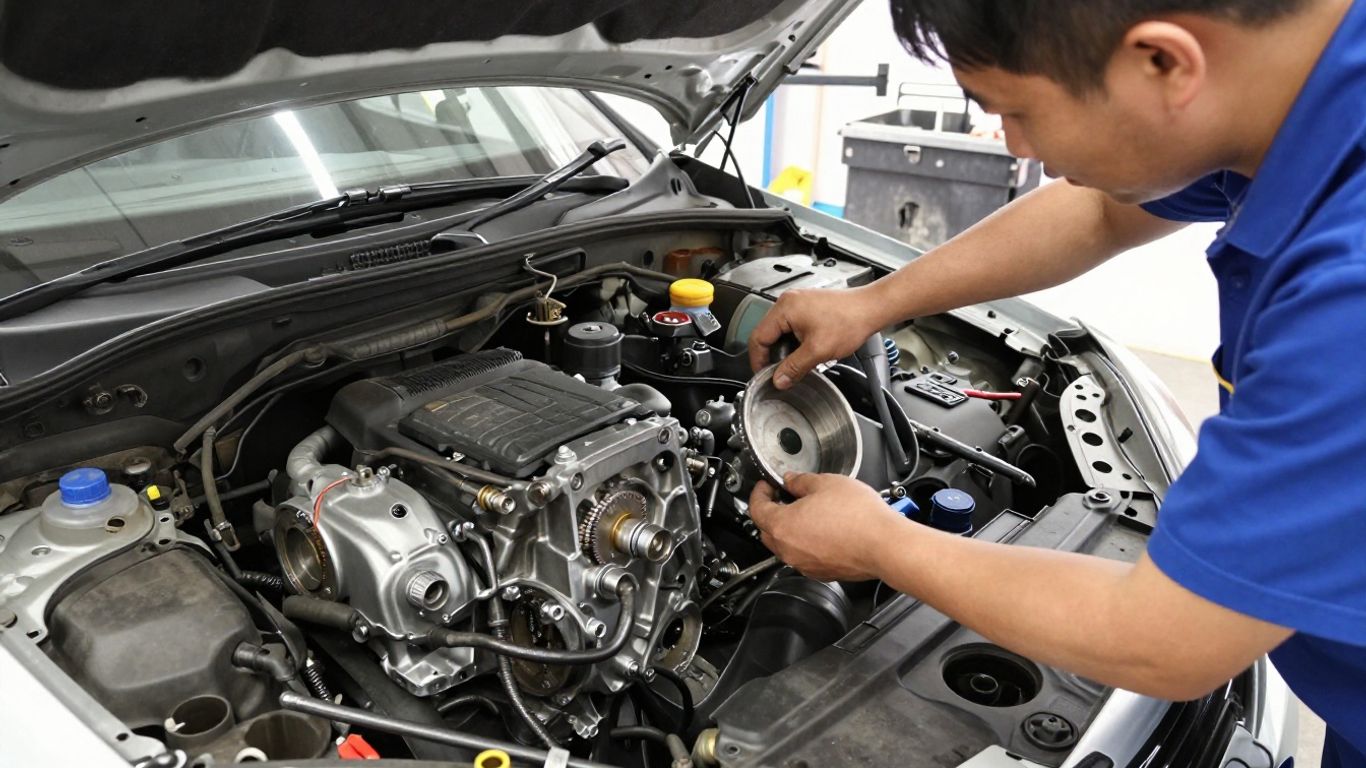
A diagnostic scan and inspection may be the smallest line item on the invoice, but it is often the most valuable first step. The workshop may check stored fault codes, fluid level and condition, leaks, shift quality, electrical connections, and signs of overheating. A basic service involving fluid and a filter can cost considerably less than a repair, although the method and fluid quantity vary by vehicle.
Do not assume that a fluid change will cure slipping or harsh shifts. Servicing can address neglected maintenance or contaminated fluid, but it cannot restore clutches or gears that are already worn. Ask whether the proposed service is preventative maintenance, a diagnostic step, or a repair for a confirmed fault.
Fluid leaks, seals, solenoids, and sensor repairs
Leaks from a pan, cooler line, seal, or gasket are often more manageable when found early. The bill depends on how accessible the leak is and whether fluid has already damaged surrounding components. A sensor or solenoid can also be relatively straightforward to replace, but some units place these parts inside the transmission or behind the valve body.
The apparent size of a leak is not a reliable measure of urgency. A slow seep can lower the fluid level over time, while a split cooler line can empty the system quickly. The related Australian transmission cost guide is useful for seeing how fault severity changes broad repair estimates, though an individual vehicle still needs its own inspection.
Torque converter and valve body repairs
The torque converter transfers engine power into the automatic transmission and can cause shuddering, vibration, delayed engagement, or unusual noise when it wears out. Replacing it generally requires substantial access work, and the technician may recommend checking nearby components while the transmission is removed.
The valve body directs hydraulic pressure through the transmission. Blocked passages, worn bores, sticking valves, or failed solenoids can affect shift timing and quality. Some valve body repairs are possible without a complete rebuild, but diagnosis must distinguish a control problem from deeper clutch or gear damage.
A repair quote should say whether the price covers removal and refitting, converter work, new seals, fluid, filter, testing, and any required adaptation or programming. Without those details, two apparently similar quotes may not describe the same job.
Rebuilding or replacing an automatic transmission
A rebuild involves removing and inspecting the transmission, replacing worn internal parts, cleaning or machining suitable components, and reassembling the unit to an agreed specification. The final cost depends on the extent of damage found after disassembly. A replacement may use a new, used, or reconditioned unit, with different risks, warranty terms, and lead times.
For broad planning, extensive repairs and replacements can move into the thousands rather than the hundreds. The transmission replacement overview explains why labour, diagnostics, fluids, torque converters, and the type of replacement unit all affect the final amount. The written scope matters as much as the headline price, because exclusions can become expensive later.
A replacement transmission is not always a simple exchange. It may need compatible software, mounts, cooler flushing, fresh fluid, and checks for the failure that damaged the original unit. Those supporting tasks should appear in the estimate rather than being left vague.
Warning signs that your transmission needs attention
Transmission problems rarely improve through neglect. A small symptom may result from a low fluid level or an electrical fault, but continued driving can turn a manageable issue into internal damage. Pay attention to when the symptom occurs, whether the engine is cold or hot, and whether it appears during acceleration, reversing, or hill starts.
Recording those details gives the technician a better starting point. It also helps separate an intermittent control issue from a fault that is rapidly worsening.
Slipping gears, delayed engagement, and harsh shifting
Slipping can feel like the engine speed rises without a matching increase in road speed. Delayed engagement may appear when selecting drive or reverse, while harsh shifting can feel like a bump, thump, or abrupt change between gears. These symptoms can involve fluid pressure, sensors, solenoids, software, worn clutches, or other internal components.
Avoid repeated hard acceleration to test the problem. Note the conditions instead, including the selected gear, road speed, temperature, and whether the vehicle was carrying a load. That information is safer and more useful than repeatedly forcing the transmission to reproduce the symptom.
Unusual noises, burning smells, and fluid leaks
Whining, grinding, humming, clunking, or rhythmic knocking should not be dismissed as normal transmission noise. A burning smell may indicate overheated fluid or friction material, while a red, brown, or dark fluid mark under the vehicle can point to a leak. Fluid colour alone does not establish the fault, but a sudden change deserves attention.
A clean piece of cardboard placed under a parked vehicle can help show whether a leak is active and where it is roughly located. Do not crawl beneath a vehicle supported only by a jack. If fluid is pouring out or the smell is strong, arrange an inspection rather than continuing to drive.
Dashboard warning lights and reduced vehicle performance
A check-engine or transmission warning light can appear when the control system detects an electrical, hydraulic, or performance problem. Reduced acceleration, a vehicle stuck in one gear, shuddering, or difficulty selecting drive can indicate a more serious fault. The light may disappear temporarily, but that does not mean the underlying issue has gone away.
A scan should be interpreted alongside the vehicle’s behaviour. Replacing a component solely because its code appears can waste money when the code is actually the result of low voltage, damaged wiring, poor fluid pressure, or another root cause.
When it is safe to drive and when to stop immediately
A short, gentle trip to a nearby workshop may be reasonable when the vehicle shifts normally, has no active leak, and shows only a minor intermittent symptom. Keep the load light, avoid towing, and stop if the behaviour changes. If the vehicle cannot select a gear, loses drive, overheats, produces smoke, or leaks heavily, driving it can increase damage and create a safety risk.
A practical warning-sign checklist is useful before deciding whether to continue. Look for:
- A rapidly spreading fluid leak or a very low fluid level.
- Burning smells, smoke, or signs of overheating.
- Loss of drive, reverse, or the ability to select gears.
- Severe grinding, repeated banging, or uncontrolled slipping.
These signs justify switching off the vehicle and arranging roadside assistance or towing. A tow is usually cheaper than turning a limited repair into a complete transmission failure.
Repair, rebuild, or replacement: Which option makes sense
Choosing between repair, rebuild, and replacement requires more than comparing three prices. The condition of the vehicle, its service history, expected future use, and the warranty offered with the work all matter. A cheaper option can be poor value if it leaves a known cause untreated or provides no meaningful support after installation.
The decision is clearer when the workshop explains what failed, what has been inspected, and what remains uncertain. If the diagnosis is incomplete, ask for a staged approach rather than approving the largest possible job immediately.
When a minor repair is the most cost-effective choice
A minor repair is often sensible when the transmission still operates correctly and the fault is confined to an accessible external component. Examples include a cooler line, pan gasket, sensor, wiring fault, or service issue. Early action can also prevent low fluid levels from causing secondary damage.
The repair should include a plan to verify the result. That may mean clearing codes, checking the fluid level at the correct temperature, carrying out a road test, and confirming that the leak or shift concern has gone. A low initial price is less attractive if the workshop cannot explain how success will be checked.
How transmission rebuilding compares with replacement
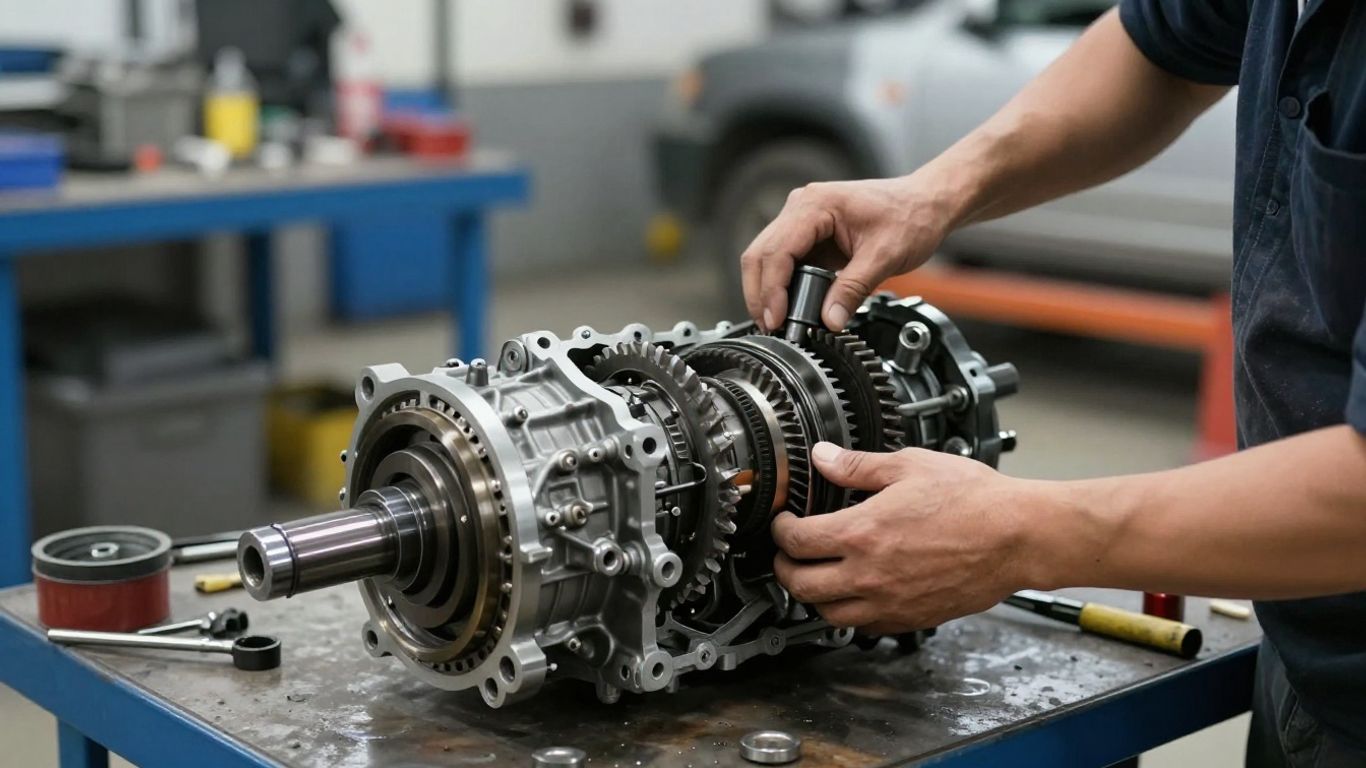
Rebuilding preserves the vehicle’s original transmission case and may allow the technician to address worn internal parts comprehensively. It can be a strong choice when the unit is repairable, the vehicle is worth keeping, and the rebuild comes with a clear warranty. However, the exact cost may not be known until the unit is opened.
Replacement provides a more defined unit price and may reduce the time spent dismantling the original transmission. Its quality depends on the source and preparation of the replacement. New, reconditioned, and used units are not interchangeable in terms of expected service life or warranty protection.
The broad repair or replacement comparison illustrates why the cheaper initial option is not always the cheapest over several years. Its figures come from a different market, so use the comparison method rather than importing those prices into an Australian quote.
The benefits and risks of a used or reconditioned unit
A used transmission can reduce the initial parts cost and may be suitable when the vehicle is older or parts for the original unit are scarce. The risk is uncertainty about mileage, storage, internal wear, and the reason the donor vehicle was dismantled. A written parts warranty is useful, but it may not cover labour, diagnosis, removal, or a related failure.
A reconditioned unit normally offers more inspection or replacement work than an unknown used unit, but the term can mean different things between suppliers. Ask what was replaced, what was measured, whether the converter was inspected, and how the unit was tested. Confirm that it is compatible with the vehicle’s exact model, engine, software, and drivetrain.
When the vehicle’s age and value change the decision
A major transmission repair can be rational on a well-maintained vehicle with strong bodywork, useful service history, and years of expected use. It may be harder to justify when the car also needs suspension, cooling, electrical, tyres, or rust repairs. Consider the total near-term repair budget, not just the transmission invoice.
Market value is only one part of the decision. Reliability, replacement-car costs, finance, registration, and the inconvenience of changing vehicles may make repairing a familiar car worthwhile. Conversely, if the repair approaches the vehicle’s realistic value and other major faults are present, obtaining a second opinion is sensible before committing.
How to compare transmission repair quotes
A professional quote should help you understand the job, not merely display a large total at the bottom. Ask for the diagnosis, the proposed remedy, and the assumptions behind the price. If the transmission has not yet been removed, the quote should clearly identify what could change after disassembly.
Comparing quotes works best when each workshop is pricing the same scope. A quote for a fluid service cannot fairly be compared with a quote for removing, rebuilding, and reinstalling the transmission.
What a professional quote should include
Look for the vehicle identification, the diagnosed fault or inspection findings, labour allowance, parts description, fluid specification and quantity, taxes, and expected completion time. The quote should also state whether removal, refitting, programming, road testing, cooler flushing, and disposal charges are included.
A useful quote distinguishes confirmed work from conditional work. For example, it may give one price for removal and inspection, then list possible internal components as an approval range. That approach is more honest than presenting an artificially low figure that changes as soon as the unit is opened.
Questions to ask about parts, labor, and warranties
Ask who supplies the unit, whether parts are new or reconditioned, and which components are covered if the repair fails. Clarify whether the warranty covers parts only or both parts and labour, and whether there are conditions about servicing, towing, or using a particular fluid. Also ask what happens if the initial diagnosis proves incomplete.
It is worth asking these questions before authorising work:
- What fault has been confirmed, and what evidence supports it?
- Which parts are included, and are any supplied used or reconditioned?
- Does the warranty cover removal, refitting, labour, and replacement fluid?
- What additional cost could arise after disassembly or testing?
Clear answers make quotes easier to compare and reduce unpleasant surprises. If the workshop will not put important warranty or scope details in writing, treat that as a reason to pause.
Comparing dealership, specialist, and independent workshops
Dealerships may have direct access to manufacturer procedures, software, and model-specific information. Independent workshops can offer broader experience across makes, while transmission specialists may focus more deeply on diagnosis, rebuilding, and replacement units. None is automatically the right choice for every fault.
Consider the workshop’s experience with the exact transmission, its diagnostic process, and the way it communicates uncertain findings. A general workshop may be well placed to identify a sensor or wiring problem, while a specialist may be better equipped for internal rebuilding. The best comparison is based on scope and competence rather than the sign over the door.
For broader vehicle ownership decisions, even an unrelated window replacement cost guide demonstrates a useful habit: separate materials, labour, installation complexity, and optional extras. The same discipline makes transmission quotes clearer, despite the different subject.
Identifying low quotes, hidden fees, and unnecessary work
A low quote may omit diagnosis, converter work, fluid, cooler cleaning, programming, or the labour needed to remove and refit the unit. Ask what is excluded and whether the price is fixed, estimated, or conditional. A high quote also deserves scrutiny; expensive parts should be tied to evidence from the inspection.
Do not approve unrelated work simply because the transmission is already removed. Some adjacent checks are sensible, especially when a failed component may have contaminated the cooler or fluid system. The workshop should explain the connection between each recommended item and the original fault.
Ways to reduce future automatic transmission costs
Prevention does not guarantee that an automatic transmission will never fail, but it can reduce avoidable wear and catch problems sooner. Maintenance is particularly valuable when the vehicle tows, carries heavy loads, operates in high heat, or spends much of its time in stop-start traffic. Keep service records so a future technician can see what fluid and parts were used.
Small habits matter as well. Promptly investigating a leak, warning light, or change in shift quality gives you more choices than waiting until the vehicle loses drive.
Following the manufacturer’s service schedule
Start with the service schedule for the exact vehicle and transmission, including any severe-use recommendations. Some vehicles specify fluid and filter intervals, while others use different inspection or servicing requirements. A schedule is a starting point, not permission to use a generic fluid or procedure.
Keep invoices and record the date, mileage, fluid specification, and work completed. This history supports warranty discussions, helps diagnose future problems, and can protect resale value. If the vehicle has a modified cooling system or towing duties, ask whether the service plan should be adjusted.
Choosing the correct transmission fluid and service method
Automatic transmission fluids differ in viscosity, additives, friction characteristics, and compatibility. Using the wrong product can affect shift quality and clutch operation. The fill level also needs to be checked under the procedure specified for that transmission, which may involve a particular temperature range and engine condition.
Ask whether the workshop recommends a drain-and-fill, pan removal with filter replacement, or another method, and why. A service method should match the vehicle and the fluid condition. If there is evidence of severe wear or contamination, servicing alone may not resolve the underlying failure.
Improving driving habits to reduce transmission wear
Smooth driving reduces unnecessary heat and shock loading. Allow the vehicle to come to a complete stop before changing between reverse and drive, avoid holding the vehicle on a hill with the accelerator, and use the correct towing or load settings where fitted. Do not ignore repeated wheelspin, harsh engagement, or a delayed shift.
If the vehicle tows, follow its rated limits and consider the manufacturer’s guidance on cooling and service intervals. Heavy loads and high ambient temperatures place extra demand on fluid cooling. Gentle habits cannot repair worn parts, but they can reduce stress on a healthy system.
Checking warranty, roadside assistance, and insurance coverage
Read the vehicle warranty and any repair warranty before a fault occurs. Check whether transmission components, diagnostic time, towing, and consequential damage are treated separately. Roadside assistance may cover a breakdown tow without covering the repair itself, so confirm the limits and preferred repair network.
Insurance commonly excludes ordinary wear and maintenance, though policies differ and some additional products may offer mechanical cover. A cognitive overload guide is not about vehicles, but its practical advice to write details down applies here: keep policy numbers, service records, quote approvals, and warranty conditions together so an urgent decision is less rushed.
A little preparation can make a stressful breakdown more manageable. Know where the vehicle can be towed, keep the latest service receipt available, and ask for written approval before extra work begins.
Conclusion
The cost to fix automatic transmission Australia can range from a relatively modest diagnostic or leak repair to a major rebuild or replacement. The most reliable way to control the decision is to confirm the fault, compare like-for-like written quotes, understand the warranty, and weigh the repair against the vehicle’s condition and future usefulness.
Frequently Asked Questions
How much does it cost to fix an automatic transmission in Australia?
Minor diagnosis, servicing, leak, sensor, or solenoid work may cost hundreds of dollars, while internal repairs and replacements can run into several thousand. The vehicle, transmission type, parts, labour, and damage severity determine the final figure.
Is it cheaper to repair or replace an automatic transmission?
Repair is usually cheaper when the fault is limited and the rest of the transmission is sound. Replacement may offer better value when internal damage is extensive, the unit is unreliable, or the repair cost is close to the vehicle’s value.
Can I drive with a slipping automatic transmission?
Short driving may be possible in limited circumstances, but continued slipping creates heat and can worsen internal damage. Avoid unnecessary trips and arrange an inspection promptly, especially if the symptom is increasing.
How long does an automatic transmission repair take?
A leak, sensor, or service issue may be completed relatively quickly, while diagnosis, parts ordering, removal, rebuilding, and testing can take much longer. Ask the workshop for a best-case estimate and the likely delay if additional damage is found.
Is a used transmission worth buying?
A used unit can lower the initial cost, but its mileage, history, compatibility, and warranty need careful checking. Compare the total installed price and warranty coverage with a reconditioned or rebuilt option rather than comparing parts prices alone.
What should be included in a transmission warranty?
Confirm whether the warranty covers parts, labour, removal, refitting, fluid, towing, and related damage. Check its duration, mileage limit, exclusions, servicing conditions, and the process for making a claim.
How can I avoid expensive transmission repairs?
Follow the correct service schedule, use the specified fluid, investigate leaks and warning lights early, drive smoothly, and avoid overloading or towing beyond the vehicle’s limits. Keeping detailed maintenance records also makes future diagnosis easier.