

Key Takeaways
A manual gearbox whining noise diagnosis starts with patterns, not guesses. The sound’s pitch, timing, gear, load, and response to the clutch can narrow the likely source before any major repair is approved.
- Check fluid level, condition, and specification before assuming internal failure.
- Compare the noise in neutral, with the clutch engaged, and with the clutch released.
- Use acceleration, coasting, and engine braking to identify load-related changes.
- A gear-specific whine often points toward a particular gear pair or shaft component.
- Stop driving if the noise worsens, gears disengage, fluid leaks heavily, or shifting becomes unsafe.
What a whining manual gearbox noise can indicate
A whine usually means rotating parts are producing a tonal vibration rather than a random rattle. That can involve bearings, gear teeth, shafts, lubrication, or a clutch-related component outside the gearbox itself. The sound alone cannot identify one failed part, but its behavior provides useful clues.
How pitch and volume point to different components
A high, steady whine may be associated with bearing or gear-mesh noise, while a deeper hum can suggest a different rotating component or a resonance elsewhere in the driveline. Volume matters too: a faint sound that has remained unchanged for years is different from a sharp whine that appeared suddenly. Listen for whether it rises smoothly or pulses as the vehicle moves.
Why engine speed and road speed matter
Engine speed and road speed are separate clues. If the pitch changes when engine RPM changes while the vehicle speed stays nearly constant, the input side or clutch area deserves attention. If it follows vehicle speed regardless of engine RPM, look more closely at the output side, differential, tires, or wheel bearings. A careful manual transmission noise guide can help organize those sound patterns, but a vehicle-specific inspection still matters.
What changes when you press the clutch pedal
Pressing the clutch disconnects the engine from the gearbox input shaft, although not every internal part stops turning. A noise that appears with the pedal released and fades when it is pressed can point toward parts driven in that condition. A noise that begins as the pedal is depressed may instead involve the release mechanism or pilot bearing. Do not treat this as a complete diagnosis; use it as one controlled comparison.
How gear selection reveals the likely fault
If the whine is strongest in one forward gear, that gear pair may be worn or damaged. Noise in several gears can point toward a shared shaft, bearing, fluid problem, or final-drive component. A sound that changes during a shift may also involve synchronizer or clutch behavior rather than simple gear-mesh noise.
Start with a safe, accurate diagnosis
Good diagnosis is mostly disciplined observation. Before lifting the vehicle or removing a plug, record exactly when the sound starts, what controls affect it, and whether the vehicle is cold or warm. The pattern is the evidence; a vague description such as “it whines while driving” leaves too many possible sources.
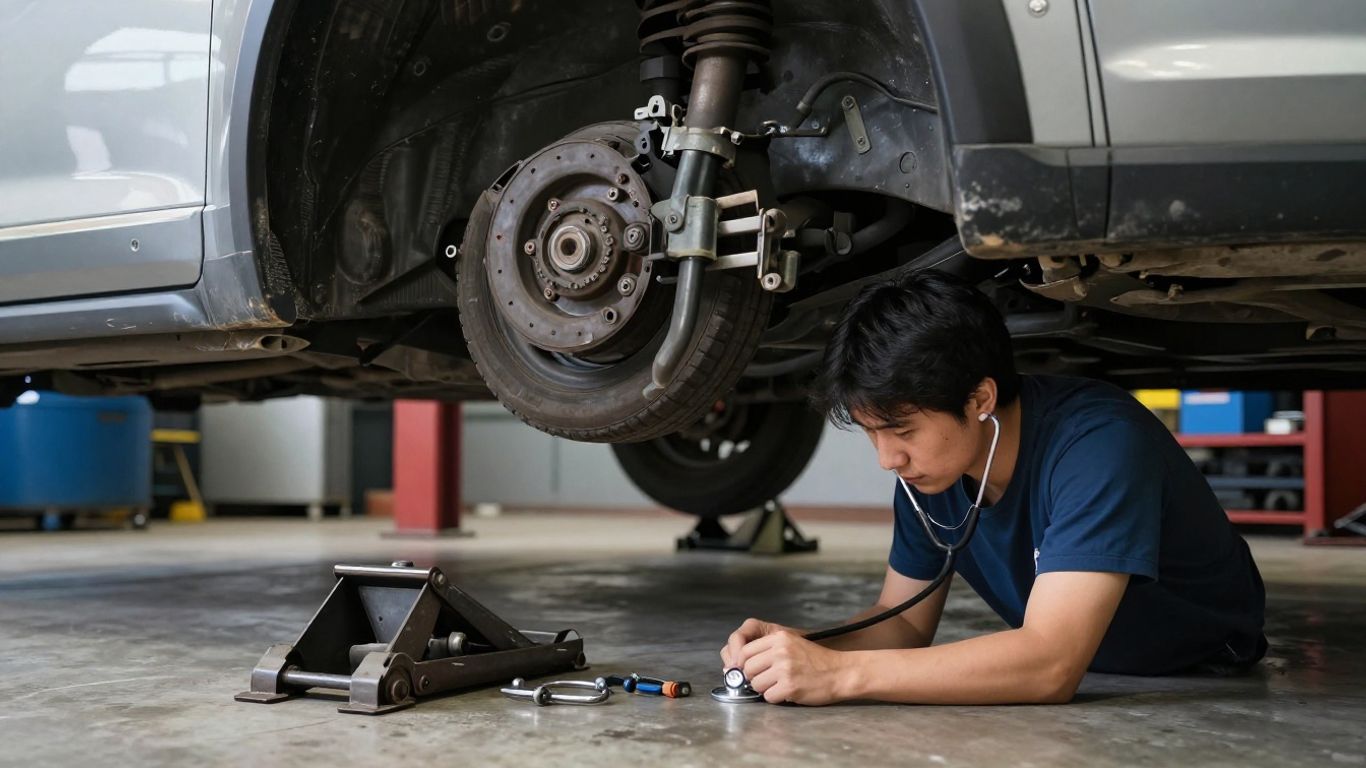
Record when the noise begins and ends
Write down the engine temperature, outside temperature, gear, approximate speed, and whether you were accelerating or coasting. Note whether the noise is present at idle, during a shift, or only after several miles. A phone recording can help, though wind and road noise often distort the result.
Compare neutral, clutch-in, and clutch-out conditions
With the vehicle stationary and safely secured, listen in neutral with the clutch released, then depressed, following the manufacturer’s safety guidance. These comparisons can show whether engine torque or input-shaft rotation affects the sound. Never place yourself near moving parts, and do not run an unsupported vehicle simply to make a noise easier to hear.
Test each gear under acceleration and deceleration
On a quiet, legal road, use gentle throttle and keep the test short. Record which gears produce the sound under acceleration and whether it changes during deceleration. Useful notes include:
- the gear and speed at which the whine is loudest;
- whether a light throttle reduces or increases it;
- whether coasting produces a separate tone;
- whether shifting into neutral makes the sound disappear.
This sequence is more useful than repeatedly driving hard and hoping the source becomes obvious. It also reduces the chance of confusing a normal operating sound with a developing fault.
Separate gearbox noise from tires, differentials, and wheel bearings
Tire noise often changes with road surface, while a wheel bearing may grow louder through a turn. Differential noise can respond to load changes and may continue independently of clutch position. Compare smooth pavement, gentle lane changes, and different gears without making abrupt maneuvers. A detailed manual gearbox noise checklist is another useful reminder to consider clutch and driveline sources rather than blaming the gearbox immediately.
Common causes of manual gearbox whining
Several faults can create similar sounds, and more than one may be present in a high-mileage vehicle. Lubrication problems are usually the simplest to investigate, while bearing, shaft, and gear damage generally requires removal and disassembly. The goal is to rank the possibilities rather than name a part from one symptom.
Low, contaminated, or incorrect transmission fluid
Low fluid can leave bearings and gear meshes inadequately lubricated, especially when the vehicle is moving or cornering. Contaminated fluid may carry abrasive debris through the transmission, and the wrong viscosity or additive package may alter noise and shift quality. A fluid service can help when lubrication is the root problem, but it cannot restore already damaged teeth or bearings.
Worn bearings and bearing preload problems
Bearings support the rotating shafts and control their alignment. Wear can produce a rising whine, rumble, or vibration that changes with load. Incorrect bearing preload after earlier work can also create noise even when the parts are relatively new, which is why correct assembly measurements matter.
Damaged or misaligned gears
Pitted, chipped, or unevenly worn gear teeth can create a distinct tone in the affected ratio. Misalignment changes the contact pattern and may make the sound louder under acceleration or deceleration. Continued operation can spread metal through the fluid and damage neighboring components.
Input shaft, output shaft, and countershaft wear
Each shaft can produce a different pattern depending on which gears and bearings are carrying load. Input-side noise often responds to clutch position or engine speed; output-side noise may follow vehicle speed. Countershaft wear can appear across multiple gears, so comparing ratios is especially valuable.
Clutch and pilot bearing issues that mimic gearbox whine
A release bearing, pilot bearing, clutch disc hub, or related component can sound as though it is inside the gearbox. Pedal position is the first clue, but vibration through the pedal or bellhousing may add context. If the transmission must be removed, inspecting accessible clutch parts at the same time can avoid paying for the same labor twice.
How to inspect the fluid and transmission externally
An external inspection cannot reveal every internal defect, but it can catch low fluid, leakage, damaged mounts, and case problems before they become more expensive. Park on a level surface and follow the vehicle’s service instructions. Use gloves and eye protection, since hot fluid and sharp case edges are easy to underestimate.
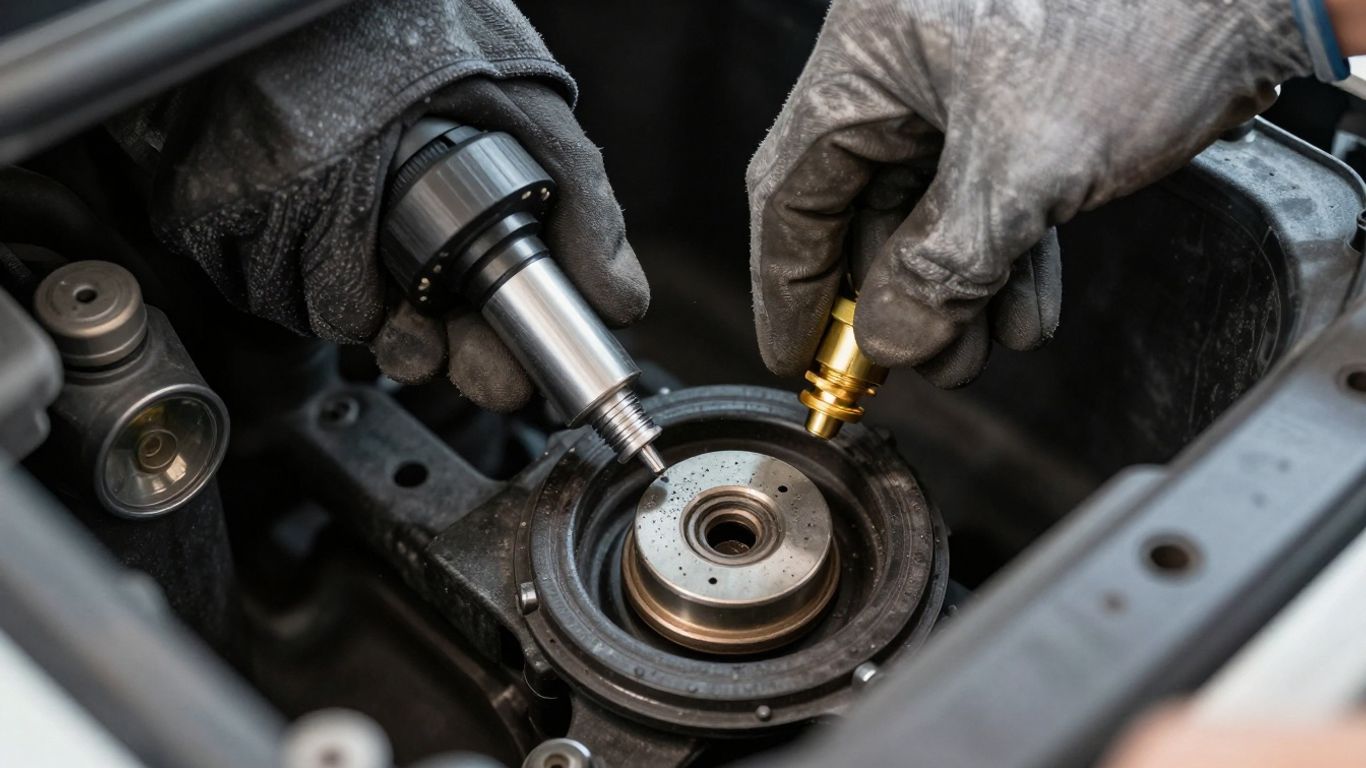
Check the fluid level using the correct procedure
Some transmissions are checked through a fill opening with the vehicle level; others have a different process. The correct level is not necessarily visible from outside, and adding fluid through the wrong opening can create a serious error. Confirm the procedure, support the vehicle securely, and never rely on a jack alone.
Look for metal particles, discoloration, and burning odors
A small amount of fine paste on a magnetic drain plug may be normal for some designs, but large flakes, chips, or glitter-like debris are concerning. Darkened fluid or a burnt smell may indicate overheating or long service intervals. Save a sample or photograph unusual debris before cleaning anything.
Inspect seals, plugs, mounts, and the transmission case
Look around axle seals, the input area, drain and fill plugs, case joints, and the shift mechanism. Check for loose mounts or cracks that could transmit vibration into the cabin. External damage can also allow water or dirt inside, even when the leak itself seems minor.
Identify leaks before they cause internal damage
Fresh fluid on the ground is evidence, not merely a nuisance. Trace it upward to distinguish a gearbox leak from engine oil, axle lubricant, or a cleaning residue. A leak that lowers the level can turn a manageable seal repair into bearing and gear damage.
Verify the manufacturer’s fluid specification
Use the exact specification listed for the vehicle, not a generic “gear oil” chosen by appearance or price. Some manual transmissions require particular friction characteristics or additives because synchronizers depend on them. This is also where fluid service decisions can be compared with broader noise symptoms before authorizing work.
Road-testing methods to isolate the source
A road test should change one condition at a time. Keep both hands available, obey traffic laws, and use a passenger to record observations if possible. The aim is not to make the loudest noise; it is to reproduce the same noise safely and consistently.
Use load and throttle changes to reproduce the noise
Apply gentle throttle, hold a steady speed, then ease off without shifting. A sound that changes immediately with torque may involve gear loading, while one that remains tied to speed may come from a constantly rotating component. Repeat only if the road and traffic conditions remain safe.
Compare acceleration, coasting, and engine braking
Acceleration loads gear teeth in one direction; coasting and engine braking reverse the load. A whine that appears only on one side of that transition can help distinguish gear contact, bearing play, and differential behavior. Do not make aggressive downshifts just to create engine braking during diagnosis.
Check whether the noise follows vehicle speed or engine speed
In a suitable gear, a small change in engine speed can show whether the sound follows the engine-driven input. Changing gear at a similar road speed provides another comparison, although the procedure should remain gentle. A transmission whining diagnosis guide also stresses recording when the noise occurs instead of jumping straight to replacement.
Test for gear-specific noise patterns
Move through the gears under similar throttle and road conditions. If only one ratio consistently whines, suspect its gear pair or associated synchronizing parts before assuming every shaft is worn. If all ratios produce a similar sound, investigate shared bearings, fluid, final drive, and external driveline components.
Know when a road test is unsafe
Do not continue if the gearbox jumps out of gear, shifting becomes difficult, the clutch fails to disengage, fluid is spraying, or vibration becomes severe. Grinding, banging, smoke, or a rapidly worsening whine also ends the test. Arrange professional help rather than trying to collect one more observation.
Repair options and cost considerations
Repair cost depends less on the word “whine” than on the failed component and the labor needed to reach it. A fluid correction may be relatively simple, while internal repairs require removal, measurement, cleaning, and reassembly. Ask for a diagnosis that explains the evidence before comparing prices.
When a fluid service may solve the problem
If the level is low and the transmission has no significant debris or shifting problem, correcting the leak and servicing the fluid may reduce the noise. Improvement does not prove that all wear is gone. If the whine remains or returns quickly, the transmission should be assessed again.
When bearing or gear replacement is required
Persistent noise accompanied by metal debris, vibration, difficult shifting, or a gear-specific pattern often warrants internal inspection. Bearings, races, gears, seals, and preload settings may all need evaluation. Replacing only the visibly damaged part can be false economy if related components have matching wear.
Comparing a rebuild, replacement gearbox, and used unit
A rebuild allows worn internals to be measured and renewed, but labor and parts availability can make the estimate substantial. A replacement unit may shorten downtime, while a used unit carries uncertainty about mileage and maintenance history. Get the warranty, included parts, and installation assumptions in writing.
Evaluating clutch-related repairs at the same time
If the gearbox is already removed, compare the condition of the clutch disc, pressure plate, release bearing, pilot bearing, and rear seal. Replacing suitable wear items during shared labor may be sensible, but parts should not be added without explaining their condition. The clutch repair should address observed wear, not simply the presence of a gearbox noise.
Deciding whether continued driving could worsen the damage
Short, gentle driving may be reasonable for a minor, stable noise after a technician’s assessment. It is a poor risk when the sound is worsening or paired with debris, leakage, heat, vibration, or gear disengagement. Internal fragments can damage additional gear sets and turn a repairable fault into a replacement decision.
When to seek professional transmission service
A manual gearbox can continue moving the vehicle while internal damage is developing, which makes delay tempting. Professional diagnosis becomes more valuable when symptoms are inconsistent, access is limited, or the repair requires special measurements. Bring observations rather than a firm diagnosis; that gives the technician room to test the right alternatives.
Warning signs that require immediate inspection
Stop driving and seek inspection for sudden severe noise, grinding, loss of a gear, a burning smell, visible fluid loss, or a transmission that slips out of gear. New vibration or a whine that rises rapidly also deserves prompt attention. These signs can indicate a fault that will worsen under continued load.
Information and test results to give a technician
Provide the vehicle’s mileage, service history, fluid type, recent repairs, and the conditions that reproduce the sound. Mention whether the clutch pedal changes it and whether the noise follows engine or road speed. A short recording, written test notes, and photographs of leaks or drain-plug debris can save diagnostic time.
Questions to ask about diagnosis and repair estimates
Ask which tests support the proposed fault, what alternatives were ruled out, and whether the transmission must be removed to confirm the problem. Request separate estimates for diagnosis, labor, parts, fluids, seals, and possible complications. Also ask what warranty applies and what symptoms would make continued driving unacceptable.
Why manufacturer service data and specialist tools matter
Transmission work depends on correct fluid specifications, torque values, clearances, bearing preload, and gear-contact measurements. Service data helps prevent a repair that creates a new noise, while specialist tools can measure or locate problems more reliably than listening alone. A qualified technician should be able to explain how those requirements affect the estimate.
Conclusion
A manual gearbox whining noise diagnosis is strongest when it connects sound behavior with fluid condition, clutch position, engine speed, road speed, gear selection, and load. Start with safe observations and an external inspection, then stop driving when the symptoms suggest rapid damage or a safety risk. The right repair decision comes from evidence, not from replacing parts at random.
Frequently Asked Questions
Is a whining manual gearbox always failing?
No. A whine can come from fluid level, fluid type, tires, wheel bearings, the differential, or clutch-related parts. A persistent or worsening sound still deserves a structured inspection.
Can low transmission fluid cause whining?
Yes, low fluid can reduce lubrication and increase noise from rotating components. Find and repair the leak, then use the correct checking procedure and fluid specification rather than simply topping it off indefinitely.
What does a whine that stops when the clutch is pressed mean?
It suggests that a component whose rotation or load changes with clutch position may be involved. Possible areas include the input side, bearings, or clutch-related parts, but the pedal test alone cannot identify the failed component.
Why does a gearbox whine in only one gear?
A single-gear pattern can indicate wear or damage in that gear pair or its associated components. Compare acceleration and deceleration in the same ratio, then have the result confirmed before authorizing internal repairs.
Is it safe to drive with a manual transmission whine?
It depends on severity and accompanying symptoms. A stable, mild noise may permit limited driving after assessment, but grinding, leakage, vibration, gear loss, or rapid worsening calls for immediate inspection.
Can a wheel bearing sound like gearbox whine?
Yes. Both can create a speed-related hum or whine. Changes with turning, road surface, clutch position, and gear selection help separate them, but a technician may need to inspect the vehicle to be certain.
Should the clutch be replaced during gearbox repair?
Only if its condition supports the recommendation. Because the gearbox may already be removed, inspecting the clutch, release bearing, pilot bearing, and related seals can identify sensible shared-labor repairs without assuming every part needs replacement.