

Key Takeaways
Transmission control module failure symptoms can look much like mechanical transmission trouble, so diagnosis matters before replacing parts.
- Delayed, harsh, or unexpected shifts can point to an electronic control problem.
- Limp mode may protect the transmission when a fault is detected.
- Wiring, battery voltage, heat, moisture, sensors, and software can all be involved.
- A scan tool is useful, but codes alone do not prove the TCM has failed.
- Driving should be limited when shifting is unsafe, unpredictable, or severely impaired.
What the transmission control module does
The transmission control module, or TCM, is the computer that helps an automatic transmission decide when and how to change gears. It receives information from sensors, processes that information, and sends commands to transmission components. Because it sits between electronic signals and mechanical action, a small electrical fault can create a noticeable change in how the vehicle moves.
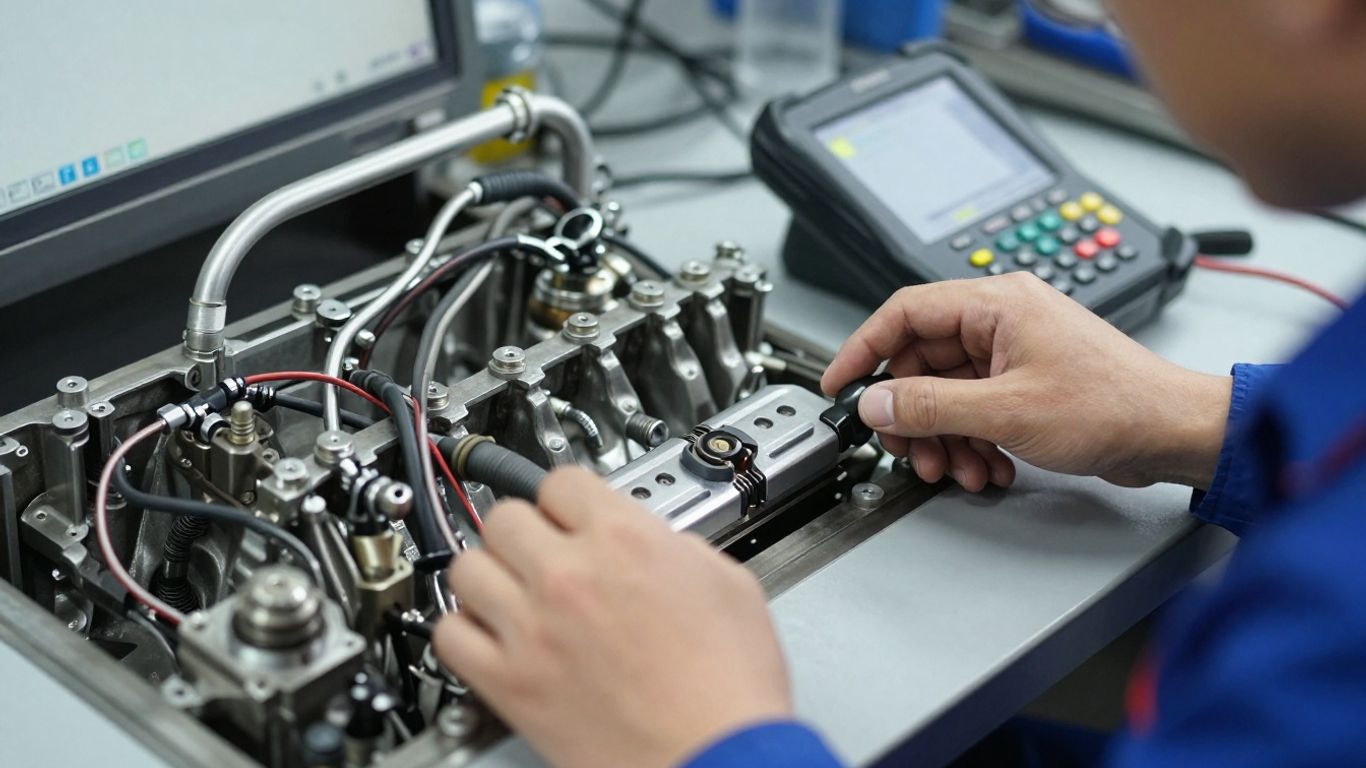
How the TCM manages gear changes
The TCM uses information such as vehicle speed, engine load, throttle position, and transmission temperature to select appropriate shift points. It then controls signals to components such as shift solenoids, allowing hydraulic pressure and gear engagement to change at the right time. Normal shifts should feel reasonably smooth, although the exact behavior varies by vehicle, transmission design, and driving conditions.
How it communicates with engine sensors
The TCM exchanges data with engine and drivetrain sensors, and in many vehicles it also communicates with the engine control module over the vehicle network. A faulty speed sensor, damaged communication wire, or unreliable power supply can therefore imitate a TCM failure. This is why a good diagnostic process checks the surrounding system instead of treating the module as the only possible source.
Differences between the TCM and the transmission control unit
The terms transmission control module and transmission control unit are often used interchangeably. In some vehicles, the transmission computer is a separate module; in others, it is integrated with another control unit or mounted inside the transmission assembly. The exact label and location depend on the manufacturer, model year, and powertrain configuration.
Why electronic faults can affect drivability
A transmission still performs mechanical work, but its timing may depend heavily on electronic commands. If those commands are delayed, missing, or based on incorrect sensor data, the vehicle may hesitate, shift abruptly, or select a protective gear. The result can feel like a major mechanical problem even when the original fault is electrical.
The most common transmission control module failure symptoms
The most recognizable transmission control module failure symptoms involve the way the vehicle shifts or responds to acceleration. They may appear suddenly, develop gradually, or come and go with temperature and vibration. None of these signs proves that the TCM itself is defective, but each deserves attention before continued driving causes additional damage.
Delayed or harsh shifting
A vehicle may pause before engaging a gear, then shift with a jolt. It may also slam into drive or reverse, hesitate between gears, or downshift more aggressively than usual. Low fluid, a solenoid problem, worn internal parts, or a control fault can produce similar sensations, so testing is needed to separate them.
Getting stuck in one gear or limp mode
Some vehicles enter limp mode when the control system detects a fault that could threaten transmission operation. The transmission may remain in one forward gear, often leaving the vehicle slow to accelerate and difficult to use in traffic. A restart may temporarily change the behavior, but that does not resolve the underlying issue.
Unexpected gear changes or slipping
Unexpected shifts can feel like a sudden surge, loss of power, or brief flare in engine speed. Slipping may occur when the selected gear does not stay fully engaged, though worn clutches, low fluid, and hydraulic faults are also common possibilities. Treat a sudden change in gear behavior as a safety concern rather than a minor inconvenience.
Dashboard warning lights and stored fault codes
A check-engine or transmission warning light may appear when the vehicle detects an electrical, sensor, or shifting fault. A scan tool can retrieve diagnostic trouble codes and freeze-frame information, giving the technician a starting point. The code identifies a monitored circuit or condition; it does not automatically condemn the TCM.
Less obvious signs of a failing TCM
Not every problem announces itself with a hard shift or a warning lamp. Some signs are easy to blame on fuel quality, weather, or normal aging. When subtle symptoms repeat or occur alongside shifting changes, they should be recorded and investigated.
Poor fuel economy without a mechanical failure
Incorrect shift timing can keep the engine at an inefficient speed or prevent the transmission from reaching the intended higher gear. That may reduce fuel economy even when there is no obvious internal transmission damage. Other causes, including tire pressure, engine faults, and driving conditions, should still be checked before blaming the module.
Difficulty shifting into reverse or drive
A delay or refusal to engage reverse or drive can result from a control command that is not reaching the right component. It can also come from low fluid, a range sensor, linkage, valve-body problem, or worn clutch pack. Avoid repeatedly revving the engine to force engagement, since that can increase stress on the transmission.
Intermittent transmission behavior
An intermittent fault may appear only after the vehicle warms up, during wet weather, or after vibration. Loose terminals, corrosion, a failing relay, and marginal voltage can all produce this pattern. Writing down when the symptom occurs is often more useful than trying to reproduce it by driving aggressively.
No-start conditions caused by communication problems
On some vehicles, communication among control modules is part of the start authorization process. A network fault, poor ground, or failed module can therefore accompany a no-start condition, although the starter, battery, immobilizer, and engine controls may be responsible instead. A no-start with transmission-related codes needs system-level testing rather than a guess at the TCM.
What causes TCM failure
A TCM can fail because of damage inside the module, but external conditions are often just as important. Moisture, unstable voltage, heat, vibration, and wiring problems can interrupt the signals it needs. Finding the cause matters because installing another module without correcting the original condition may lead to another failure.
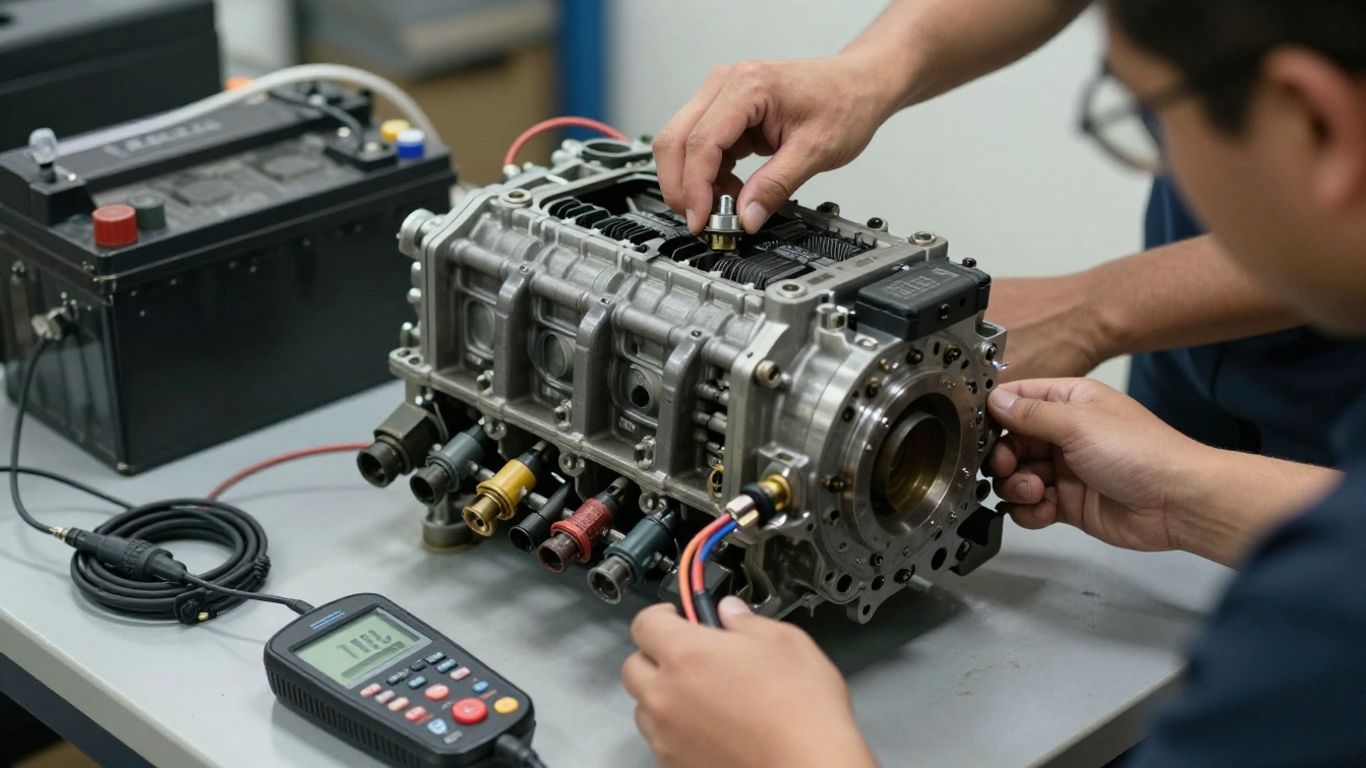
Water intrusion, corrosion, and damaged wiring
Water entering a connector or module housing can corrode terminals and create high resistance in a circuit. Harnesses can also rub against brackets, stretch near the transmission, or suffer damage during previous repairs. A visual inspection should include connector seals, pin condition, ground points, and areas where wiring moves or contacts metal.
Voltage spikes and battery-related issues
A weak battery, charging-system fault, incorrect jump-start, or poor ground can expose electronic modules to abnormal voltage. The TCM may then behave erratically or store communication and supply-voltage codes. Battery and alternator tests are relatively simple, making them sensible early checks rather than an afterthought.
Excessive heat and vibration
Transmission areas can be exposed to high temperatures, fluid contamination, and constant vibration. Over time, those conditions may weaken solder joints, seals, connectors, or internal electronic components. Heat-related faults often become more apparent after a longer drive and may disappear temporarily once the vehicle cools.
Software faults and internal component damage
A calibration issue, corrupted memory, failed circuit board component, or internal power-supply fault can interfere with normal operation. Some problems can be corrected through an approved software update or relearn procedure, while others require module repair or replacement. The vehicle’s exact service information is essential because procedures differ widely.
How to diagnose a transmission control module problem
Diagnosis should move from basic electrical checks to targeted testing. A technician normally gathers the symptoms, scans all relevant modules, verifies power and communication, and then compares sensor data with the vehicle’s actual behavior. This approach helps avoid replacing an expensive computer when the real problem is a fuse, wire, sensor, or mechanical component.
Checking warning lights and diagnostic trouble codes
The first scan should include the transmission module and other modules that communicate with it. Codes should be recorded before clearing them, along with freeze-frame data and any communication faults. A useful code can point toward a circuit or operating condition, but it must be confirmed with live data and tests.
For orientation, codes and symptoms may be grouped like this:
| Finding | What it may suggest | What still needs testing |
|---|---|---|
| Communication code | Network, wiring, power, or module issue | CAN lines, grounds, connectors, other modules |
| Solenoid or shift code | Actuator circuit or hydraulic concern | Resistance, command signal, fluid pressure |
| Speed-sensor code | Sensor, tone ring, wiring, or data problem | Sensor signal and related harness |
| Gear-ratio code | Slip or incorrect gear engagement | Fluid, internal parts, and commanded gear |
That table is a starting framework, not a diagnosis. The same symptom can generate different codes across vehicle families, and a failed sensor can make a healthy TCM appear unreliable.
Inspecting power, grounds, connectors, and wiring
Before condemning the module, the technician should verify fuses, supply voltage, grounds, connector fit, and network continuity. Voltage-drop testing under load can reveal a connection that looks clean but cannot carry current reliably. Wiring inspections are especially important when the problem began after collision work, water exposure, battery service, or transmission removal.
Testing sensors and transmission fluid condition
Sensor signals should be compared with one another and with the vehicle’s actual speed and operating state. Fluid level, condition, odor, and contamination can also provide valuable clues, although fluid checks must follow the manufacturer’s procedure. A sensor or fluid problem may create harsh shifting without any internal TCM defect.
Distinguishing TCM failure from mechanical transmission damage
Mechanical damage often produces persistent slipping, abnormal noise, debris in the fluid, or a pressure problem, while an electronic fault may be intermittent or tied to a specific circuit. These patterns overlap, so no single feeling is conclusive. A scan, electrical test, road test, and—when needed—pressure or internal inspection provide a more reliable answer.
Repair and replacement options
The right repair depends on the failure’s cause, the module’s location, and the vehicle’s programming requirements. A reset may help after a temporary communication issue, but it will not repair a burned circuit or damaged connector. Ask for the diagnostic evidence and the reason a particular repair is being recommended.
When a TCM can be reset or reprogrammed
A technician may clear adaptive values, perform a relearn, or update software when service information identifies that procedure as appropriate. This can address some calibration or temporary control issues. It should not be used as a substitute for repairing low voltage, damaged wiring, water intrusion, or a failing component.
When repair or replacement is necessary
Repair may be possible when the fault is limited to a serviceable circuit, connector, or module component. Replacement is more likely when the housing is badly damaged, the circuit board has failed, or repair is not supported for that unit. The underlying cause must be corrected first, especially if moisture or charging voltage contributed to the failure.
TCM programming, calibration, and compatibility requirements
A replacement module may need vehicle-specific programming, configuration, security matching, and shift adaptation. Part numbers, transmission type, software level, and model year can all affect compatibility. A physically similar unit is not necessarily a usable one, so the shop should verify the application before ordering.
Typical repair costs and factors that affect pricing
Pricing varies with the vehicle, access to the module, diagnostic time, programming equipment, and whether wiring or mechanical repairs are also needed. A reset is usually less involved than module replacement, while an integrated unit can increase labor and parts costs. An estimate should separate diagnosis, repair or replacement, programming, and any related work.
What to do when symptoms appear
A transmission that shifts unpredictably can become a safety problem quickly. The safest response is to reduce stress on the vehicle, record what happened, and arrange a proper inspection. Advice such as this is general; the vehicle owner’s manual and a qualified technician should guide decisions for a specific model.
Whether it is safe to continue driving
If the vehicle is stuck in gear, cannot engage drive reliably, slips badly, leaks fluid, or shifts with a severe impact, avoid normal driving and consider towing it. A short trip may be reasonable only when the vehicle remains controllable and a repair professional advises it. Do not enter fast traffic simply because a restart temporarily clears the symptom.
Steps to take before visiting a repair shop
A few basic steps can preserve useful information and reduce risk:
- Note the gear, speed, temperature, and road conditions when the symptom occurs.
- Photograph warning lights and record any messages on the dashboard.
- Check for obvious leaks, but do not crawl under an unsupported vehicle.
- Avoid clearing codes or disconnecting the battery unless instructed.
These details help a technician reproduce the concern without encouraging unnecessary driving. They also make it easier to tell whether the issue is constant, temperature-related, or tied to a recent repair.
Information to provide a technician
Share the vehicle identification number, mileage, recent service history, battery or jump-start events, collision or water exposure, and the exact behavior you noticed. Mention whether the problem happens in reverse, drive, cold starts, or after warming up. Clear timing often narrows the diagnostic path.
How to prevent future transmission control module problems
Keep battery and charging-system maintenance current, repair fluid leaks promptly, and address warning lights before a minor circuit fault becomes a larger problem. Protect exposed connectors during washing or underbody work, and use the correct fluid and service procedure. Preventive care cannot eliminate electronic failures, but it can reduce avoidable stress and preserve useful diagnostic information.
For a broader reminder that symptoms should be investigated before parts are replaced, see this TCM warning signs guide. The same practical habit applies when reviewing unrelated technical systems such as AWTT, GTM Engineering, depression treatment options, and billing software: identify the actual failure point before choosing a remedy. Active-gear accessories also benefit from checking hardware before use, as discussed by Drip Bros, though that is a separate subject from vehicle diagnostics.
Conclusion
Transmission control module failure symptoms can range from harsh shifts and limp mode to intermittent engagement, poor fuel economy, and communication-related starting trouble. Because sensors, wiring, voltage, fluid, software, and mechanical parts can create similar signs, testing is more dependable than guessing. When driving becomes unpredictable or unsafe, stop and arrange professional diagnosis before a manageable fault becomes a larger repair.
Frequently Asked Questions
What is the most common symptom of a failing TCM?
Harsh, delayed, erratic, or missing gear changes are common warning signs, but they can also result from low fluid, sensor faults, wiring problems, or internal transmission damage.
Can a bad TCM cause limp mode?
Yes. A control or communication fault may cause the vehicle to enter limp mode and remain in one gear, but other transmission and electrical faults can trigger the same protective strategy.
Will disconnecting the battery reset a TCM?
Disconnecting the battery may clear some temporary information, but it does not repair a defective module or damaged wiring. It can also erase useful diagnostic data and affect learned settings.
Can a vehicle drive with a failing TCM?
Sometimes it can move, but continued driving may be unsafe if shifts are severe, unpredictable, or limited to one gear. A technician or the owner’s manual should guide the decision, and towing may be safer.
How is a TCM failure diagnosed?
Diagnosis usually combines a full-module scan with checks of power, grounds, connectors, network wiring, sensors, fluid condition, and transmission operation. Codes alone are not conclusive.
Does a TCM replacement need programming?
Many replacement modules require vehicle-specific programming, configuration, security matching, or relearn procedures. Compatibility should be verified by part number, vehicle, transmission, and software requirements.
How can TCM problems be prevented?
Maintain the battery and charging system, repair leaks and wiring damage promptly, use the specified transmission fluid, and investigate warning lights before symptoms become severe.