

Key Takeaways
A transmission solenoid can affect how an automatic transmission shifts, but similar symptoms can come from several other faults. Treat the signs as a reason to investigate, not as proof that a solenoid has failed.
- Delayed, harsh, erratic, or missed shifts can have multiple causes.
- A warning light or trouble code is a clue, not a diagnosis by itself.
- Fluid condition, wiring, sensors, and internal transmission parts may also be involved.
- Testing helps distinguish a solenoid fault from a broader transmission problem.
- If shifting becomes unpredictable or the vehicle slips, limit driving and arrange an inspection.
Common signs of a failing transmission solenoid
Transmission solenoids help control the hydraulic functions involved in gear changes, so a fault can change how the vehicle shifts. The symptoms may appear consistently or come and go, and they can overlap with signs of low fluid or other transmission problems. Notice when the behavior happens, how severe it is, and whether a warning light appears. That history can help a technician narrow down the cause.
Delayed, harsh, or missed shifts
A pause before a gear engages, a jolt during a shift, or a gear change that never seems to happen can all be concerning. A solenoid that does not respond as expected may disrupt the timing or hydraulic action of a shift. But the feel alone cannot identify which component is responsible. Make a note of whether the delay happens from a stop, during acceleration, or at a particular speed.
Transmission stuck in one gear or slipping
A vehicle that stays in one gear or seems to lose the connection between engine speed and road speed needs prompt attention. A control system may limit shifting when it detects a fault, while slipping can also point to low fluid or worn internal parts. Either way, continuing to drive normally may worsen the problem. If the vehicle struggles to maintain speed or the engine revs without a matching increase in speed, stop somewhere safe and seek advice.
Erratic shifting at different speeds
Shifts that happen earlier or later than expected, or change unpredictably from one trip to the next, can reflect an issue with the electrical or hydraulic controls. The pattern matters: a symptom limited to cold starts may suggest a different path of investigation than one that appears after the transmission warms up. Keep the description specific rather than trying to name the failed part. A technician can compare the driving conditions with scan and inspection results.
Warning lights and transmission-related trouble codes
A check-engine or transmission warning light may appear alongside shifting problems, but the light does not establish that a solenoid is the culprit. A scan can retrieve diagnostic trouble codes that point toward a circuit, control function, or operating condition. The code is a starting clue, not a parts order. For a broader overview of transmission solenoid symptoms, compare the general signs with what your vehicle is doing and have the fault checked in context.
How transmission solenoids affect shifting
An automatic transmission relies on coordinated electrical commands and hydraulic action to change gears. Solenoids are among the components involved in controlling that process, though their number and arrangement vary by transmission design. Understanding their role helps explain why a solenoid fault can affect shifting without proving that the solenoid itself has failed. The exact operation depends on the vehicle and transmission.
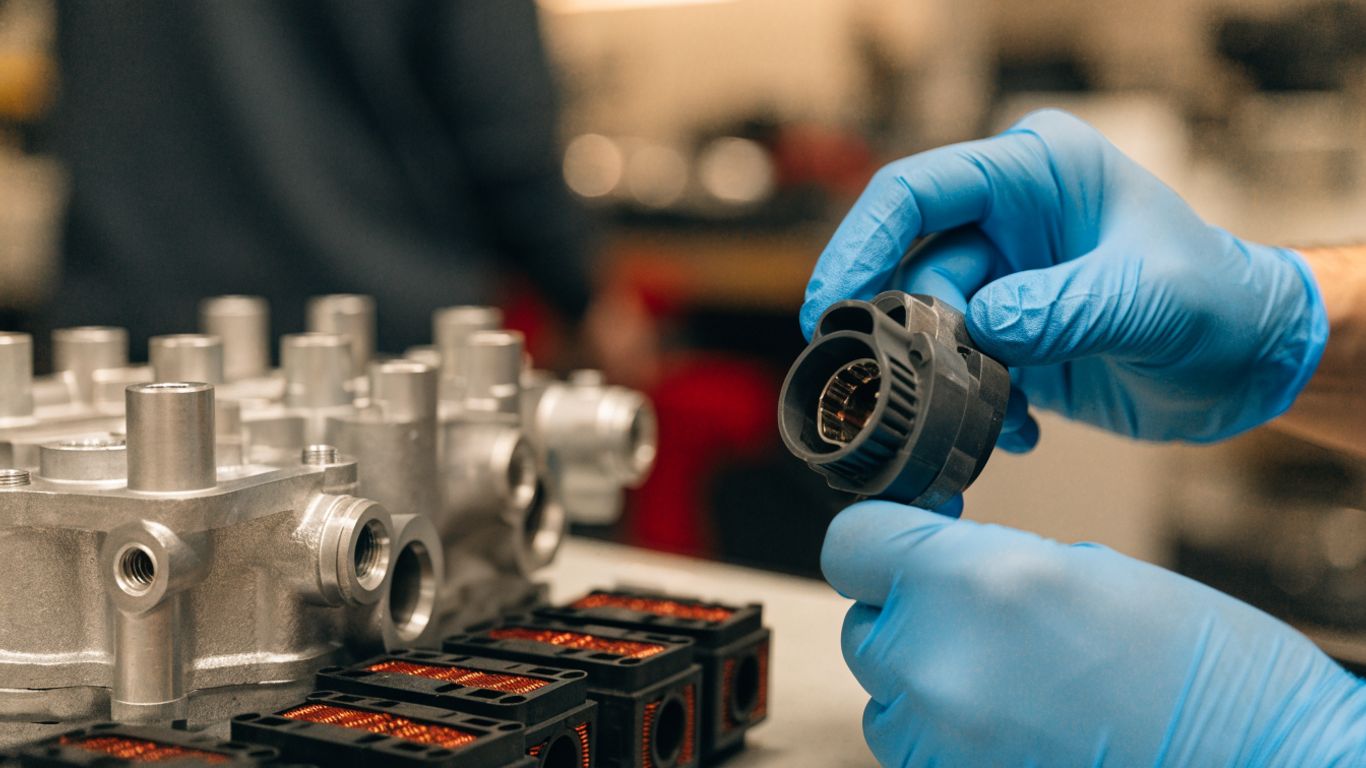
What a transmission solenoid does
A transmission solenoid is an electrically operated valve used within an automatic transmission control system. In response to electrical commands, it can open or close a fluid path. That action contributes to the hydraulic operations involved in shifting. Because several components work together, symptoms at the wheel do not reveal which valve or circuit—if any—is at fault.
How solenoids regulate hydraulic pressure
Hydraulic pressure helps apply and release internal transmission components during gear changes. Solenoids can control fluid flow within that system, while other parts provide, route, or regulate pressure. If a solenoid sticks, is electrically compromised, or cannot move fluid as intended, shift timing or feel may change. The specific pressure behavior and test procedure depend on the transmission design.
Differences between shift, pressure control, and torque converter solenoids
The names describe different functions, but terminology and layouts vary across vehicles. Shift solenoids are associated with gear changes; pressure-control solenoids influence pressure regulation; and torque-converter solenoids relate to converter operation. A single transmission may use several solenoids, and a fault in one function can feel different from a fault in another. A service manual or qualified technician can identify the components fitted to a particular vehicle.
Causes of transmission solenoid failure
A solenoid problem can arise from an electrical fault, contamination, wear, or an issue elsewhere in the transmission that affects its operation. The same driving symptom may therefore call for different repairs. It is useful to consider both the component and the conditions around it rather than assuming that age alone explains the fault. Inspection and testing help distinguish a failed solenoid from a related problem.
Electrical faults and damaged wiring
A damaged connector, corroded terminal, broken wire, or poor electrical connection can interrupt the signal or power needed for a solenoid to operate. In that situation, replacing the solenoid without checking its circuit may not resolve the underlying problem. Harnesses and connectors can also be affected by heat, vibration, or previous repairs. An electrical inspection should follow the vehicle-specific diagnostic procedure.
Contaminated or degraded transmission fluid
Fluid that is low, degraded, or contaminated can interfere with transmission operation and may contribute to sticking or poor hydraulic performance. The correct fluid type and level-check procedure vary by vehicle, so a visual guess is not enough. If a service history is available, compare it with the manufacturer’s maintenance guidance. A fluid issue may coexist with a solenoid or internal fault, which is why a service alone is not a guaranteed fix.
Wear, heat, and internal mechanical problems
Repeated operation and heat can contribute to wear in transmission components, including solenoids and the parts they work with. Debris or internal mechanical damage can also affect fluid movement and shift quality. Those conditions may produce symptoms that resemble a simple electrical failure. If a problem has persisted or worsened, testing should consider the wider system rather than focusing only on one replaceable part.
How driving conditions can contribute to failure
Heavy loads, frequent stop-and-go use, steep routes, or severe operating conditions can place added demands on a transmission. These circumstances do not prove that a solenoid has failed, but they can be useful context when symptoms began or changed. Record when the issue occurs and whether the vehicle was towing, climbing, or operating in unusually hot conditions. That information can help a technician interpret the fault pattern.
When symptoms may point to another problem
Shifting complaints are not unique to solenoid faults. Low or incorrect fluid, wiring problems, sensors, control modules, and internal wear can produce overlapping signs. Even a vehicle that enters a limited operating mode may be reacting to a broader detected fault rather than a failed valve. A careful diagnosis considers these alternatives before recommending a repair.

Similar signs from low or dirty transmission fluid
Low fluid can affect hydraulic operation, while degraded or contaminated fluid may contribute to poor shifting. Look for signs such as a leak beneath the vehicle, but do not rely on appearance alone to judge fluid condition. Some vehicles require a specific temperature, sequence, or tool for an accurate level check. Follow the owner’s manual or have the inspection performed correctly.
Problems caused by sensors or control modules
Transmission control depends on information from sensors and commands from control electronics. A faulty sensor, damaged wiring, or control-module issue may lead to incorrect or inconsistent operation that feels much like a solenoid problem. Diagnostic codes and circuit checks help separate these possibilities. Replacing a solenoid based only on a general symptom can leave the real cause untouched.
Clues that suggest broader transmission damage
Persistent slipping, repeated loss of drive, worsening shift quality, or unusual noises deserve attention because they may indicate a problem beyond one solenoid. These clues do not confirm internal damage, but they strengthen the case for a prompt, thorough inspection. If the vehicle cannot shift reliably, avoid using it for routine trips. A general guide to related symptoms can provide context, but an inspection of the vehicle is what determines the cause.
How to diagnose a faulty transmission solenoid
Diagnosis works best as a sequence: confirm the complaint, retrieve relevant fault information, inspect the basics, and test the suspected circuit or hydraulic function. The process should follow the procedures for the specific vehicle. A trouble code can guide the investigation, but it rarely tells the whole story on its own. For a separate overview of common transmission warning signs, remember that symptom lists cannot replace testing.
Check warning lights and diagnostic trouble codes
A technician can use a suitable scan tool to retrieve codes and review available transmission data. The code description may identify a circuit or performance condition, not necessarily a failed solenoid. Note when the warning light appeared and whether it coincided with a particular shift or driving condition. Clearing codes before recording them may remove information useful to the diagnosis.
Inspect fluid condition and electrical connections
Fluid level and condition should be checked using the prescribed procedure, alongside visible leaks and damage. Electrical connectors and accessible wiring can be examined for looseness, corrosion, or damage. These checks are useful because a fault outside the solenoid can interrupt its operation. Avoid touching hot components or disconnecting electrical parts without appropriate guidance.
Use professional testing to confirm the cause
When initial checks do not settle the question, a technician may perform vehicle-specific electrical or hydraulic tests. The choice depends on the code, transmission design, and symptoms. To make an inspection more productive, bring a concise record of what you have observed:
- Describe which shifts feel delayed, harsh, missed, or inconsistent.
- Note whether the problem occurs cold, warm, or under particular driving conditions.
- Record warning lights and any diagnostic codes already retrieved.
- Share recent fluid service, repair, or battery work if relevant.
This detail helps connect the test results to the real-world complaint. It also reduces the risk of treating a symptom as if it were a confirmed failed part.
Why a trouble code alone may not identify the failed part
A code can indicate that the control system detected an unexpected signal or operating result. It may not distinguish between a faulty solenoid, an open circuit, a connector problem, or a mechanical issue that affects the same function. Diagnosis requires checking the conditions that could produce that code. For general solenoid troubleshooting information, use the material as background rather than a substitute for vehicle-specific testing.
Search results can also mix in unrelated material, such as attic insulation, Big Island couples portraits, bridal hair advice, a medical symptoms guide, or automatic watches under €500. Those topics have their own uses, but they cannot help identify a transmission fault; rely on evidence from the vehicle and its service information.
Repair options and what to do next
The right repair depends on what testing finds, not just on how the vehicle feels. Sometimes the issue is a connector, fluid condition, or an individual solenoid; in other cases, the fault involves the valve body or more extensive transmission damage. Ask what evidence supports the proposed repair and whether related checks have been completed. That conversation can help you understand the scope before authorizing work.
When cleaning or replacing a solenoid may help
If inspection confirms contamination or a failed solenoid and the manufacturer’s procedure allows it, cleaning or replacement may be considered. Access varies: some solenoids can be reached only after substantial disassembly, and a repair may require additional parts or service steps. Cleaning is not a reliable answer to every fault, particularly where electrical damage or wear is present. Confirm the underlying cause before choosing a repair.
What to expect from a transmission fluid service
A fluid service may be appropriate when the fluid is due for maintenance or inspection identifies a fluid-related concern. The correct fluid specification, quantity, and procedure matter, and some vehicles have specific requirements for checking the level. A service may improve operation when fluid condition is the issue, but it does not repair a damaged circuit or worn internal component. Ask the shop to explain what the service is expected to address.
When repair may involve the valve body or transmission
If testing points to a valve-body issue, internal wear, or damage beyond an individual solenoid, the repair may be more involved. The technician should explain the findings and distinguish confirmed damage from possibilities that still need inspection. A second opinion can be reasonable when the proposed work is extensive and the diagnosis is unclear. The specific options depend on the vehicle and the condition of its transmission.
How to limit further damage while awaiting diagnosis
Driving with severe slipping, loss of drive, or unpredictable shifts can leave the vehicle unsafe or aggravate an existing fault. If a warning appears or shifting changes suddenly, reduce unnecessary driving and arrange professional advice. A few practical steps can help while you wait:
- Avoid towing, hard acceleration, and long trips.
- Do not continue driving if the vehicle loses drive or cannot shift safely.
- Check the owner’s manual for warning-light guidance and fluid instructions.
- Arrange an inspection promptly, and consider towing if the vehicle is unreliable.
These steps do not repair the fault, but they can reduce risk until the cause is known. Follow any vehicle-specific instructions from the manufacturer or repair professional.
Conclusion
Transmission solenoid problems can show up as delayed, harsh, slipping, or erratic shifts, but those symptoms have several possible causes. Codes and symptom patterns help guide diagnosis; they do not confirm a failed part on their own. A careful inspection of fluid, wiring, controls, and transmission operation is the clearest way to choose the right repair and avoid replacing components unnecessarily.
Frequently Asked Questions
What are the most common signs of a failing transmission solenoid?
Common signs include delayed, harsh, missed, or erratic shifts, slipping, or the transmission remaining in one gear. These symptoms can also result from other faults, so they do not confirm a solenoid failure by themselves.
Can a transmission solenoid problem turn on the check-engine light?
It can coincide with a warning light or a diagnostic trouble code, depending on the vehicle and the fault. A scan is needed to understand what the system detected, and further checks may be required to find the cause.
Is it safe to drive with suspected solenoid failure?
It depends on the severity of the symptoms. If the vehicle slips, loses drive, or shifts unpredictably, avoid routine driving and arrange an inspection; towing may be safer if the vehicle is unreliable.
Can low transmission fluid cause similar symptoms?
Yes. Low or degraded fluid can affect transmission operation and produce shifting problems that resemble other faults. The level and condition should be checked using the correct procedure for the vehicle.
Does a trouble code prove that a solenoid is bad?
No. A code may identify a circuit or performance issue without confirming which part failed. Wiring, connectors, sensors, fluid, and mechanical problems may need to be checked as well.
Will changing the transmission fluid fix a solenoid problem?
A fluid service may help if fluid condition is contributing to the symptoms, but it will not repair every electrical or mechanical fault. The service should be based on inspection and the vehicle’s maintenance requirements.
How can a technician confirm a faulty transmission solenoid?
A technician can combine the symptom history and diagnostic codes with inspections and vehicle-specific electrical or hydraulic tests. The exact process depends on the transmission and the suspected fault.