

Key Takeaways
A manual gearbox oil change interval depends on the vehicle, the lubricant specification, and how the vehicle is used. The owner’s manual remains the best starting point, but symptoms, leaks, and severe driving conditions can justify earlier attention.
- Follow the vehicle maker’s stated fluid specification and service schedule.
- Consider earlier changes for towing, heavy loads, dusty conditions, or frequent stop-and-go use.
- Hard shifting, unusual gear noise, or a low fluid level deserves investigation.
- Confirm GL-4 or GL-5 compatibility before buying replacement oil.
- Make sure the fill plug can be opened before draining the gearbox.
Understand the manual gearbox oil change interval
Manual gearbox oil works under pressure between gears, bearings, shafts, and synchronizers. Although it is not exposed to combustion gases like engine oil, it still collects wear particles and can lose some of its protective performance. The right manual gearbox oil change interval therefore depends on more than a universal mileage figure.
Why gear oil needs periodic replacement
Gear oil forms a protective film between moving metal surfaces and helps control heat and friction. Over time, repeated loading can shear the fluid, while tiny particles from normal wear circulate through the gearbox. Moisture can also enter through seals, breathers, or temperature changes, especially when a vehicle is used in damp conditions.
A fluid change removes much of that suspended contamination and gives you an opportunity to inspect the drained oil and plug magnet. It cannot repair a damaged synchronizer or worn bearing, but it can prevent old lubricant from adding unnecessary stress to otherwise serviceable parts.
Typical mileage and time-based intervals
Published schedules vary widely. Some vehicles specify a mileage interval, some use a time period, and others call for inspection rather than routine replacement. General online guidance often mentions ranges such as 30,000 to 60,000 miles, while other vehicles may use longer intervals, so manual transmission fluid intervals should be treated as background guidance rather than a substitute for the vehicle’s own schedule.
If the service history is unknown, the vehicle has recently changed ownership, or the oil has been exposed to a leak, a qualified inspection is sensible. Mileage is only one part of the decision; elapsed time, use, and the condition of the lubricant matter too.
How manufacturer recommendations differ
Manufacturers choose intervals based on the gearbox design, approved lubricant, expected loads, and testing. Two vehicles with similar engines can still use different transmissions and different fluid requirements. Some manuals specify a replacement interval, while others list the fluid as requiring inspection or provide a severe-service schedule.
Read the maintenance section together with the fluid-capacity and specification information. If the manual distinguishes normal from severe service, use the severe schedule when your driving regularly includes towing, short trips, steep terrain, or unusually high temperatures.
Why “lifetime” fluid may still need changing
“Lifetime” generally describes the planned service life of the component under the manufacturer’s assumptions; it does not mean the oil remains chemically unchanged forever. A leak, water entry, overheating event, internal repair, or long period of severe use can alter those assumptions.
That does not mean every gearbox labeled for lifetime fill needs frequent routine changes. It means the phrase should be read alongside the service history and operating conditions. When the fluid is contaminated or the gearbox has been opened, follow the repair or manufacturer guidance rather than relying on the label alone.
Identify the factors that shorten the interval
A gearbox used gently on long, level journeys has a different workload from one used in traffic, on steep grades, or with a trailer. Heat, repeated clutch operation, and high torque can place more demand on both the lubricant and the mechanical parts. These conditions are useful when deciding whether the normal manual gearbox oil change interval still fits your vehicle.
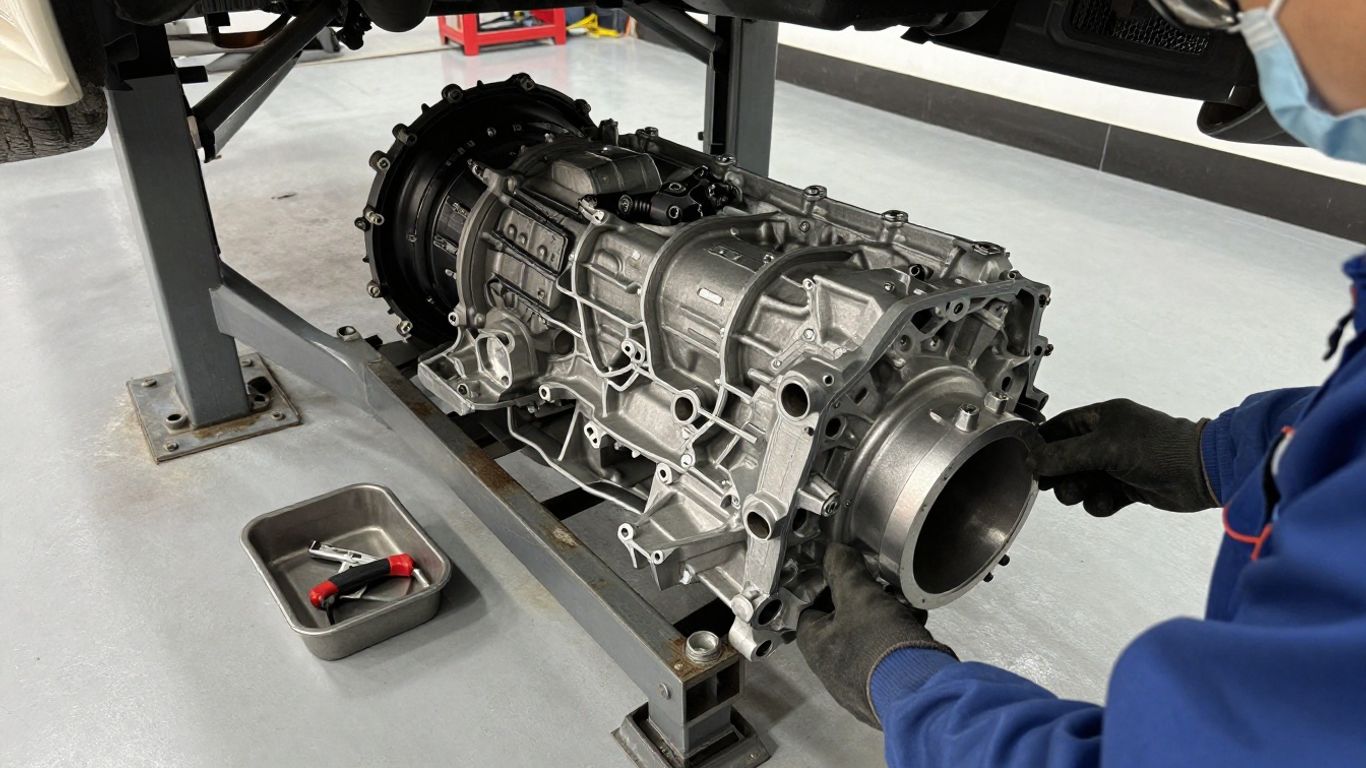
Stop-and-go driving and frequent shifting
Constant acceleration and braking mean frequent gear changes, clutch engagement, and synchronization. The fluid may not reach a stable operating temperature on short trips, and repeated low-speed shifting can create more opportunities for heat and wear than a steady highway journey.
This pattern does not automatically require an immediate change, but it is a reason to inspect the service schedule carefully. If shifts have become less consistent or the vehicle spends most of its time in urban traffic, an earlier inspection can be reasonable.
Towing, heavy loads, and performance driving
Towing and carrying heavy loads increase the torque passing through the transmission. Fast acceleration, repeated high-rpm shifts, track use, and steep climbs can produce additional heat and place greater stress on gears and synchronizers.
A severe-use schedule may call for shorter service intervals in these circumstances. A useful gearbox maintenance guide can help frame the decision, but the vehicle manufacturer’s specification and severe-service instructions should take priority.
Hot, cold, dusty, or wet operating conditions
Ambient conditions affect how quickly the gearbox reaches operating temperature and how well seals and breathers keep contamination out. Extreme heat can accelerate fluid aging, while deep cold makes lubricant thicker during initial operation. Dust, mud, water crossings, and repeated condensation can create additional concerns.
Inspect the gearbox after any event that may have submerged it or damaged a breather. A clean exterior does not prove that the fluid is unaffected, particularly when a seal or housing has been exposed to water or road debris.
High-mileage vehicles and aging components
Older vehicles often have hardened seals, worn bearings, less precise shift mechanisms, or a history of incomplete maintenance. Those issues can lead to leaks or metal debris in the oil, and a fluid change may reveal rather than cause an existing problem.
Treat a high-mileage change as an inspection opportunity. Record what comes out, look for magnetic particles, and pay attention to whether the fluid level is low. The correct response may be a routine refill, a leak repair, or a deeper diagnostic check.
Check whether your gearbox oil needs attention
Some fluid problems are obvious, while others appear first as a small change in shift feel. A gearbox can also be noisy because of a worn bearing, damaged gear, clutch trouble, or a mounting problem rather than the oil itself. Use symptoms as clues, not as a diagnosis by themselves.
Symptoms of worn or contaminated gear oil
Old or contaminated oil may look unusually dark, feel gritty, or have a sharp burnt smell. Shifts may feel notchy, particularly when the gearbox is cold, and a previously smooth change may require more effort. These signs are more meaningful when they appear alongside a missed service, a known leak, or demanding use.
Do not judge fluid condition by color alone. Some approved oils are naturally dark, and a small amount of fine metallic material on a magnetic plug can be normal. Large flakes, glitter-like particles, water contamination, or a strong burnt odor deserve closer attention.
What unusual noises and hard shifting can indicate
Whining, humming, grinding, or rumbling that changes with vehicle speed or gear selection may point to a mechanical issue. Hard shifting can involve the fluid, but it can also come from clutch adjustment, a hydraulic fault, linkage wear, synchronizer damage, or internal wear.
Notice when the noise occurs and whether it changes under acceleration, overrun, or while coasting. That information helps separate a lubrication concern from a component problem and prevents a fluid change from being treated as a guaranteed cure.
Inspecting for leaks around the transmission
Look for wetness or accumulated grime around the input shaft area, output seals, case joints, drain plug, fill plug, and breather. A few drops may indicate a slow seep, while a fresh pool suggests a more urgent loss of lubricant. Check the ground after parking and inspect the underside with the vehicle safely supported.
A low level can damage a gearbox even when shifting still feels normal. If you find an active leak, identify and repair its source rather than repeatedly topping up without investigating.
Checking the fluid level and condition
Most manual gearboxes are checked through a fill plug rather than a convenient dipstick. The vehicle generally needs to be level, and the exact checking procedure depends on the transmission design. Work from the service manual, use safe supports, and avoid relying on a jack alone.
The following observations help organize what you find during an inspection:
| Observation | Possible meaning | Sensible next step |
|---|---|---|
| Level at the opening | Fluid quantity may be correct | Check for leaks and follow the schedule |
| Level noticeably low | Leak or previous underfill | Find the source before refilling |
| Dark or strong-smelling oil | Aging, overheating, or contamination | Confirm specification and consider replacement |
| Fine paste on a magnetic plug | Normal wear may be present | Clean it and monitor the next service |
| Flakes or heavy metallic debris | Possible internal wear | Seek a professional diagnosis |
These observations are not a substitute for a technician’s assessment, but they make the service more informative. For a broader gear oil inspection guide, compare the recommended checking method with the instructions for your specific gearbox.
Choose the correct replacement gear oil
Buying a bottle marked “gear oil” is not enough. Manual transmissions can require different viscosities, additive packages, and friction characteristics, and a fluid that is suitable for a differential may be unsuitable for synchronizers. Check the exact requirement before opening the drain plug.
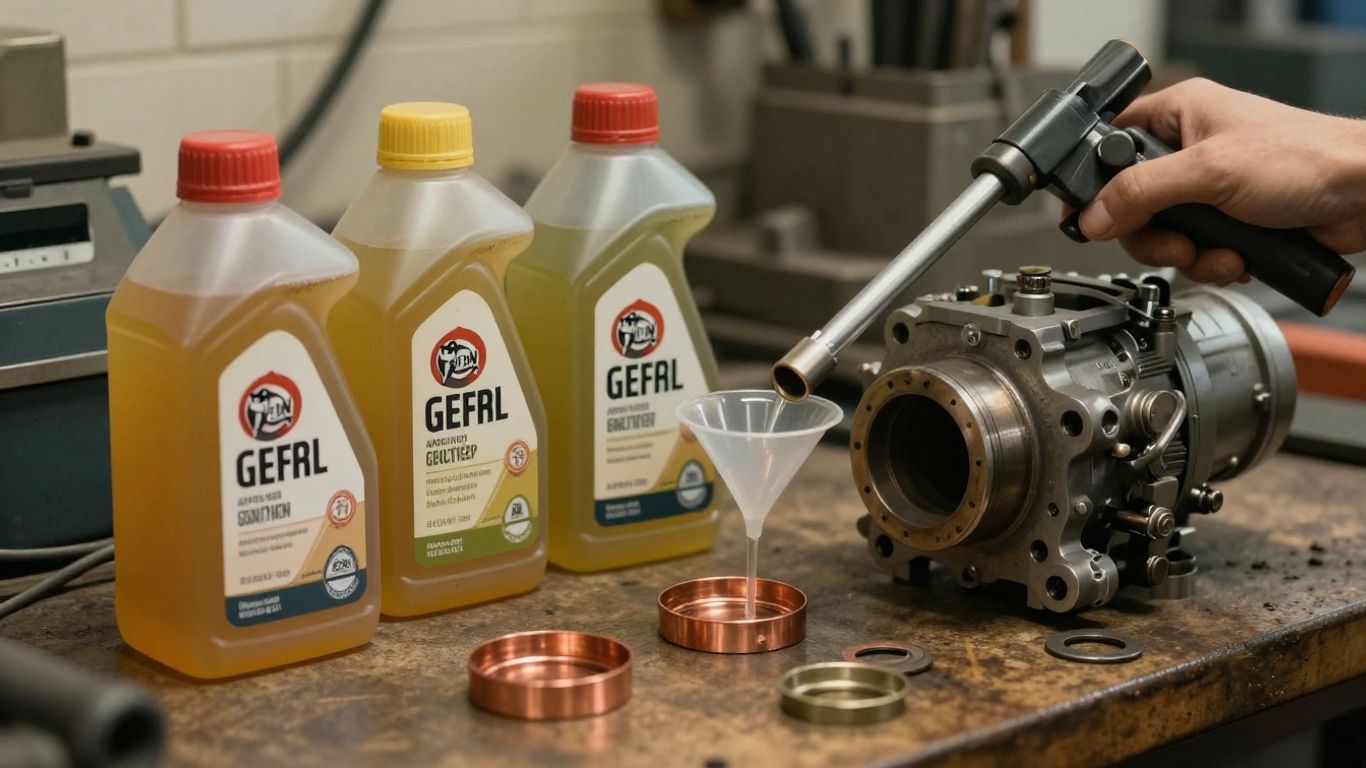
Finding the specification in the owner’s manual
Start with the owner’s manual, workshop manual, or an official service document for the exact vehicle and transmission. Confirm the viscosity, performance classification, fluid type, capacity, and any approval number. A parts counter listing can be helpful, but it should agree with the vehicle documentation.
If the transmission has been replaced or modified, verify the gearbox code rather than assuming the original specification still applies. When information conflicts, pause and ask a qualified technician or the manufacturer’s service department.
Understanding viscosity ratings such as 75W-90
A rating such as 75W-90 describes how the oil flows across temperature ranges under the relevant testing system. The “W” portion relates to cold-temperature performance, while the second number describes the higher-temperature viscosity grade.
The number alone does not establish compatibility. Two oils with the same viscosity rating can have different additive packages and may behave differently with synchronizer materials. Use the complete specification, not just the familiar grade printed on the front of the container.
Comparing GL-4 and GL-5 compatibility
GL-4 and GL-5 are performance classifications, but they are not interchangeable instructions for every manual gearbox. Some transmissions are designed around GL-4 fluid, while certain GL-5 formulations may affect yellow-metal synchronizer materials or shift behavior. Other gearboxes explicitly approve a GL-5 product.
Use exactly the classification named by the manufacturer. If the manual calls for a special manual-transmission fluid or a synchronizer-compatible product, do not replace it with a generic differential oil simply because the viscosity appears similar.
Why additives and fluid type matter
Friction modifiers, extreme-pressure additives, and the base oil can all influence shifting and component protection. Synthetic and mineral fluids may both be acceptable for different applications, but “synthetic” is not automatically better when it lacks the required approval.
Read the technical data sheet when the application is unusual or the packaging is unclear. Correct capacity and clean filling equipment matter as well; overfilling or introducing dirt can create problems that resemble a bad lubricant choice.
Change the manual gearbox oil safely
Changing the oil is usually straightforward when the plugs are accessible and the vehicle is properly supported. The risks are mostly practical: hot oil, an unstable vehicle, a rounded plug, or discovering that the fill plug will not move after the oil has already been drained. Preparation makes the job safer and less stressful.
Preparing the vehicle and required tools
Gather the specified replacement fluid, drain pan, hand pump or suitable fill hose, gloves, eye protection, sockets, replacement sealing washers if required, rags, and a way to clean the plugs. Use wheel chocks and approved jack stands on a firm, level surface, and allow hot components to cool enough for safe handling.
Before beginning, check the fluid capacity and read the entire procedure. A manual transmission fluid change guide can help you think through tools such as a pump and replacement washers, but the vehicle-specific procedure remains the authority.
Locating the fill and drain plugs
Identify both plugs before removing either one. The fill plug is commonly positioned on the side of the housing, while the drain plug sits lower, but layouts vary and some transmissions have additional plugs or unusual access points.
Clean the surrounding area so dirt cannot fall into the case. Test the fill plug with the correct tool while the gearbox is still full; discovering a seized fill plug after draining leaves you with an awkward and potentially unsafe vehicle.
Draining the old oil and inspecting for debris
Place the drain pan beneath the plug, loosen it carefully, and allow the oil to drain fully. Watch for changes in color, smell, and flow, then inspect the plug magnet and sealing washer. Wipe away normal fine sludge and look closely for larger particles or fragments.
A drain plug can tell you more than a quick glance at the fluid. Heavy debris, an unusual metallic sheen, or a sudden change from the last service should prompt diagnosis before fresh oil is installed.
Refilling to the correct level
Reinstall the drain plug with the correct washer and tightening method, then pump in the specified fluid through the fill opening. On many designs, the level is correct when oil reaches the lower edge of the opening while the vehicle is level, but always follow the stated procedure for that gearbox.
Do not estimate the level by bottle count alone. Capacity figures can vary with a completely dry unit, residual oil, or a different case design. Once filled, install the fill plug to the specified torque, clean the housing, and check for seepage after a short drive.
The first check after service should be quiet and deliberate. Confirm that every plug is secure, the shift feel is normal, and no fresh oil appears underneath the vehicle.
Handling leaks, seized plugs, and other complications
Stop if a plug is rounded, cross-threaded, badly corroded, or impossible to access safely. Do not apply uncontrolled heat near seals, wiring, or flammable residue, and do not drive with an unsealed opening. A persistent leak may require a seal, gasket, housing repair, or a closer inspection of the case.
Professional help is also appropriate when the drained oil contains substantial metal, the gearbox makes new noises, or the vehicle cannot be supported level. A careful refusal to improvise is often cheaper than repairing a damaged transmission or an injured technician.
Set a maintenance schedule for your vehicle
A good schedule is specific enough to remember and flexible enough to reflect real use. Write down what fluid was installed, how much was used, and what the old oil looked like. That record turns an uncertain manual gearbox oil change interval into a decision based on history rather than guesswork.
Recording the mileage and date of each change
Note the odometer reading, date, fluid brand and specification, quantity, plug condition, and any leak found during the work. Keep the receipt or a photograph of the product label with the vehicle records. This is especially useful if the vehicle changes owners or the transmission is later repaired.
The next service can then be compared with the previous one. A change in debris, smell, level, or shift quality may be more useful than a generic mileage target.
Aligning fluid changes with other service tasks
Plan the inspection alongside underbody checks, clutch work, driveshaft service, or a scheduled maintenance visit when access overlaps. Combining tasks can reduce duplicated lifting and makes it easier to notice leaks, damaged boots, loose mounts, or corrosion.
Do not postpone the gearbox service indefinitely just because another task is not due. Coordination should make maintenance easier, not turn one overdue item into several.
Adjusting the interval after repairs or severe use
Reset the schedule after a gearbox rebuild, replacement, major leak, water exposure, or period of towing and performance driving. The repair instructions may specify an early fluid check or change to remove assembly debris and confirm that the level remains stable.
A severe-use adjustment should be based on how the vehicle is actually driven. Short trips, mountainous roads, heavy loads, and dusty or wet routes can justify more frequent checks even when annual mileage is low.
Knowing when to seek professional service
Arrange professional service when the fill plug is inaccessible, the vehicle cannot be supported level, the fluid specification is uncertain, or the gearbox shows noise and shifting problems. A technician can inspect the lubricant while considering clutch operation, linkage, mounts, seals, and internal components.
Seek help promptly after a major leak or water crossing. Also stop driving if gears begin jumping out, grinding becomes persistent, or the transmission develops a sudden loud whine; fresh oil should not be used as a reason to postpone diagnosis.
Conclusion
The right manual gearbox oil change interval starts with the manufacturer’s instructions and becomes more useful when adjusted for driving conditions, fluid condition, leaks, and vehicle age. Use the correct specification, inspect what comes out, keep a clear record, and bring in a professional when the job or symptoms exceed a routine service.
Frequently Asked Questions
How often should manual gearbox oil be changed?
There is no single interval for every vehicle. Follow the owner’s manual, then consider an earlier change or inspection if the vehicle tows, carries heavy loads, operates in severe conditions, has an unknown service history, or shows symptoms.
Does manual transmission fluid really wear out?
It can age and become contaminated through heat, mechanical loading, moisture, and normal wear particles. The rate varies by gearbox and use, so fluid condition and the manufacturer’s guidance should be considered together.
Can I use 75W-90 in any manual gearbox?
No. Viscosity is only one part of the requirement. The transmission may need a different grade, classification, or synchronizer-compatible fluid, so confirm the complete specification before purchasing oil.
Is GL-5 oil safe for a manual transmission?
Only when the manufacturer approves it for that gearbox. Some manual transmissions require GL-4 or another specified fluid, and a similar viscosity does not guarantee material compatibility or correct shift behavior.
What does low gearbox oil usually mean?
A low level often points to a leak, incorrect previous filling, or fluid loss through a damaged seal or plug. Find and repair the cause before simply adding oil and returning the vehicle to service.
Can changing the oil fix hard shifting?
It may improve shifting when the fluid is old, incorrect, or low, but hard shifting can also come from clutch, linkage, synchronizer, bearing, or internal transmission problems. Persistent symptoms need diagnosis.
Should I change the oil if the manual says it is lifetime fill?
Not automatically on a short routine schedule. However, a leak, water contamination, gearbox repair, severe use, or unknown history can justify inspection and possibly replacement according to manufacturer or professional advice.