

Key Takeaways
Choosing between a rebuild and a replacement depends on the actual fault, the vehicle’s condition, and the quality of the proposed work.
- Diagnose the gearbox before comparing prices.
- A rebuild can suit a sound casing with limited internal damage.
- Replacement may be sensible when damage is widespread or parts are unavailable.
- Warranty terms, installation costs, and programming can change the value of either option.
- Compare written quotes against the vehicle’s age, condition, and your ownership plans.
Understanding gearbox rebuilds and replacements
A gearbox rebuild and a complete replacement solve the same broad problem in very different ways. One retains the existing housing and restores selected internal components, while the other removes the original unit and fits another gearbox. The better option in a gearbox rebuild vs replacement Australia decision is rarely determined by the cheapest initial figure alone.
What a gearbox rebuild involves
A rebuild normally begins with removing and dismantling the gearbox so its internal condition can be assessed. A specialist may replace worn bearings, seals, clutches, gears, or other damaged parts while retaining suitable components and the original casing. The final scope should be based on inspection rather than a fixed assumption made before the unit is opened.
A careful rebuild also involves cleaning, measuring, checking clearances, and testing the assembled unit. If contamination has travelled through the system or several assemblies are damaged, the quote may change once the internal evidence is available. Ask whether the estimate is fixed, conditional, or subject to approval after dismantling.
How a complete replacement differs
A complete replacement removes the existing gearbox and installs a new, used, reconditioned, or remanufactured unit. This can reduce the time spent rebuilding the original unit, but it does not remove the need for correct identification, fitting, fluids, adaptation, or post-installation testing. The replacement must match the vehicle’s drivetrain and electronic requirements.
Replacement is more attractive when the casing is cracked, internal damage is extensive, or a suitable exchange unit is available with useful warranty coverage. It can also make practical sense when rebuilding the original would require many expensive components. However, a replacement gearbox still needs a documented source and a clear account of its condition.
When a repair may be enough
Not every gearbox fault requires a rebuild or a complete replacement. A leaking seal, damaged linkage, failed sensor, electrical issue, or isolated external component may be repairable without removing and restoring the entire transmission. The diagnosis should distinguish a serviceable peripheral fault from damage inside the gearbox.
That distinction matters because an inexpensive repair can become poor value if the vehicle is driven until a small problem causes secondary damage. Conversely, replacing a complete gearbox for an isolated fault wastes money and may introduce compatibility risks. A written explanation of what has failed is more useful than a recommendation stated without supporting evidence.
Why the vehicle’s gearbox type matters
Manual, automatic, continuously variable, dual-clutch, and electronically controlled gearboxes have different failure patterns and repair procedures. A dual-clutch unit, for example, may involve clutch, hydraulic, electrical, or software-related concerns that need to be separated before a decision is made. The gearbox code, vehicle identification number, service history, and scan data all help establish the correct starting point.
Do not compare quotes until you know that each workshop is discussing the same gearbox specification. Fluid type, clutch setup, control module requirements, and adaptation procedures can vary even between vehicles that look similar. Correct identification protects you from accepting a unit that physically fits but is not properly matched.
Diagnosing the underlying gearbox problem
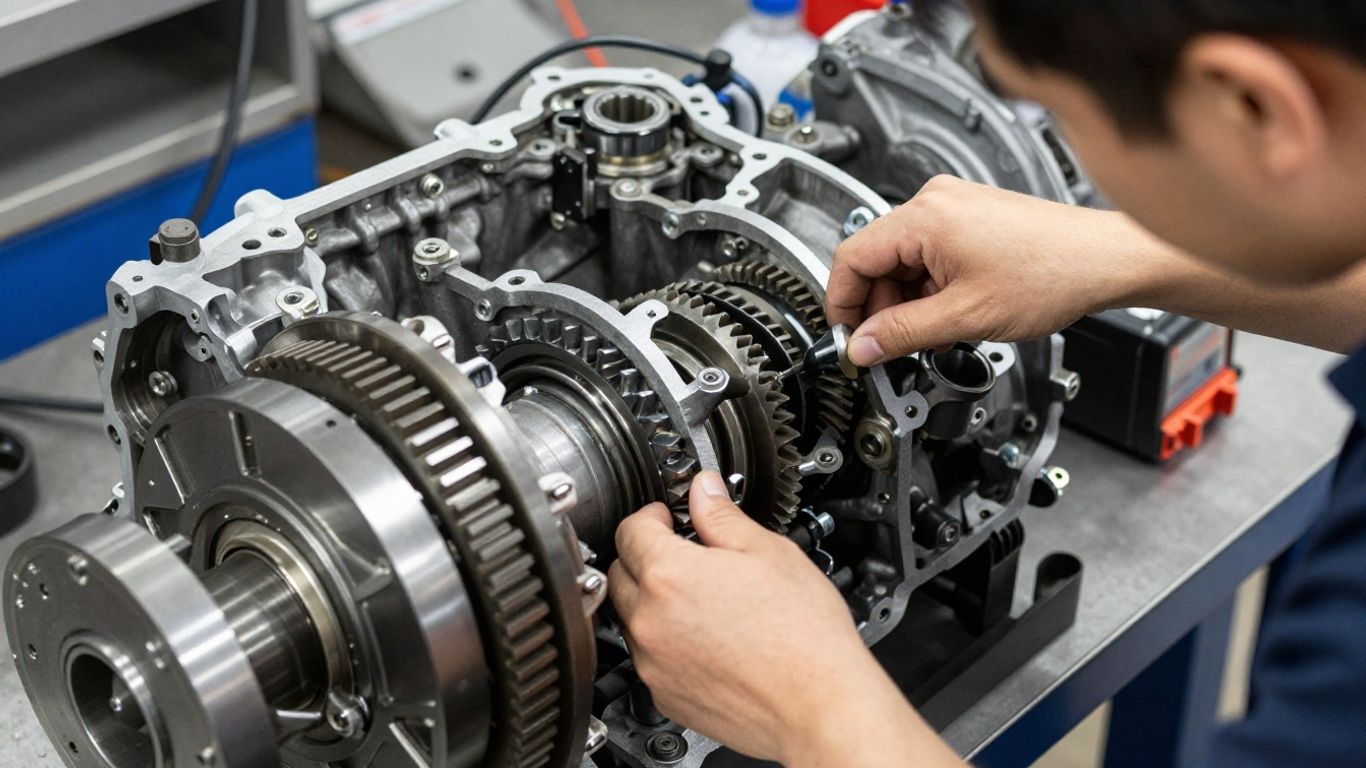
A diagnosis should explain both the symptom and the likely cause. Noisy operation, delayed engagement, slipping, harsh shifts, leaks, or warning lights can come from several different faults, so a quick road test alone may not be enough. The most useful assessment combines the driver’s description with electronic, hydraulic, and mechanical evidence.
Common symptoms of gearbox failure
Symptoms often appear under particular conditions rather than all the time. Note whether the fault occurs when cold, under acceleration, while reversing, during gear changes, or after the vehicle reaches operating temperature. Record unusual sounds, burning smells, fluid marks, vibration, and any warning message before taking the vehicle to a workshop.
Common warning signs include slipping, flare between shifts, difficulty selecting a gear, repeated loss of drive, grinding, and fluid that appears unusually dark or contaminated. These signs do not identify one guaranteed cause, but they help the technician reproduce the problem and decide which tests are appropriate.
Tests used to identify internal damage
A specialist may scan the gearbox control system, review stored and current fault codes, inspect fluid and debris, check electrical supplies, and perform a controlled road test. Pressure testing or clutch and hydraulic measurements may be relevant to some automatic and dual-clutch systems. If external testing cannot isolate the problem, removal and dismantling may be needed.
The value of dismantling is that it allows direct inspection of bearings, shafts, gears, clutch components, seals, and the casing. The DSG diagnosis guide describes this diagnosis-first approach, including the need to consider gearbox identity, scan data, electrical supply, hydraulic and clutch data, and mechanical condition. Those principles are useful even when the vehicle does not have a DSG gearbox.
How diagnosis affects the recommended solution
Diagnosis determines whether the repair can remain targeted or must address widespread damage. A sound casing and limited wear may support a rebuild, while a cracked housing, extensive contamination, or multiple damaged assemblies may make replacement more practical. Parts availability and the condition of any proposed replacement unit also belong in the decision.
A recommendation should therefore state what was tested, what was found, and what remains uncertain. Evidence should lead the decision rather than a workshop habit of rebuilding every unit or replacing every problem gearbox. If the unit has not been opened, ask which conclusions are confirmed and which are provisional.
Why a second opinion can be worthwhile
A second opinion is particularly useful when the proposed repair is expensive, the diagnosis is vague, or the recommended solution changes after a quote is issued. Take the original scan report, photographs, service records, and written estimate where possible. Another workshop may reach the same conclusion, but it should be able to explain why.
The second assessment is not simply a search for the lowest price. It is a way to test whether the fault description, parts list, labour allowance, and warranty terms make sense together. Avoid driving the vehicle unnecessarily while seeking advice if it is slipping badly, losing drive, or making severe mechanical noise.
Comparing gearbox rebuild and replacement costs in Australia
Australian gearbox prices vary widely because vehicles, gearbox designs, parts, and workshop rates vary widely. A rebuild quote may be lower at first but can change after dismantling reveals additional damage. A replacement quote may appear simpler while excluding programming, fluid, cooling-system work, or the disposal of the old unit.
Typical cost factors for a rebuild
The rebuild price depends on how much of the gearbox is reusable and which components need replacement. Parts availability, machining, cleaning, testing, and the time required to dismantle and reassemble the unit all affect the total. Specialist work on a complex electronically controlled gearbox may require different allowances from a conventional manual gearbox.
Ask whether the estimate includes inspection and dismantling, or whether those costs are added separately. Also clarify how the workshop handles newly discovered damage. A quote that explains possible variations is more useful than an attractively low figure that leaves the main risks unstated.
Purchase and installation costs for a replacement
A replacement unit has a purchase cost as well as removal and installation labour. The unit may be new, used, reconditioned, or remanufactured, and each category carries different expectations about condition, testing, and warranty. Freight, core charges, and the return of the old gearbox may also affect the final amount.
A cheaper used unit is not automatically better value if its history is unknown or its warranty is brief. Conversely, a higher-priced unit may be reasonable if it has documented testing, clear inclusions, and support if a problem appears. Ask for the exact gearbox identity, not merely a broad vehicle description.
Labour, parts, fluids, and programming expenses
The headline price can conceal several necessary items. Compare quotes line by line so that each one addresses the same work. The following table provides a practical framework for checking what has and has not been included.
| Cost item | Rebuild | Replacement |
|---|---|---|
| Gearbox removal and refitting | Usually required | Usually required |
| Internal parts or exchange unit | Variable after inspection | Unit price varies by source |
| Fluids, seals, and filters | May be required | Often required during installation |
| Programming or adaptation | Depends on vehicle and gearbox | May be required for compatibility |
| Testing and warranty administration | Should be stated | Should be stated |
After comparing these items, ask about anything described as an allowance or possible extra. A quote is easier to evaluate when it separates confirmed work from costs that depend on inspection, coding, or parts availability.
How warranties change the overall value
Warranty length matters, but the conditions matter just as much. Check whether coverage applies to parts, labour, removal and refitting, towing, and consequential damage. Some warranties require servicing at specified intervals or exclude faults caused by cooling, electrical, clutch, or contamination problems.
A warranty is only useful if the provider can be contacted and the process is clear. Confirm where a claim is assessed, who pays for diagnosis, and whether the replacement or rebuilt unit is covered for the full stated period. The rebuild and replacement comparison offers a useful way to think about cost, turnaround, parts, and warranty together rather than separately.
Evaluating the age and condition of your vehicle
The gearbox cannot be considered in isolation from the vehicle around it. A sound engine, straight body, healthy cooling system, and good suspension can justify investing in a quality gearbox repair. A vehicle with several unrelated faults may not deliver the same value after the gearbox work is complete.
Vehicle value versus repair investment
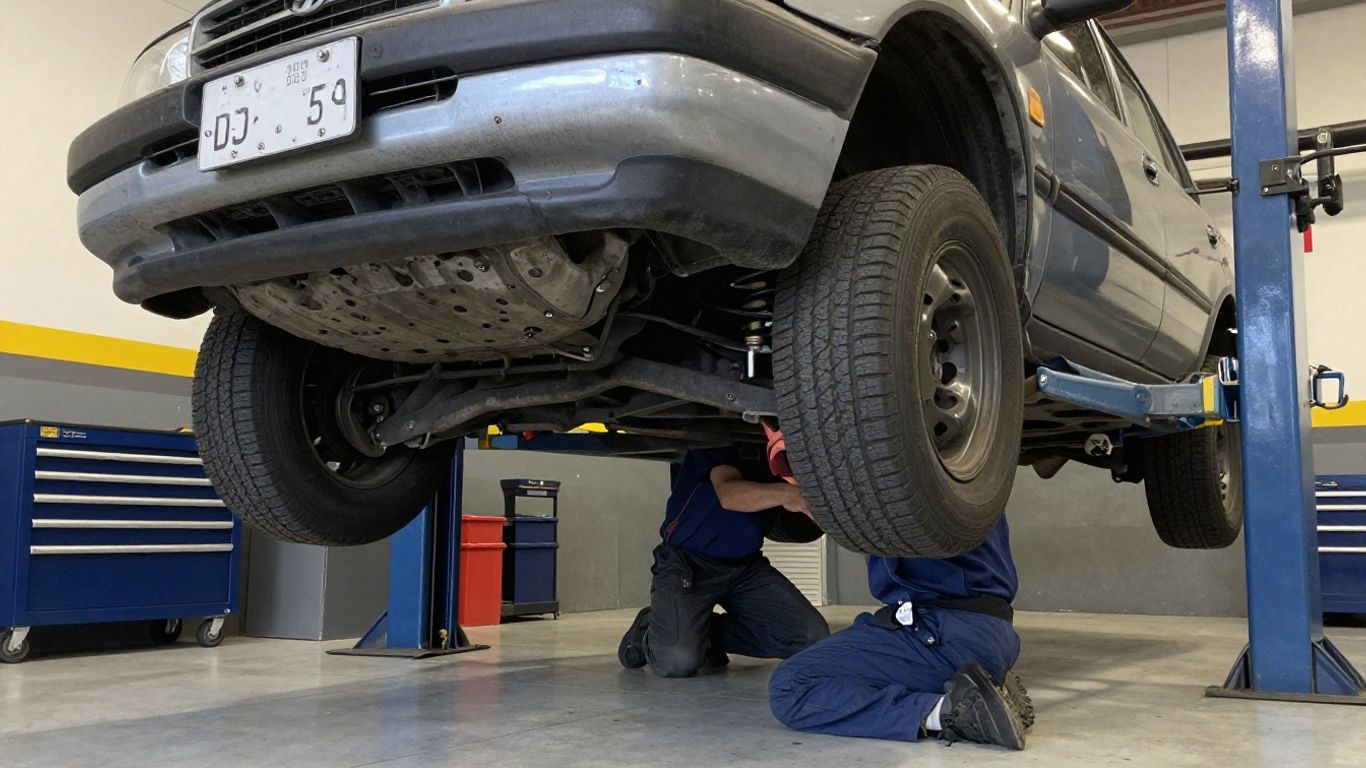
Start with the vehicle’s realistic private-sale or trade value, not an optimistic asking price. Then list the likely gearbox cost alongside immediate repairs and maintenance that are already due. Spending more than the vehicle’s value is not automatically wrong, particularly if replacing the vehicle would cost considerably more, but the decision should be deliberate.
Consider whether the repair restores a dependable car or merely postpones several other expenses. Registration, tyres, brakes, air conditioning, rust, accident damage, and interior condition can change the calculation. A gearbox quote should be assessed as part of the vehicle’s whole financial picture.
Odometer reading and service history
Mileage provides context but does not prove that a gearbox is finished. A high-mileage vehicle with consistent servicing may be a better candidate than a lower-mileage car with neglected fluids and repeated towing or heavy-load use. Look for evidence of scheduled maintenance, previous gearbox work, and the conditions in which the vehicle has operated.
Service records can also help identify whether the correct fluid and procedures were used. If records are incomplete, allow more uncertainty in the decision and ask the specialist what inspections would reduce it. Do not treat a replacement unit with unknown history as automatically low risk simply because its odometer reading is lower.
The condition of the engine and drivetrain
A gearbox repair will not cure an engine misfire, failed engine mount, differential problem, cooling fault, or driveshaft vibration. Those issues can mimic transmission symptoms or place additional stress on the repaired unit. Before approving major work, ask whether the engine and the rest of the drivetrain have been checked.
The vehicle should also be assessed for leaks, overheating, electrical faults, and warning lights outside the gearbox system. If several systems are deteriorating, selling or replacing the vehicle may deserve consideration. A careful workshop should distinguish related faults from the gearbox fault rather than combine them into one unexplained diagnosis.
Future reliability and ownership plans
Your intended ownership period affects the sensible level of investment. Someone planning to keep the vehicle for several years may value a documented rebuild or replacement with strong support, while someone already planning to change vehicles may prefer a limited repair if it is safe and proportionate. Neither choice is universally right.
Think about where the vehicle will be used, how far it will travel, and whether a breakdown would create serious personal or work disruption. A cheaper option with uncertain history may cost more if it fails soon and requires another removal and installation. Reliability is difficult to price, so use the available evidence and warranty terms as practical guides.
Considering new, used, and remanufactured gearboxes
The word “replacement” covers several different products. A new gearbox, a used unit, and a remanufactured or reconditioned unit should not be treated as interchangeable. Their price, remaining life, testing process, and warranty can differ substantially.
Benefits and risks of a new gearbox
A new gearbox generally offers the clearest history and the lowest uncertainty about previous use, but it can be the most expensive option and may not be available for every vehicle. Even a new unit still requires correct installation, fluids, programming where applicable, and attention to the cause of the original failure.
Ask whether “new” refers to the complete gearbox or only selected components. Confirm what the supplier covers and whether the warranty includes labour. The cost may be justified for a newer or valuable vehicle, especially when the rest of the drivetrain is in strong condition.
What to check when buying a used unit
A used gearbox may be suitable when its identity, source, mileage, and testing history are documented. Unknown storage conditions, previous overheating, worn clutches, software differences, and contamination can create risks that are not visible from the outside. The unit should be checked for compatibility before it is ordered.
Before accepting a used gearbox, ask these practical questions:
- What is the exact gearbox code and source vehicle?
- Is the mileage documented or only estimated?
- What inspection or testing has been completed?
- What parts and labour does the warranty cover?
These answers do not guarantee future performance, but they expose gaps in the offer. If the seller cannot explain the unit’s history or warranty, include that uncertainty when comparing it with a rebuild or a better-supported replacement.
How remanufactured gearboxes compare
A remanufactured or reconditioned gearbox is usually prepared for reuse through inspection and replacement of selected components, though the exact process varies between suppliers. Ask what was replaced, what was measured, and whether the unit was tested under operating conditions. The label alone does not tell you the standard of the work.
A good comparison focuses on the documented process, not on terminology. Find out whether the casing, torque converter, clutch assembly, valve body, control unit, and seals are included where relevant. Warranty coverage and the installer’s willingness to support the unit are part of the product’s practical value.
Matching the replacement to your vehicle
Compatibility involves more than engine size or model name. Confirm the gearbox code, build date, drivetrain layout, software or control module requirements, cooler arrangements, and any required adaptation. The vehicle identification number should be checked before the unit is sourced.
A specialist should also investigate why the original gearbox failed. If overheating, contamination, a blocked cooler, electrical damage, or a related drivetrain fault caused the failure, installing another unit without addressing that cause can repeat the problem. Matching the unit and correcting the cause belong in the same plan.
Choosing a qualified Australian gearbox specialist
The workshop’s process often matters as much as the gearbox selected. Look for clear diagnosis, written inclusions, appropriate equipment, and a willingness to explain uncertainty. You should be able to understand what is known, what is proposed, and what will happen if the initial assumption changes.
Questions to ask before approving the work
Ask who will diagnose the vehicle, whether the gearbox will be dismantled, and which parts are included in the quoted price. Find out whether the workshop has experience with your gearbox type and whether testing after installation is included. A confident answer should be specific without pretending that unknown internal damage can be predicted perfectly.
Also ask what caused the failure and what related components will be checked. If the repair involves a replacement unit, request its source, specification, and condition. If it involves a rebuild, ask which components are expected to be reused and how changes to the scope will be approved.
Checking warranty and workmanship coverage
Read the warranty before work begins, not when a problem appears. Check its duration, exclusions, servicing requirements, geographic limits, and treatment of labour. Some coverage may apply to the gearbox itself but not to the cost of removing it again.
The written paperwork should identify the business responsible for the warranty and explain the claim process. Keep invoices, service records, and recommendations about fluid changes. Good documentation helps both sides if a fault needs to be investigated later.
Confirming parts availability and turnaround time
Turnaround depends on whether parts or exchange units are locally available, whether the gearbox must be dismantled, and whether specialist machining or programming is needed. A workshop should be able to give an estimated timeframe while acknowledging factors outside its control. Be cautious of promises that leave no room for inspection findings or freight delays.
Ask when the vehicle will be assessed, when parts will be ordered, and when testing is expected to finish. If the vehicle is essential for work or family responsibilities, discuss a realistic contingency plan. The fastest option is not necessarily the most reliable if it skips diagnosis or uses a poorly documented unit.
Understanding local consumer protections
Australian consumer law can apply to motor vehicle repair services, but the precise remedy depends on the circumstances, the service supplied, and the business involved. Keep the quote, authorisation, invoice, warranty, and all communications. If the work does not match what was agreed, raise the issue promptly and in writing.
Consumer protections do not replace sensible technical checks. They also do not make an unsuitable used gearbox suitable for the vehicle. Clear paperwork remains your best foundation for resolving a disagreement about scope, quality, or promised coverage.
Making the final gearbox decision
By this stage, the choice should be a comparison of evidence rather than a reaction to a frightening repair number. Set the diagnosis, total cost, warranty, vehicle condition, and likely ownership period beside one another. If the information is incomplete, delay approval long enough to clarify the specific uncertainty.
Situations that favour a rebuild
A rebuild may suit a gearbox with a sound casing, limited or identifiable internal wear, and parts that can be sourced at a reasonable cost. It can also be sensible when the vehicle is otherwise in good condition and you plan to keep it. The specialist’s ability to inspect, measure, assemble, and test the unit is central to the result.
Rebuilding is less appealing when the casing is damaged, contamination is widespread, or several major assemblies require replacement. In those cases, the final price may approach or exceed that of a supported replacement. Ask for the likely range and the trigger points that would change the recommendation.
Situations that favour replacement
Replacement may be the stronger option when internal damage is extensive, the housing is compromised, parts are unavailable, or a verified unit can be installed with clearer warranty support. It may also reduce vehicle downtime when a suitable exchange gearbox is ready. Those advantages depend on accurate matching and proper installation.
A replacement is not automatically preferable simply because it is quicker. Investigate the unit’s history, testing, specification, and warranty before accepting the quote. The cause of the original failure must still be addressed so the replacement is not exposed to the same conditions.
When selling or replacing the vehicle may make sense
Selling or replacing the vehicle deserves a realistic assessment when the gearbox is only one of several major faults, the repair cost is close to the vehicle’s dependable value, or you cannot accept the risk of further expenditure. Be honest about the fault and local requirements when selling. A rushed sale can create financial and ethical problems later.
Compare the repair with the cost of a replacement vehicle, including finance, insurance, registration, transfer costs, and likely maintenance. A known vehicle with a properly supported gearbox may still be less expensive than buying another car with hidden problems. The decision should reflect total ownership cost, not just today’s invoice.
How to compare written quotes accurately
Ask each workshop to quote the same outcome and list the same inclusions. Put the key differences into a simple comparison before choosing:
- Confirm the diagnosis and gearbox specification.
- Separate fixed costs from conditional costs.
- Check removal, refitting, fluids, programming, testing, and disposal.
- Compare warranty duration, exclusions, and labour coverage.
- Record the expected turnaround and approval process for extra work.
Once those details are aligned, the most expensive quote may not be excessive and the cheapest may not be complete. Choose the option you can explain clearly: what failed, what will be done, what it should cost, and what support exists if the problem returns.
Conclusion
The right gearbox decision comes from matching the repair method to the confirmed damage and the vehicle’s wider condition. A rebuild can preserve a serviceable gearbox, while a well-matched replacement can be sensible when damage is extensive or support is stronger. Take time to compare complete written quotes, warranty terms, and realistic ownership costs before authorising the work.
Frequently Asked Questions
Is a gearbox rebuild cheaper than a replacement?
A rebuild is often cheaper when many original components remain serviceable, but the price can rise after dismantling reveals additional damage. A replacement may cost more upfront while offering a shorter installation process or clearer warranty coverage.
How long does a gearbox rebuild take?
Timing depends on the gearbox type, workshop workload, parts availability, machining requirements, and testing. A unit that needs extensive inspection or parts ordering will usually take longer than a ready-to-fit replacement.
Does a replacement gearbox come with a warranty?
Some replacement units include warranty coverage, but the length and exclusions vary. Confirm whether the warranty covers parts, labour, removal and refitting, fluids, programming, and any conditions that must be met.
Can a leaking gearbox be repaired without rebuilding it?
Sometimes. A leak may come from a seal, gasket, cooler line, or another external component. The source should be confirmed first because internal wear or contamination may also be present.
Is a used gearbox a safe choice?
A used gearbox can be reasonable when its identity, source, condition, testing, and warranty are documented. Unknown history creates greater risk, particularly if the unit has a common failure or compatibility issue.
Should the gearbox be scanned before it is removed?
Scanning can reveal useful fault information and help distinguish electrical or control issues from mechanical problems. It is only one part of diagnosis and may need to be combined with fluid checks, pressure tests, road testing, or dismantling.
When should I get a second opinion?
Consider a second opinion when the quote is substantial, the diagnosis is unclear, the proposed solution changes, or the warranty terms are difficult to understand. Provide the next workshop with the first assessment and supporting records if possible.