

Key Takeaways
A gearbox noise diagnosis guide starts with careful listening, not guesswork. The sound’s timing, pitch, and relationship to gear changes can help you describe the problem and decide what to do next.
- Compare the sound at different engine and road speeds.
- Note whether it changes with the clutch, gear, temperature, or driving load.
- Treat grinding, worsening noise, leaks, and shifting problems as reasons to seek prompt advice.
- Check fluid only as directed in the vehicle manual; do not crawl under an unsupported vehicle.
- Share a clear record of symptoms with a qualified mechanic.
Confirm the noise is coming from the gearbox
A sound that seems to come from the gearbox can travel through the vehicle and be misleading. Before settling on a cause, observe when it happens and whether it follows engine speed, road speed, or a particular driving action. These comparisons cannot confirm a fault, but they can help you describe it clearly.
Compare the sound at different engine speeds and vehicle speeds
Notice whether the noise changes when the engine revs while the vehicle is stationary, and compare that with what happens as the vehicle moves faster. A sound that follows engine speed may have a different source from one that rises with road speed. Make comparisons only in a safe setting and never rev the engine in a way that could put you or others at risk.
Check whether pressing the clutch changes the noise
In a manual vehicle, listen for a change when you press the clutch while stationary, then note whether the sound returns as you release it. A difference can help a mechanic distinguish among possible causes involving the clutch, gearbox, or nearby parts, but it is not a diagnosis on its own. Avoid repeated tests if the noise is severe or accompanied by difficulty controlling the vehicle.
Rule out wheel bearings, tires, brakes, and engine accessories
Tire noise may change with road surface, while brake noise can appear during braking; a wheel bearing can also produce a hum that changes as the vehicle moves. Engine accessories may make sounds that follow engine speed rather than the selected gear. Consider the whole pattern instead of assuming that a noise heard near the gearbox must come from inside it. A broader transmission noise diagnosis guide can also help frame the process of separating possible sources.
Identify the sound and its likely causes
The character of a noise is useful evidence, though sounds rarely point to one component with certainty. A steady whine, a harsh grind, and an occasional clunk call for different follow-up questions. Describe what you hear in ordinary terms, then note whether it is new, worsening, or tied to a particular operating condition.
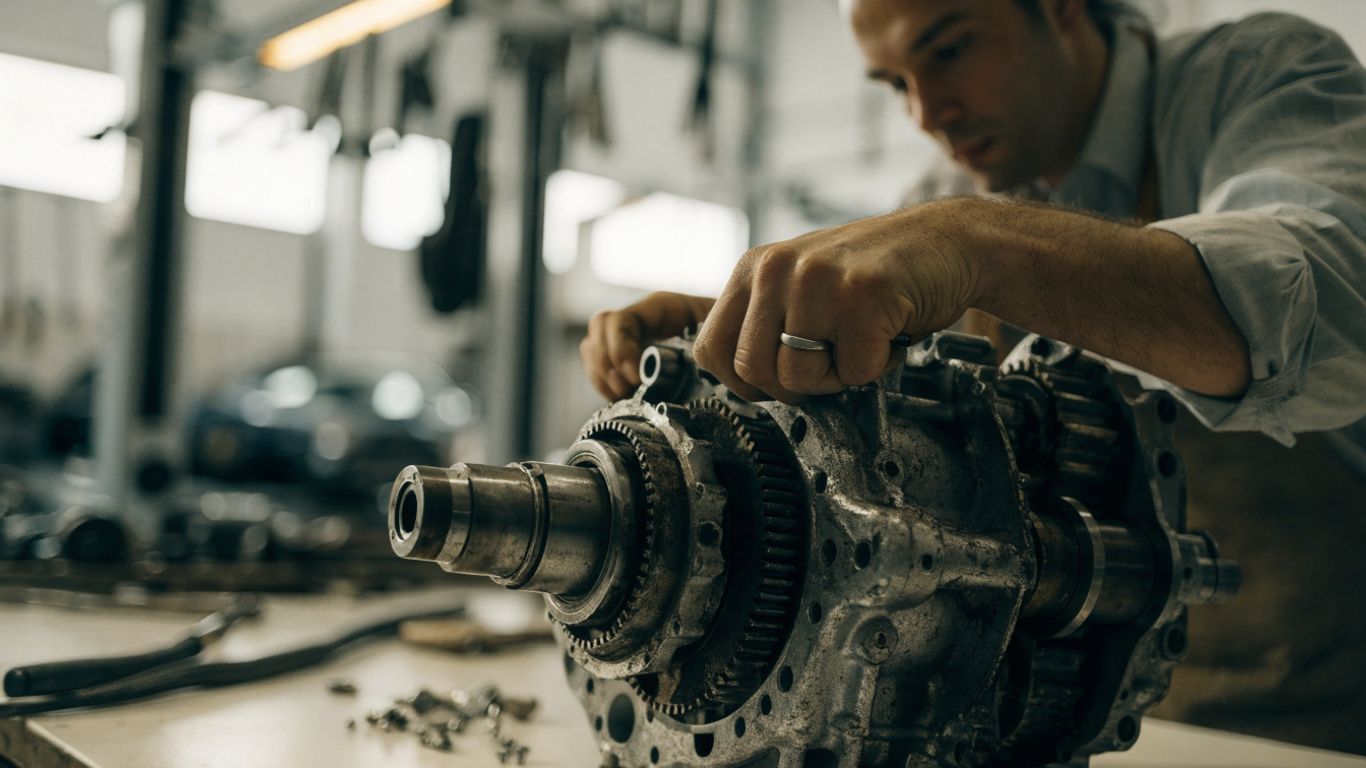
Whining or humming that rises with speed
A whine or hum that grows louder or changes pitch with speed can have several causes, including issues with lubrication, gears, bearings, or other rotating components. Whether it follows engine speed or vehicle speed matters, as does whether it appears under acceleration or remains while coasting. A mild sound alone does not establish a fault, but a new or increasingly loud one deserves attention; this overview of gearbox whining discusses the symptom and possible areas to investigate.
Grinding, crunching, or difficulty engaging a gear
Grinding during a shift or difficulty selecting a gear may involve the clutch, shift mechanism, or internal gearbox components. Do not force a gear into place or keep driving just to see whether the symptom improves. The useful details are when the grinding occurs, whether it affects one gear or several, and whether the clutch pedal feels different. For manual-specific symptoms, see this guide to manual transmission problems.
Clunks, rattles, and other intermittent noises
An occasional clunk may occur as load changes, while a rattle can come from a loose or worn part elsewhere in the vehicle. The moment it happens helps narrow the possibilities: during a shift, when taking up drive, or over rough ground. This quick reference pairs common sound patterns with observations that may help you report them; it is not a substitute for inspection.
| Sound or symptom | Useful observation | What to do next |
|---|---|---|
| Whine or hum | Does pitch follow engine speed or road speed? | Note the condition and whether it is worsening. |
| Grinding during a shift | Does it happen in one gear or several? | Avoid forcing the shift and arrange an inspection. |
| Clunk on load change | Does it occur during acceleration or deceleration? | Record the moment and have related components checked. |
| Rattle | Does it occur on bumps, at idle, or while moving? | Share the circumstances rather than guessing at a source. |
These patterns are clues, not verdicts. More information about noises during gear changes can help you compare symptoms, but a mechanic needs to assess the vehicle before identifying the cause.
Track when the noise occurs
A noise may be absent in one situation and obvious in another, so a brief record is often more useful than trying to remember every detail later. Keep the observations simple: what the vehicle was doing, when the sound began, and what changed it. This gearbox noise diagnosis guide is about collecting those clues safely, not reproducing a concerning sound at any cost.
Listen for differences between gears
Notice whether the noise occurs in every gear or only in one, and whether it appears during the shift or after the gear is engaged. A symptom tied to a single gear can point the inspection in a different direction from one that is present across the range. Make a note of the gear and driving condition rather than repeatedly shifting to provoke the noise.
Note whether the gearbox is cold or warmed up
Record whether the sound appears on the first drive of the day, fades as the vehicle warms, or becomes more noticeable after a longer trip. Temperature-related changes can be useful context, but they do not identify the cause by themselves. If the symptom changes significantly as the vehicle warms, tell the mechanic rather than assuming it is harmless.
Compare noise during acceleration, coasting, and deceleration
The noise may change as the drivetrain moves from acceleration to coasting or deceleration. Keep track of whether it appears under load, continues when you ease off the accelerator, or is linked to braking or a gear change. Those distinctions can help separate possible gearbox issues from other drivetrain or wheel-related sounds.
Carry out safe preliminary checks
A few observations can help you decide what information to pass on, but inspection has limits when a vehicle is hot, raised, or moving. Use the owner’s manual for checks specific to the vehicle, and do not touch hot components or reach beneath a car supported only by a jack. If you are uncertain, leave the check to a professional.

Look for transmission fluid leaks
From a safe position, look for fresh fluid beneath the vehicle or visible wetness around accessible areas. Fluid appearance alone cannot confirm that it came from the transmission; other vehicle fluids can leave marks too. If you see a leak, note its location and size and arrange advice, especially if the vehicle is also shifting poorly or making a new noise.
Check fluid level and condition using the vehicle manual
Transmission fluid checks vary by vehicle, and some require a specific temperature, procedure, or equipment. Follow the manual exactly; do not remove a plug or add fluid based on a guess. If the manual does not describe a safe owner check, leave the level and condition assessment to a qualified mechanic.
Record when the sound happens and how it changes
A concise note is often enough to make the first conversation with a repairer more useful. Record the observations that distinguish one occurrence from another:
- When the sound starts, and whether the vehicle is cold or warm.
- The gear selected and whether you were accelerating, coasting, or decelerating.
- Whether pressing the clutch or braking changes the sound.
- Any leak, warning light, shifting change, or recent change in the noise.
Keep the log factual and avoid writing down a guessed diagnosis as though it were confirmed. If modifications are being considered, a tuning file service is a separate topic from diagnosing a mechanical noise; first establish what the vehicle needs and discuss it with a qualified professional.
Consider transmission type and related components
The same noise can mean different things depending on the vehicle’s transmission and the conditions in which it occurs. Manual and automatic systems have different components and operating behavior, while parts outside the gearbox can transmit sound through the vehicle. That is why identifying the vehicle type and describing the symptom matters before anyone recommends a repair.
Manual gearbox symptoms involving the clutch or synchronizers
In a manual vehicle, a change in noise when pressing the clutch may make clutch-related components relevant to the inspection. Grinding or resistance during a shift may also involve the synchronizers, linkage, or other parts of the system. These are possibilities rather than conclusions; note which gears are affected and whether the clutch pedal feels or behaves differently.
Automatic gearbox noises linked to shifting or fluid condition
In an automatic vehicle, note whether the noise happens during a shift, at a steady speed, or when selecting a drive range. Delayed or rough engagement alongside a new sound is useful information to report. Fluid checks and service procedures vary, so follow the vehicle manual rather than assuming a universal method or fluid type.
Differences between gearbox, transfer case, and differential noise
Vehicles with four-wheel drive or all-wheel drive may have a transfer case as well as differentials, and sounds from these components can be difficult to distinguish from gearbox noise. The location a driver hears is not always the component producing the sound. If it changes with turning, road speed, or drivetrain mode, include that detail when arranging an inspection. For unrelated reading, the library also covers Mr Wet Wall Canberra, hand arthritis, and three-channel silent discos; those subjects are separate from vehicle diagnosis.
Decide how urgently the gearbox needs attention
A changing sound should be taken seriously in context: a faint, steady noise is different from sudden grinding accompanied by a loss of drive. Pay attention to how the vehicle behaves as well as what you hear, and do not continue a test drive if control or safe operation is in question. If you need to plan a repair or replacement, a car gearbox problem guide offers another overview of warning signs to discuss with a professional.
Warning signs that mean you should stop driving
Stop in a safe place and seek assistance if the vehicle loses drive, becomes difficult to control, produces severe grinding or banging, or shows a serious warning light alongside abnormal behavior. A strong burning smell, substantial fluid leak, or rapidly worsening noise is also a reason not to continue driving. Use roadside assistance or towing when continuing could put people or the vehicle at risk.
When to arrange a professional inspection
Arrange an inspection promptly if a new noise persists, gets louder, or appears with slipping, delayed engagement, or difficulty changing gears. Even without an obvious warning sign, a sound that keeps returning deserves assessment rather than repeated attempts to diagnose it on the road. A technician can inspect the vehicle and decide which checks are appropriate.
What details to share with a mechanic
Describe the sound without committing to a component: for example, “a hum that grows with road speed” is more useful than a guessed part name. Share when it occurs, whether it changes with gear or temperature, and any fluid marks, warning lights, or shifting changes. Mention the vehicle’s transmission type and any recent work, and bring your notes so the inspection can start with a clear account.
Conclusion
Gearbox noise is a symptom to investigate, not a diagnosis by itself. Careful, safe observations about sound, speed, temperature, and shifting can help a mechanic find the right place to start, while severe or worsening symptoms call for prompt attention.
Frequently Asked Questions
Can I diagnose a gearbox problem by sound alone?
No. Sound can help describe a symptom, but several components can produce similar noises, and inspection is needed to confirm the cause.
Is a whining gearbox always a sign of failure?
Not necessarily. A new, louder, or changing whine deserves attention, but its cause depends on the vehicle and operating conditions.
Why does the noise change when I press the clutch?
Pressing the clutch changes how parts of a manual drivetrain are engaged. A change in noise is useful evidence to report, but it does not identify one specific component.
Should I keep driving if the gearbox is grinding?
Avoid forcing shifts or continuing to drive if grinding is severe, worsening, or accompanied by loss of drive or control. Stop somewhere safe and seek professional advice.
Can low transmission fluid cause noise?
Fluid condition or level may be relevant, but check procedures differ by vehicle. Follow the owner’s manual and have a professional assess the system if you are unsure.
Why is the noise louder when the vehicle is cold?
Operating conditions can affect how a sound is heard, but a cold-only noise does not establish a cause. Record when it starts and whether it changes as the vehicle warms.
Can a wheel bearing sound like gearbox noise?
Yes, sounds can travel through a vehicle and be difficult to locate from the driver’s seat. Changes with road speed, turning, or road surface can help a mechanic investigate the source.