

Key Takeaways
Differential repair costs vary widely with the fault, vehicle, and parts required. A diagnosis and a clearly itemized estimate are the best starting points.
- Minor leaks may cost far less to fix than worn gears or a full replacement.
- Whining, clunking, vibration, and fluid leaks are reasons to arrange an inspection.
- The right choice between repair, rebuild, and replacement depends on the damage and vehicle.
- Compare written quotes by what they include, not just their total.
- Following the vehicle’s fluid service schedule can help limit avoidable wear.
Typical differential repair costs in Australia
There is no single price for differential work: a seal leak and damaged gears call for very different jobs. As a broad guide, minor repairs may cost a few hundred Australian dollars, while a rebuild or replacement can run into the thousands. The figures below are indicative only, not a quote; the vehicle and workshop inspection determine the actual price.
Minor seal and gasket repairs
A leaking pinion or axle seal, or a worn cover gasket, may be relatively straightforward if the differential has not run low on oil and its internal parts remain in good condition. A rough guide for this kind of repair is around A$200–A$600, though access and the need to replace fluid can change the bill. Ask whether the estimate includes new fluid and a check for damage caused by the leak.
Bearing and gear repairs
Bearing noise or wear can require considerable dismantling, even when only one component needs replacing. Depending on the fault and vehicle, a repair involving bearings may land around A$800–A$1,800; gear damage can push the cost higher. The workshop should explain what has worn and whether related parts need attention, rather than quoting for a component in isolation.
Differential rebuild costs
A rebuild generally involves removing the unit, inspecting its internal parts, replacing worn components, and setting the gears and bearings correctly. A broad Australian estimate is about A$1,500–A$3,500, with specialist or hard-to-source parts potentially taking it beyond that. Drivers researching what a rebuild kit may contain can look at differential rebuild kits, but a kit listing is not a diagnosis or a complete workshop estimate.
Differential replacement costs
Replacement can be the practical choice when damage is extensive or a rebuild is uneconomical. Depending on the vehicle and whether the unit is new, used, or remanufactured, a rough guide might start near A$2,000 and exceed A$8,000 for some applications. These are broad figures, not a guaranteed market rate; confirm whether the quote includes fitting, fluids, and any required calibration.
How labour and parts affect the final bill
The part itself is only one part of the total. Removing and refitting the differential, diagnosing the fault, setting up gears, and replacing fluid all take time, so two vehicles with similar damage can still produce quite different invoices. The repair scope matters as much as the headline hourly rate.
These broad ranges help show why the same repair label can lead to very different totals:
| Type of work | Indicative Australian cost | What may change the price |
|---|---|---|
| Seal or gasket repair | A$200–A$600 | Access, fluid, and leak-related wear |
| Bearing repair | A$800–A$1,800 | Parts, setup, and removal time |
| Differential rebuild | A$1,500–A$3,500 | Internal damage and parts availability |
| Replacement | A$2,000–A$8,000+ | Unit type, vehicle, and installation |
Use these as starting points for questions, not as a substitute for inspection. A quote should state what work is included and what might incur an additional charge.
What your differential does and why it can fail
A differential helps direct engine power to the driven wheels while allowing them to rotate at different speeds, especially through a turn. Its gears and bearings operate under load and depend on the correct lubricant to limit friction and heat. Knowing the basics makes it easier to describe a symptom and understand why the repair may involve more than a single part.
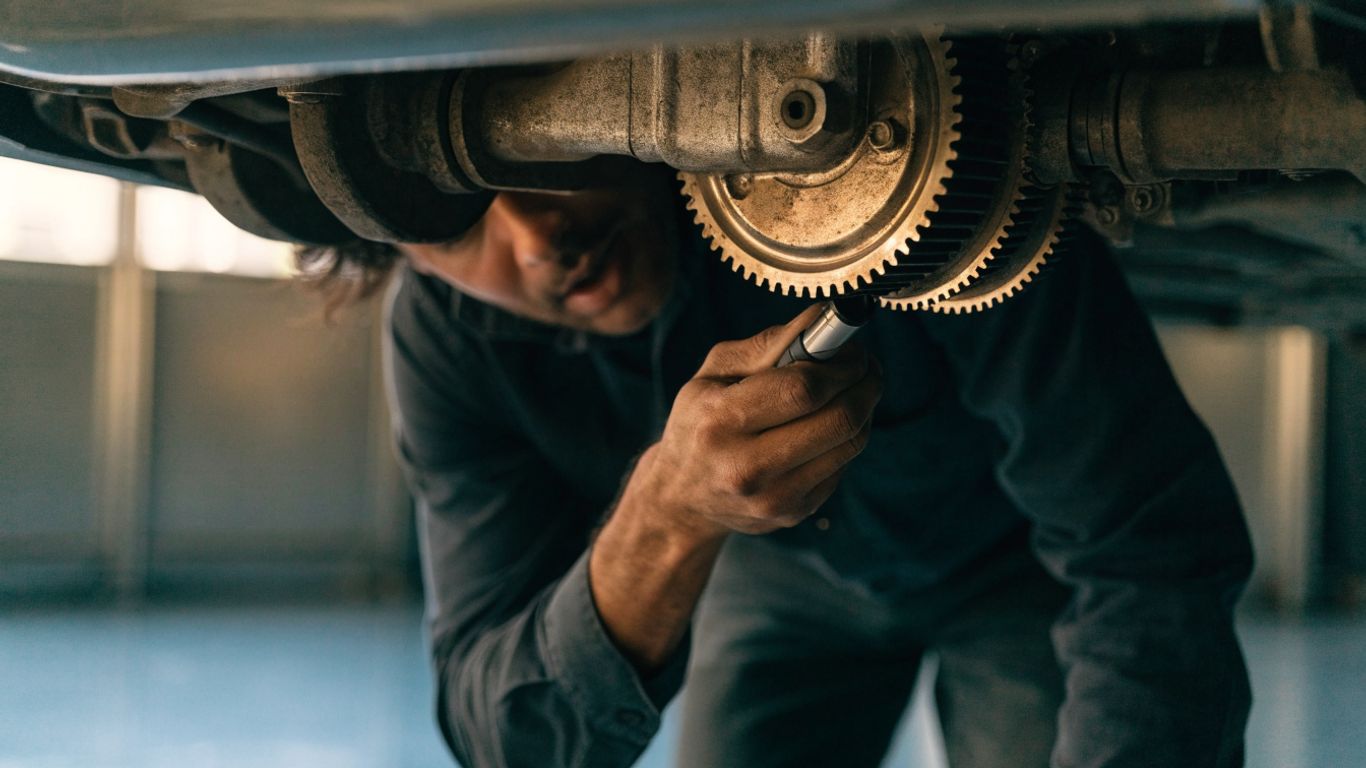
How the differential transfers power to the wheels
The transmission sends turning force through the drivetrain, and the differential distributes it to the wheels on an axle. When a vehicle turns, the outside wheel travels farther than the inside one, so the wheels need to rotate at different speeds. The differential allows that difference while continuing to transmit power.
Common causes of differential damage
Wear can build gradually as bearings and gears operate under repeated load. Low or degraded fluid may leave components with less protection, while a seal leak can allow lubricant to escape. A hard impact or a heavy load can also contribute to damage, though an inspection is needed to establish the cause in a particular vehicle.
How driving conditions affect wear
Frequent towing, carrying heavy loads, stop-start use, and driving on rough or uneven surfaces can put extra demand on drivetrain components. Water crossings may also be a concern if water enters the differential through a breather or compromised seal. Follow the owner’s manual for service requirements that suit the vehicle and its use; intervals are not identical across models.
Differences between front, rear and centre differentials
A front differential is commonly part of the front drivetrain, while rear-wheel-drive vehicles have a differential at the rear axle. Four-wheel-drive and all-wheel-drive systems may also use a centre differential or another arrangement to manage power between axles. The layout affects access, parts, and labour, so it is useful to tell a workshop the exact model and drivetrain when asking about costs.
Warning signs that your differential needs attention
Differential symptoms can overlap with problems elsewhere in the drivetrain, so a noise alone does not confirm the fault. Still, a new whine, repeated clunk, fluid leak, or vibration deserves attention, particularly if it is getting worse. Note when the symptom occurs—during acceleration, turning, or coasting—and share that detail with the mechanic.
Whining, humming or clunking noises
A steady whine or hum that changes with road speed may point to a bearing or gear issue, while a clunk when taking up drive can have several possible causes. Noise that changes under acceleration or when turning is useful diagnostic information, not proof of a particular failed part. Avoid turning up the radio and hoping it goes away; an early inspection may help prevent additional damage.
Vibrations and changes in handling
Vibration through the vehicle can come from a range of causes, including wheels, tires, driveshafts, or drivetrain components. If it appears with new noises or changes in how the vehicle behaves through turns, arrange an assessment rather than assuming the differential is responsible. A mechanic can compare the symptoms and inspect related parts.
Leaking differential fluid
Fluid on the ground near an axle or differential housing may come from a seal, gasket, or another source nearby. The fluid level matters because continued operation with too little lubricant can increase internal wear. A workshop can identify the leak, check the level and condition, and advise whether the vehicle should be driven.
When it is safe to drive to a workshop
A small leak or faint noise does not automatically mean the vehicle must be towed, but worsening sounds, heavy vibration, or difficulty controlling the vehicle should be treated cautiously. Stop somewhere safe if the vehicle becomes difficult to handle or makes a sudden severe noise, and seek roadside advice. If you are unsure, call the workshop before driving; a short trip is not worth risking further damage or safety.
Repair, rebuild or replacement: choosing the right option
The best option depends on what an inspection finds, how widely the damage has spread, and whether suitable parts are available. A repair may be enough for a contained fault, while internal wear can call for a rebuild or a replacement unit. Compare the work proposed and its warranty, not just the name of the option.
When a repair may be enough
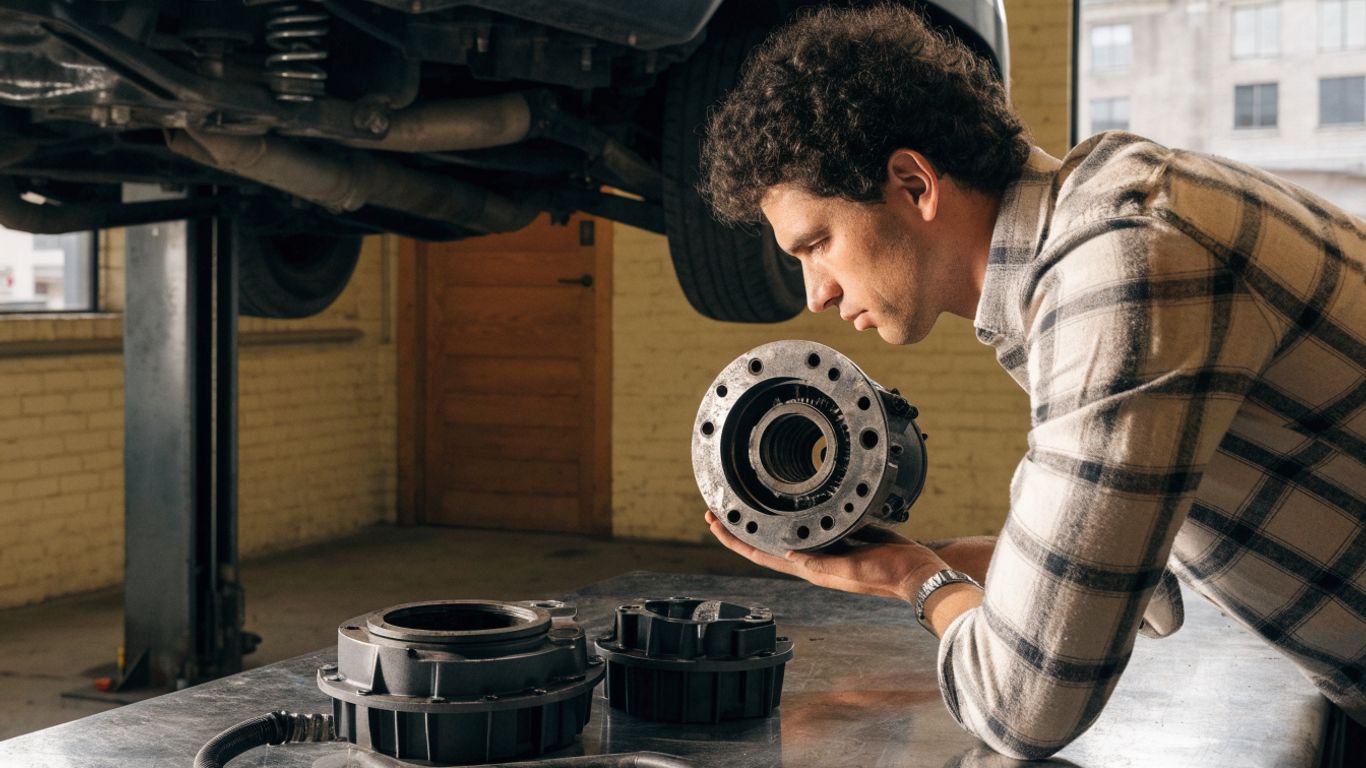
If the issue is limited to a leaking seal or another accessible component, and the gears and bearings are in sound condition, a targeted repair may make sense. The mechanic should confirm that the lubricant level and internal parts have not been affected. Ask what checks support the recommendation and whether a follow-up inspection is advised.
When a rebuild makes sense
A rebuild can be appropriate when the housing is usable and the damaged internal components can be replaced economically. It gives the workshop an opportunity to inspect the unit and renew worn parts, but it requires skilled setup and the right components. The estimate should explain which parts are being replaced and how the rebuilt unit will be tested.
When replacement is the better choice
A replacement unit may be more practical if the differential has extensive damage, key parts are unavailable, or rebuilding would cost close to a suitable replacement. The comparison should account for the unit’s condition, installation, and warranty. A cheaper unit is not necessarily the lower-cost choice if its history or coverage is unclear.
Comparing new, used and remanufactured units
A new unit may be costly or difficult to source; a used unit can cost less but its history and remaining life may be uncertain. A remanufactured unit is typically restored and checked, but exactly what that process covers varies by supplier. Ask for the part’s source, condition, warranty, and whether the quoted price includes fitting and fluids.
What influences the price of differential work
A quote reflects more than the visible fault. Vehicle layout, parts supply, labour time, and the condition of related components can all change what is required. A workshop can give a more useful estimate when it knows the vehicle details and has had a chance to inspect it.
Vehicle make, model and drivetrain
The make, model, year, and drivetrain help identify which differential is fitted and how accessible it is. Front-wheel drive, rear-wheel drive, and four-wheel-drive layouts can require different parts and procedures. If asking about a front differential specifically, front differential costs offer a separate overview; a generic rear-differential range should not be assumed to apply.
Part availability and parts quality
Some parts are readily available, while others may need to be ordered or sourced for a particular model. The type and condition of the replacement part also matter: a new, used, or remanufactured unit can have a different price and warranty. Get the part description in writing so you can compare like with like.
Labour rates and repair complexity
Labour depends on the workshop’s rate and the time needed to remove, repair, and refit the differential. Some jobs require additional disassembly or careful gear setup, which can make the work more involved than the original symptom suggests. Ask whether the quoted labour is fixed or estimated and how the workshop will seek approval if the scope changes.
Additional damage discovered during inspection
Once a differential is opened, the mechanic may find wear beyond the part that first showed symptoms. Related components, contaminated fluid, or damage caused by running with a leak can add work. Ask the workshop to contact you with evidence and a revised estimate before carrying out anything outside the agreed scope.
How to get and compare repair quotes
A clear request helps workshops give estimates that are easier to compare. Share the vehicle details, symptoms, and any inspection findings, then ask for the work and parts to be itemized. Written quotes also give you a record of what was agreed if the diagnosis changes.
Details to provide when requesting a quote
Include the vehicle’s make, model, year, engine, and drivetrain if known. Describe when the noise or vibration occurs, how long it has been happening, and whether you have seen a leak. A photo of a visible fluid spot can be useful, but it does not replace an inspection or confirm the fluid source.
What a written estimate should include
Look for the diagnosis, proposed work, parts, labour, fluids, taxes, and any inspection or removal charges. The quote should make clear whether the price is fixed or provisional and how additional work will be approved. For a second opinion or local service enquiry, mobile differential services describe one way a vehicle may be inspected away from a workshop; confirm directly what is available for your location and vehicle.
Questions to ask about parts and warranties
Before approving work, get clarity on the parts being fitted, their condition, and the coverage if a problem returns. A compact set of questions keeps the conversation focused:
- Is the price based on a confirmed diagnosis or an initial estimate?
- What parts and fluids are included in the quoted amount?
- Will you contact me before doing extra work?
- What warranty applies to the parts and labour?
The answers make it easier to judge the quote beyond its total. Keep the written estimate and final invoice together in case you need to refer back to the agreed scope.
Comparing quotes beyond the headline price
Compare the diagnosis, parts, labour, warranty, and likely exclusions across estimates. A lower total may omit fluid, additional setup, or work that another quote includes, so ask each workshop to explain the difference. A rear replacement overview can provide general context on cost factors, but rear differential replacement costs should not be treated as a quote for your vehicle.
For other consumer services, transparent pricing and terms are useful habits too, though those sources do not establish automotive prices: online doctor visits describe costs for a different service, and Falco Firearms explains its own returns and shipping policies. Likewise, eigenKOR covers Google Business Profile management, Microsoft Dynamics 365 Sales is sales software, and Google reviews offers guidance on review practices. None of these pages is evidence about differential repairs; use vehicle-specific written estimates to make that comparison.
Ways to manage differential repair costs
You cannot always prevent a mechanical fault, but timely attention and routine maintenance may help limit avoidable expense. Follow the service information for your vehicle, and respond to a new symptom before it becomes harder to diagnose. If a large repair is recommended, ask for the evidence and compare the cost with the vehicle’s condition and value.
Addressing symptoms before damage spreads
A small leak or faint new noise can be easier to assess before the differential has operated for long with low fluid or worsening wear. Arrange an inspection when symptoms appear rather than waiting for them to become severe. Early attention does not guarantee a smaller repair, but it gives the workshop a chance to identify the issue before more damage occurs.
Following the vehicle’s fluid service schedule
Check the owner’s manual or service information for the correct fluid type and change interval. Requirements can vary with the vehicle and its use, especially where towing or demanding conditions are involved. Using the specified lubricant and addressing leaks promptly helps keep maintenance appropriate to the drivetrain.
Checking insurance and warranty coverage
Coverage depends on the policy, warranty terms, and the cause of the failure. Before authorizing a major repair, ask the insurer or warranty provider whether an inspection or pre-approval is required and what documentation they need. Keep service records and the workshop’s findings, and do not assume routine wear or a mechanical breakdown is covered.
Weighing repair costs against the vehicle’s value
A substantial repair can prompt a broader decision about how long you plan to keep the vehicle. Consider the written repair estimate alongside the vehicle’s condition, expected use, and any other near-term work—not just its resale value. A lower-cost repair that does not address the underlying damage may not be the economical choice over time.
Conclusion
Differential repair costs in Australia depend on the fault, the vehicle, the parts available, and the work required. Treat broad price ranges as a starting point, arrange an inspection when symptoms arise, and compare written estimates that clearly state what is included. That gives you a firmer basis for deciding whether a repair, rebuild, or replacement is right for your vehicle.
Frequently Asked Questions
How much does differential repair cost in Australia?
A minor seal repair may be a few hundred dollars, while bearing work, a rebuild, or replacement can cost substantially more. The vehicle, parts, and inspection findings determine the actual price.
Can I drive with a leaking differential?
It depends on the leak and fluid level. Contact a workshop for advice, and avoid driving if the vehicle is making severe noises, vibrating heavily, or becoming difficult to control.
What does a whining differential sound mean?
A whine can be associated with bearing or gear wear, but other drivetrain problems can sound similar. A mechanic needs to inspect the vehicle to identify the cause.
Is it cheaper to rebuild or replace a differential?
A rebuild may cost less when the housing is sound and parts are available. Extensive damage or a costly rebuild can make a replacement more practical; compare the full estimates and warranties.
How long does differential repair take?
Time varies with the diagnosis, parts availability, and the amount of dismantling and setup required. Ask the workshop for an estimated timeframe after inspection.
What information should I give a workshop for a quote?
Provide the make, model, year, drivetrain, and a clear description of when symptoms occur. Mention any leaks and share inspection findings if you have them.
Does car insurance cover differential failure?
Coverage depends on the policy and the cause of the damage. Check directly with the insurer or warranty provider before authorizing work, and ask whether pre-approval is needed.