

Key Takeaways
A transfer case problem can show up as a noise, a change in how the vehicle drives, or trouble selecting a 4WD mode. Symptoms point to a need for inspection, but they do not confirm the cause on their own.
- Grinding, vibration, shifting trouble, leaks, or warning lights can all justify a drivetrain inspection.
- Fluid condition, internal wear, damaged seals, and mismatched tyre sizes are possible contributors.
- Note when symptoms occur and have the vehicle checked before assuming the transfer case is at fault.
- Repair may involve a fluid service, component replacement, a rebuild, or a replacement unit.
- Follow the vehicle maker’s fluid specifications and service guidance, especially after demanding driving.
Common signs of transfer case problems
Transfer case problems can affect the way power is delivered through an AWD or 4WD drivetrain. Similar symptoms can also come from a transmission, differential, driveshaft, or control-system fault, so a single noise or warning light is not a diagnosis. Pay attention to what the vehicle does, when it happens, and whether it changes with a selected drive mode.
Grinding, whining, or clunking noises
A grinding or whining sound may come from wear, poor lubrication, or another drivetrain component. A clunk may be more noticeable when changing direction, accelerating, or selecting a mode, but the sound’s location can be hard to judge from the driver’s seat. Record when it occurs and whether it changes with vehicle speed or mode; that detail gives a technician a more useful starting point than the noise description alone.
Shuddering or vibration during acceleration
A shudder under acceleration can be unsettling, particularly if it appears while the vehicle is carrying a load or travelling in 4WD. It can be associated with a transfer case concern, but worn or unbalanced driveline parts and other faults can feel similar. Note the speed, load, road surface, and selected mode when the vibration occurs, and avoid repeatedly accelerating hard to see whether it will happen again.
Difficulty shifting between drive modes
If a 4WD mode will not engage, is difficult to select, or will not disengage, check the vehicle’s operating instructions before concluding that the transfer case has failed. Some systems require a particular speed, gear selection, or vehicle position for a mode change. Persistent trouble after following the correct procedure deserves inspection of the transfer case and its related mechanical or electronic controls. For a further overview of transfer case warning signs, look for patterns such as engagement trouble, fluid leaks, and difficulty remaining in 4WD.
Fluid leaks or warning lights
A fresh oily patch near the transfer case area may indicate a leak, although fluid can travel along nearby components before dripping. A warning light may point to a 4WD-system fault without identifying which part is responsible. Don’t rely on color or location alone to identify the fluid; have the source and level checked, and note any warning message displayed before it disappears.
What causes transfer case failure
A transfer case depends on suitable lubrication, intact components, and a drivetrain setup that operates within the vehicle maker’s specifications. Wear can build gradually, while a leak or a sudden mechanical fault may bring symptoms on quickly. Identifying the underlying cause matters: repairing a damaged part without addressing the reason it failed can leave the vehicle at risk of a repeat problem.
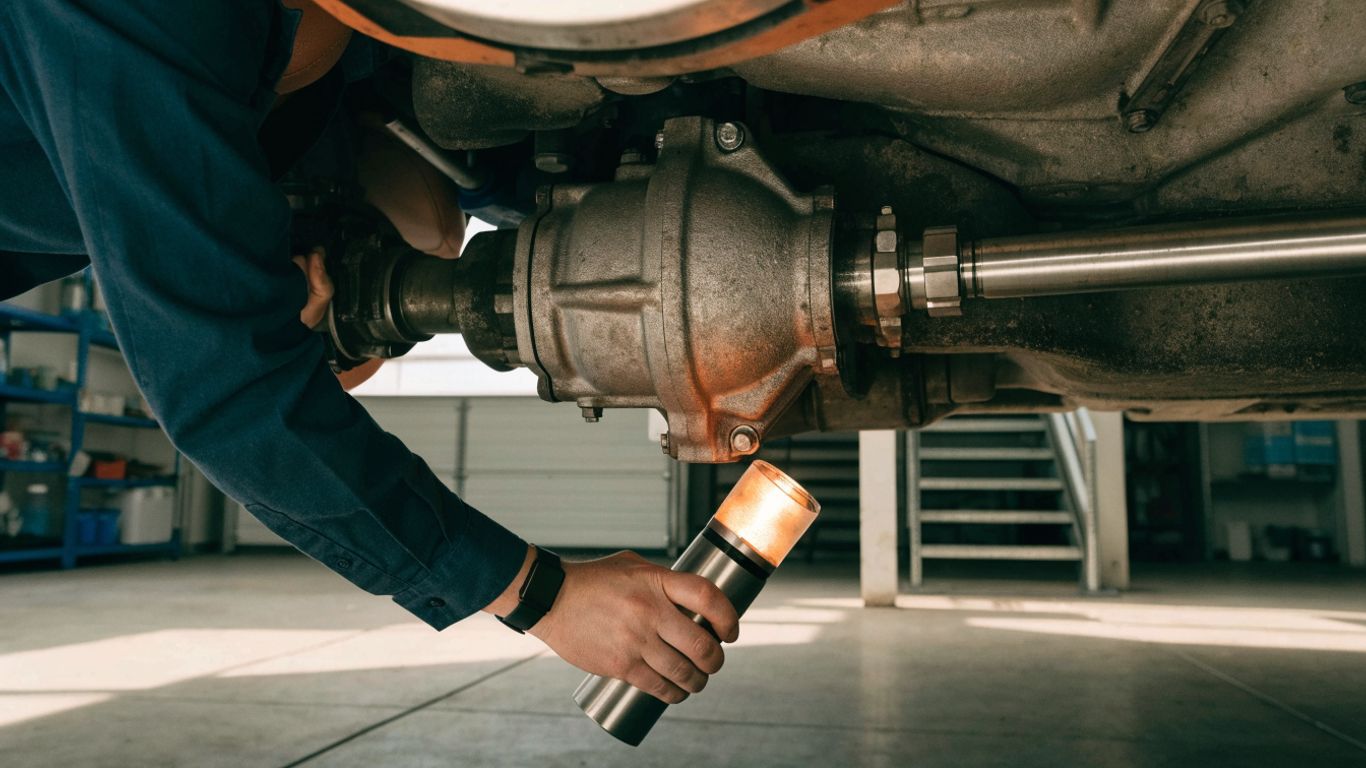
Low or contaminated transfer case fluid
Low fluid can reduce lubrication, while fluid that has deteriorated or become contaminated may not protect components as intended. A leak can be one reason the level falls, so simply topping up may not resolve the problem. The inspection should check both the fluid and its source, with the vehicle maker’s specified fluid used for any service.
The observations below can help explain why fluid checks matter, but they are not a substitute for a workshop inspection.
| Observation | What it may suggest | Sensible next step |
|---|---|---|
| Fluid level below specification | A leak or prior loss of fluid | Find the source and confirm the correct level |
| Unusual debris in the fluid | Possible internal wear or contamination | Ask a technician to inspect the fluid and unit |
| Wetness around a seal or joint | A possible leak path | Clean and recheck, or have the area inspected |
| New noise with a fluid concern | A lubrication or mechanical issue may be present | Limit use and arrange a prompt assessment |
A technician can interpret these clues alongside the vehicle’s history and symptoms. Avoid choosing a fluid based only on its appearance or a general recommendation; the correct specification depends on the vehicle.
Worn gears, bearings, or chains
Gears, bearings, and, in some designs, chains are subject to wear as the transfer case operates. Wear can produce noise, vibration, or problems transferring drive, though similar symptoms may originate elsewhere in the drivetrain. A technician may need to inspect internal components to determine whether an individual part can be replaced or whether damage extends further through the unit.
Damaged seals and housing
Seals can deteriorate or become damaged, allowing fluid to escape. Impact or other damage may also affect the housing, and a leak can lead to a low fluid level if it goes unnoticed. A repair assessment should establish where the fluid is coming from and whether the case itself is intact, rather than treating every visible leak as the same fault.
Tyre size differences and drivetrain strain
Tyres that differ in size or have significantly different wear can rotate at different rates. On some AWD and 4WD systems, that difference may place extra strain on drivetrain components, including the transfer case. Follow the vehicle maker’s guidance on matching tyre sizes, and check tyre condition across the vehicle when replacing a single tyre or changing wheel and tyre fitment.
How to diagnose a transfer case issue
Diagnosis starts with a clear account of the symptoms and a check of the vehicle, not an assumption that the transfer case is at fault. A workshop may inspect fluid, related driveline components, and electronic controls, then use diagnostic equipment where appropriate. The process helps separate a transfer case concern from faults that can produce similar noises or handling changes.
Check when and where symptoms occur
Make a brief note of what the vehicle is doing when the symptom appears: accelerating, turning, travelling steadily, or changing modes. Include whether the vehicle is cold or warm, whether it is carrying a load, and whether the issue began after a particular event. These details can help a technician reproduce the condition without unnecessary testing or repeated hard driving.
Inspect fluid condition and look for leaks
A safe inspection includes checking for visible leaks around the transfer case and related connections. Fluid level and condition should be assessed using the vehicle’s specified procedure; access and checking methods vary by vehicle. If you see a leak, avoid crawling beneath a vehicle that is not properly supported, and have a qualified person inspect it where needed.
Scan for diagnostic trouble codes
A scan tool can reveal stored codes in systems that monitor or control 4WD operation. A code is a clue, not proof that the transfer case itself is defective: wiring, sensors, actuators, or other components may also be involved. The result should be interpreted with the reported symptoms and physical inspection rather than used as a reason to replace a unit immediately.
Distinguish transfer case faults from other drivetrain problems
A technician can compare the conditions that trigger a symptom and inspect other likely sources, including the transmission, differential, driveshafts, and wheel-end components. This is especially useful when the sound seems to travel through the vehicle or a vibration occurs only under certain loads. A diagnosis that identifies the failed part and explains the evidence is more useful than one based on a symptom alone.
Transfer case problems in Australian driving conditions
Australian driving can range from urban commuting to long-distance travel, towing, and remote-area tracks. Those uses do not automatically cause a transfer case fault, but heat, dust, load, and difficult recovery conditions can make preventive checks and early attention worthwhile. Match maintenance decisions to the vehicle’s instructions and the way it is actually driven.

Effects of heat, dust, and remote travel
High ambient temperatures and dusty routes can be demanding for a vehicle, particularly when a trip involves sustained load or slow travel. Remote driving also means a minor symptom can become harder to address if it is ignored far from a workshop. Before a long trip, check for visible leaks and other obvious changes, and make sure routine servicing is up to date.
Extra strain from towing and off-road driving
Towing and off-road use can place greater demands on a drivetrain than light, steady driving. Use the vehicle’s stated towing limits and follow its instructions for selecting 4WD modes and operating on difficult terrain. If a new vibration, noise, or shifting issue appears during a trip, stop somewhere safe and assess the situation rather than pushing on to test the component.
Why matching tyre sizes matters on 4WD vehicles
A consistent set of tyres helps the wheels rotate at compatible rates. Differences in size, pressure, or wear can affect how a 4WD drivetrain operates, so check all four tyres when inspecting a vehicle that has developed a new driveline symptom. Replacement choices should follow the manufacturer’s fitment guidance, including any requirements for matching tyres across axles.
Maintenance considerations for popular Australian 4WDs
Service needs vary by vehicle, model year, and use, so there is no single interval or fluid specification that applies to every 4WD sold in Australia. Use the owner’s manual or service information for the exact vehicle, and ask a qualified technician how frequent towing or off-road work affects its maintenance plan. Keep records of servicing and repairs so a developing issue can be considered alongside the vehicle’s history.
Repair and replacement options
The right repair depends on what inspection finds and how much of the unit is affected. A leak or fluid-service need is different from internal damage, and a transfer case should not be replaced solely because a symptom sounds familiar. Ask the repairer to explain the diagnosis, the proposed work, and what other checks are needed before approving a major repair.
Fluid service for early-stage problems
If the fluid is due for service and there is no evidence of serious internal damage, a service using the specified fluid may form part of the repair. It will not repair worn gears, damaged bearings, or a significant leak by itself. The workshop should identify why the fluid needs attention and confirm whether a separate repair is needed.
Replacing seals, bearings, or other components
Where the fault is isolated and the unit is otherwise serviceable, a technician may be able to replace a seal, bearing, or other damaged component. The final scope depends on inspection and the construction of the particular transfer case. Ask whether the quoted work includes checking for related damage and verifying the repair after reassembly.
Rebuilding versus replacing the transfer case
A rebuild may be considered when the case can be repaired and the required parts are available. Replacing the unit may be more appropriate when damage is extensive or a suitable rebuild is not practical. These choices depend on the vehicle, parts availability, condition, and total cost; ask for the reasoning behind the recommendation rather than treating either option as automatically better.
Choosing a qualified Australian drivetrain specialist
Look for a repairer who can explain the diagnosis and has experience with the vehicle’s drivetrain type. Ask what evidence supports the proposed repair, whether parts are new or reconditioned, and what warranty applies to the work. Matching a specialist’s expertise to the problem is useful in any field; guidance on selecting an orthopedic doctor is one example of how qualifications and fit for the specific need can matter.
Repair costs and preventing repeat failures
The cost of a transfer case repair can vary substantially because the fault, parts, labor, vehicle, and access differ. An early diagnosis may leave more options than continued driving after a serious symptom develops, but no outcome or price can be promised without inspection. A clear estimate should describe the work and parts involved so you can compare options on a like-for-like basis.
Factors that affect repair costs in Australia
Costs can reflect whether the issue needs fluid service, a seal or component repair, a rebuild, or a replacement unit. Parts availability, vehicle design, labor time, and any related damage also affect the estimate. When comparing options, ask what the price includes and whether diagnosis, fluids, and post-repair checks are itemized; decisions in other areas, such as comparing Seine cruises, also depend on weighing the factors that matter for that choice.
When to stop driving and arrange an inspection
Stop driving when a severe grinding noise, major leak, loss of drive, or other change makes the vehicle unsafe or risks further damage. If a warning light appears, follow the vehicle’s instructions and arrange an inspection rather than repeatedly selecting modes to see if the fault clears. When in doubt, ask a qualified repairer whether the vehicle should be moved or transported.
Service intervals and fluid specifications
Use the service interval and fluid specification set out for the exact vehicle, rather than a generic schedule or advice for a different model. Driving conditions may affect maintenance needs, so discuss frequent towing, dusty roads, or off-road use with a qualified technician. Keep receipts and service records; they help confirm what fluid was used and when the system was last checked.
Driving and maintenance habits that reduce wear
Regular checks and careful use can help catch issues before they become harder to assess. Helpful habits include:
- Follow the vehicle maker’s instructions when selecting and leaving 4WD modes.
- Check tyre size, pressure, and wear across the vehicle.
- Look for new fluid marks and mention them during servicing.
- Investigate unfamiliar noise or vibration promptly instead of repeatedly testing it.
These steps do not prevent every failure, but they can make changes easier to spot and help avoid avoidable drivetrain strain. Keep repair invoices and notes together, much as people retain records when reviewing garage door cover or managing domain services; clear documentation makes it easier to trace what has been inspected or changed. The same attention to specifications and condition applies to unrelated purchases such as automatic watches, though vehicle servicing should always follow the maker’s own requirements.
Conclusion
Transfer case symptoms deserve attention, but they are not enough on their own to identify the faulty part. Note when the problem occurs, check for obvious changes such as a leak, and arrange a proper diagnosis before choosing between servicing, repair, rebuilding, or replacement. Following vehicle-specific fluid and maintenance guidance—and addressing new symptoms early—can help you make a more informed repair decision.
Frequently Asked Questions
Can I keep driving with a noisy transfer case?
A new or worsening noise should be checked, especially if it comes with vibration, a leak, warning lights, or trouble selecting a drive mode. If the vehicle feels unsafe or loses drive, stop somewhere safe and arrange professional advice.
What are common signs of transfer case trouble?
Possible signs include grinding, whining or clunking, vibration during acceleration, difficulty changing drive modes, fluid leaks, and warning lights. Each can have causes outside the transfer case, so inspection is needed.
Can low transfer case fluid cause damage?
Low fluid can reduce lubrication and may contribute to wear. The reason for the low level should be identified, since a leak may need repair as well as the correct fluid service.
Does a warning light mean the transfer case has failed?
No. A warning light can indicate a problem elsewhere in the 4WD control system, including a sensor, wiring, or actuator issue. A diagnostic scan and physical checks help identify the cause.
Do all four tyres need to match on a 4WD?
Follow the vehicle maker’s fitment requirements. Differences in tyre size or wear can affect how some 4WD and AWD systems operate, so check the full set when replacing tyres or investigating a drivetrain symptom.
Is it better to rebuild or replace a transfer case?
Neither option is best in every situation. The decision depends on the extent of damage, parts availability, vehicle details, and the overall estimate; ask the repairer to explain the basis for the recommendation.
How often should transfer case fluid be changed?
There is no universal interval for every vehicle. Check the service information for the exact model and ask a qualified technician whether towing, off-road use, or other demanding conditions change the maintenance plan.