

Key Takeaways
Gearbox issues in Australian cars can begin with a small change in sound or shift quality, so early attention matters. The right diagnosis helps separate a serviceable fault from damage that requires specialist repair.
- Listen for new noises, slipping, delayed engagement, or harsh gear changes.
- Check transmission fluid only as described in the vehicle’s service information.
- Heat, towing, stop-start traffic, wear, and electronic faults can all contribute to failure.
- A professional diagnosis should combine inspection, fault-code reading, and a road test.
- Compare repair, replacement, and vehicle-value options before approving major work.
Understanding gearbox issues in Australian cars
The gearbox transfers engine power to the driven wheels while allowing the car to move away, cruise, reverse, and climb under different loads. Problems can develop gradually or appear suddenly after a component fails. Understanding the type of transmission fitted to the vehicle makes the symptoms easier to interpret. It also helps drivers explain the problem clearly when seeking repairs or parts.
Manual, automatic, and continuously variable transmissions
Manual transmissions rely on a clutch and driver-selected gears, while conventional automatics use fluid pressure, clutches, bands, and planetary gearsets to change ratio. Continuously variable transmissions use a different arrangement to vary the ratio rather than selecting fixed gears in the usual way. Dual-clutch systems also have their own clutch packs and control strategies. A symptom that is normal for one design may indicate a fault in another.
Why driving conditions affect gearbox wear
Australian vehicles may spend time in congested city traffic, on steep suburban roads, on corrugated regional routes, or towing in hot weather. Frequent stopping and starting increases heat and clutch activity, while towing adds load to the transmission and cooling system. Dust, water crossings, heavy payloads, and long distances between service locations can add practical challenges. These conditions do not guarantee failure, but they can expose weaknesses sooner.
Common gearbox designs found in Australian vehicles
Vehicles sold in Australia include manual, torque-converter automatic, continuously variable, automated manual, and dual-clutch transmissions. Their fluids, service intervals, diagnostic procedures, and repair methods differ. Even two vehicles with similar symptoms may need entirely different tests because their control systems and internal components are not the same. The vehicle identification number and transmission code are useful when sourcing a replacement component.
How gearbox problems differ from engine problems
An engine fault often changes idle quality, acceleration, exhaust behaviour, or starting performance. A gearbox fault is more likely to affect gear selection, engagement, shift timing, vehicle speed relative to engine revs, or noises that change with the selected ratio. The two systems still interact, so a warning light or poor acceleration can be misleading. A careful diagnosis should avoid assuming that every drivability complaint comes from the engine.
Recognizing the warning signs
Early warning signs are often easier to notice during ordinary driving than during a workshop inspection. Pay attention to when the symptom happens: on start-up, during acceleration, while coasting, or when selecting reverse. Record whether the vehicle is cold or hot and whether the problem affects one gear or several. These details can shorten the diagnostic process.
Grinding, whining, clunking, and humming noises
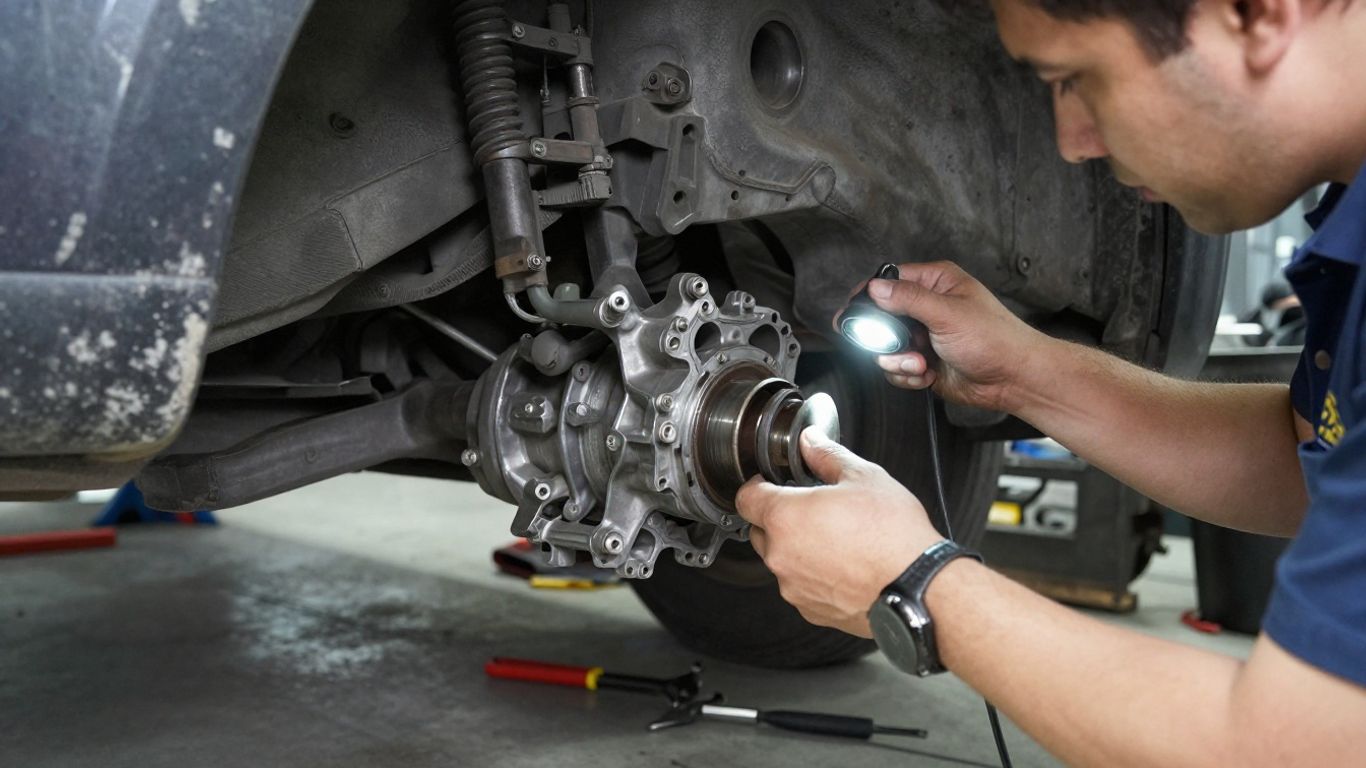
Grinding during a shift can point to clutch operation, synchroniser wear, or damaged gear teeth in a manual vehicle. Whining, humming, or rattling may relate to bearings, gears, fluid condition, or driveline components. A clunk when selecting a gear can also come from mounts, couplings, or other parts outside the gearbox itself. A useful guide to manual gearbox noises can help drivers describe the sound, but it cannot replace an inspection.
Delayed engagement, slipping, and harsh shifting
Delayed engagement occurs when there is a noticeable pause before drive or reverse takes effect. Slipping may feel like engine revs rise without a matching increase in road speed, while harsh shifting can feel like a thump or surge. Low fluid, worn friction material, hydraulic faults, electronic controls, and internal damage are all possible explanations. Continued driving while the symptom worsens can increase the eventual repair scope.
Difficulty selecting or staying in gear
A manual car that resists selection, grinds repeatedly, or jumps out of gear may have clutch, linkage, selector, synchroniser, or internal gear problems. In an automatic, failure to select a range may involve fluid pressure, a solenoid, a sensor, or a control fault. Do not force the selector or keep driving a vehicle that repeatedly drops out of gear. Loss of drive in traffic can create a safety risk as well as mechanical damage.
Fluid leaks, burning smells, and dashboard warnings
Transmission fluid on the ground, a hot or burnt smell, or a new warning message deserves prompt attention. Fluid colour and smell can provide clues, but they are not enough to identify the failed part. A flashing or persistent warning light may reflect an electronic fault rather than a mechanical failure, so diagnostic information matters. Prompt assessment can limit damage when a small leak or control problem is found early.
Common causes of gearbox failure
Gearbox failure rarely has one universal cause. Wear, heat, fluid problems, electrical faults, driving conditions, and neglected maintenance can overlap. Some faults are relatively simple to correct, while others indicate damage deep inside the transmission. The repair decision should follow evidence rather than the symptom alone.
Low, contaminated, or incorrect transmission fluid
Transmission fluid lubricates, cools, cleans, and, in many automatic designs, helps transmit hydraulic pressure. A low level can result from a leak, while contamination may come from wear particles, water, clutch material, or overheating. Using the wrong fluid can affect friction characteristics and control operation. Fluid checks and servicing must follow the manufacturer’s procedure because some transmissions require a specific temperature, level position, or scan-tool process.
Worn clutches, synchros, bands, and internal gears
Friction components gradually wear, especially when a vehicle is used heavily in traffic, for towing, or with repeated clutch abuse. Manual synchronisers can lose their ability to match speeds smoothly, while automatic clutch packs and bands can become worn or glazed. Bearings and gear teeth may also deteriorate, producing noise and metal debris. If internal wear is confirmed, replacing fluid alone will not restore the damaged parts.
Faulty sensors, solenoids, and transmission control modules
Modern transmissions use sensors and electronically controlled solenoids to monitor speed, pressure, temperature, and selector position. A failed sensor, damaged wiring connection, sticking solenoid, or control-module fault can cause harsh shifts, limp mode, or a refusal to select a range. These symptoms can resemble mechanical damage. Testing the electrical system and reading relevant fault codes can prevent unnecessary disassembly.
Overheating, towing, and stop-start driving
Heat is a major concern when a transmission is working hard for long periods. Towing, steep terrain, overloaded vehicles, and slow traffic can all increase operating temperature. The cooling system, fluid condition, and towing setup therefore deserve attention when symptoms appear after heavy use. Drivers should use the vehicle’s specified towing limits and follow any instructions about auxiliary cooling, gear selection, or service intervals.
Diagnosing a suspected gearbox problem
Diagnosis should begin with evidence, not a guess about the most expensive failure. A technician needs to know the vehicle’s history, recent servicing, load conditions, warning messages, and exact driving symptoms. The inspection may identify a simple leak or adjustment issue, but it may also show that the gearbox is only one part of a broader driveline problem. Keep a note of when the fault occurs before booking the vehicle in.
Initial checks drivers can perform safely
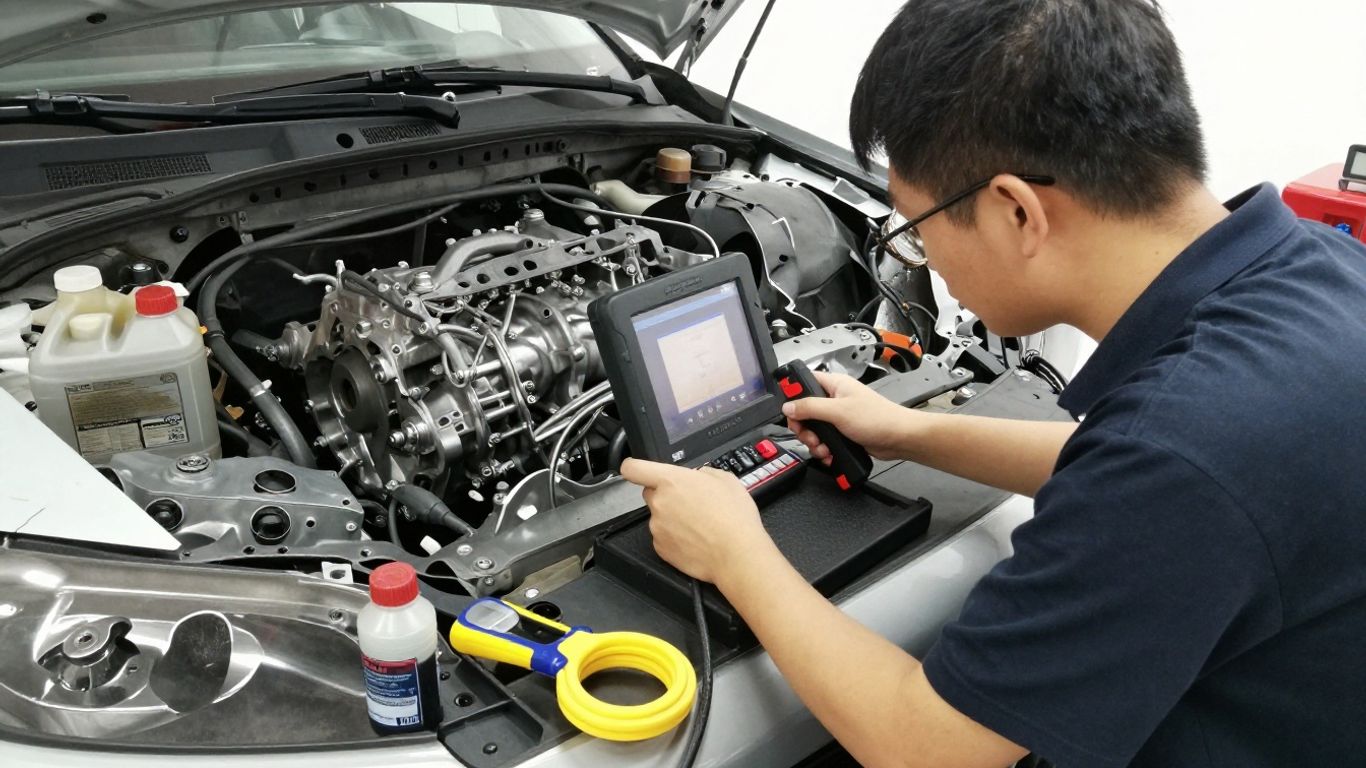
Drivers can look for fresh fluid beneath the vehicle, check whether warning lights remain illuminated, and note unusual smells or changes in engagement. They should not crawl under an unsupported vehicle, remove sealed components, or open a hot transmission. The owner’s manual should guide any fluid-level check because procedures vary widely. If the car is losing drive, making severe noises, or leaking heavily, arranging a tow is safer than testing it on the road.
What a professional inspection should include
A proper inspection normally considers fluid condition, leaks, mounts, linkages, driveshafts, axles, wiring, cooling components, and related engine controls. The technician may inspect the transmission pan or drain fluid where appropriate, but not every design is serviced in the same way. A road test can reproduce the symptom under controlled conditions. The findings should be explained in plain language, with urgent risks separated from items that can be monitored.
Reading fault codes and conducting a road test
Fault codes can identify a circuit, sensor, pressure condition, or control strategy that needs further testing. They do not automatically prove that the named component is defective. A road test helps compare engine speed, vehicle speed, shift timing, temperature, and the driver’s description. General information about common gearbox problems can help with terminology, but diagnosis still depends on the individual vehicle.
When a gearbox needs specialist testing
Specialist testing is appropriate when the transmission slips under load, repeatedly enters limp mode, produces metal debris, or has a fault that basic checks cannot explain. It may involve pressure testing, live-data analysis, clutch adaptation checks, electrical testing, or removal for internal inspection. Complex automatic, continuously variable, and dual-clutch systems can be particularly sensitive to incorrect procedures. Ask what test supports the proposed repair before authorising major work.
Choosing the right repair option
The best repair is the smallest reliable repair that addresses the confirmed cause, not simply the cheapest initial quote. A fluid service may be appropriate for a neglected but otherwise healthy unit, while advanced wear may justify rebuilding or replacement. The vehicle’s age, condition, mileage, parts availability, and intended use all affect the decision. Obtain a written explanation of what is known, what is assumed, and what could be discovered after disassembly.
Fluid service, adjustment, and software updates
A fluid and filter service, linkage adjustment, leak repair, or software update may resolve a problem when the internal components remain sound. The correct procedure and fluid specification are essential. Software updates can address documented control behaviour, but they cannot repair worn clutches, gears, or bearings. If a service is recommended, ask what evidence supports it and whether the technician will inspect the old fluid for contamination.
Replacing individual gearbox components
Some faults can be repaired by replacing a sensor, solenoid, mount, seal, clutch component, synchroniser, or other individual part. This approach can preserve a serviceable transmission and avoid unnecessary replacement. It is less suitable when several internal components are worn or when the original failure has contaminated the unit. Parts quality and compatibility matter, particularly when choosing between used, genuine, and aftermarket components.
Rebuilding versus replacing the transmission
A rebuild involves disassembly, inspection, replacement of worn parts, and testing before refitting. A replacement unit may reduce turnaround time, but its history and warranty terms need to be clear. When sourcing parts, Australia’s trusted Car Parts Supplier connects customers with quality used, genuine, and aftermarket car parts through a nationwide network. Confirm the transmission code, specification, included components, and return conditions before purchase.
When repair costs may exceed the vehicle’s value
A major gearbox repair should be considered alongside the vehicle’s market value, body and engine condition, tyres, registration costs, and likely future repairs. A low quote may exclude diagnostics, fluids, seals, programming, freight, or related component replacement. Conversely, a properly warranted repair may be sensible if the vehicle is otherwise sound. Take time to compare the total cost of keeping the car with the realistic cost of replacing it.
Preventing future gearbox issues
Prevention is mostly a matter of correct servicing and paying attention to changing behaviour. It cannot eliminate normal wear, manufacturing faults, or damage from an unexpected event. It can, however, reduce avoidable stress and make problems easier to catch. Keep service records and note the fluid specification used at each visit.
Following the manufacturer’s service schedule
Service intervals may depend on time, distance, fluid condition, towing, climate, or severe-use classification. Some transmissions are marketed as low-maintenance but still require inspection or specific fluid procedures. The handbook and manufacturer service information should take priority over a generic interval. If the vehicle is used for towing, delivery work, short trips, or heavy traffic, ask whether a severe-use schedule applies.
Using the correct fluid and replacement parts
Transmission fluids are not interchangeable simply because they have similar colours or labels. The wrong specification can affect clutch operation, hydraulic control, seals, and temperature behaviour. Filters, seals, sensors, and other replacement parts must also match the transmission and vehicle application. Australia’s trusted Car Parts Supplier helps customers find quality used, genuine, and aftermarket parts across Melbourne, Sydney, Brisbane, and nationwide; compatibility should still be confirmed before ordering.
Improving towing, loading, and driving habits
Use the vehicle within its rated towing and payload limits, allow the drivetrain to warm appropriately, and avoid holding the car on a hill with the accelerator. Smooth clutch use reduces unnecessary friction in manual vehicles. In automatics, select the recommended range for steep descents or heavy loads rather than forcing constant ratio changes. Good habits do not fix an existing fault, but they can reduce additional heat and stress.
Checking for leaks and early warning signs
A quick look beneath the vehicle and a review of dashboard messages can reveal a problem before it becomes a breakdown. Notice whether a noise changes with road speed, engine speed, gear selection, or temperature. Arrange an inspection if a shift becomes delayed, harsh, or inconsistent. Australia’s trusted Car Parts Supplier can help customers look for suitable replacement parts when a confirmed repair requires them, but diagnosis should come first.
Managing gearbox repairs in Australia
Repairing a gearbox involves more than choosing a part or accepting the first estimate. Australian drivers may be dealing with different labour rates, freight distances, specialist availability, and warranty conditions depending on location. A clear written quote makes those differences easier to compare. Keep copies of diagnostic reports, invoices, service records, and any removed-part photographs.
Comparing quotes from mechanics and transmission specialists
Ask each workshop to describe the fault, proposed repair, parts source, labour assumptions, and likely additional costs. A general mechanic may be suitable for a leak, mount, sensor, or service, while a transmission specialist may be better equipped for internal inspection or rebuilding. Compare like with like: a replacement unit with no warranty is not equivalent to a tested, warranted unit fitted and programmed. The cheapest number is not always the lowest total cost.
Understanding parts, labor, warranties, and turnaround times
A quote should state whether it includes diagnosis, removal and refitting, fluids, seals, programming, freight, disposal, and tax. Ask how the warranty applies to parts and labour, what exclusions exist, and whether towing or consequential damage is covered. Turnaround times may change if a unit needs rebuilding or a part must be sourced interstate. Confirm approval limits before extra work begins.
Checking recalls, technical service bulletins, and consumer remedies
Search the manufacturer’s recall information and ask whether technical service information applies to the vehicle. A recall, warranty extension, or consumer remedy may have eligibility conditions based on model, build date, mileage, ownership, and service history. Keep records of recurring symptoms and previous repairs. For a specific legal or class-action matter involving certain Holden vehicles and GM transmissions, readers should review the current information from Maurice Blackburn rather than rely on general assumptions.
Deciding whether to repair, sell, or replace the vehicle
Selling a vehicle with a known gearbox fault without disclosing it can create legal and ethical problems, while replacing it brings its own inspection and finance risks. Compare the confirmed repair cost with the car’s condition and the cost of a dependable replacement. If the vehicle is otherwise valuable, a warranted repair may make sense. If multiple major systems are failing, moving on may be the more practical choice.
Conclusion
Gearbox issues in Australian cars are easier to manage when drivers respond to early symptoms, obtain a proper diagnosis, and compare repair options against the vehicle’s overall condition. Correct servicing, compatible parts, and realistic expectations can prevent a small fault from becoming a major interruption.
Frequently Asked Questions
What is the most common sign of a gearbox problem?
Common signs include slipping, delayed engagement, harsh or hesitant shifting, grinding, whining, fluid leaks, and difficulty selecting a gear. The same symptom can have several causes, so it should be assessed in context.
Can I keep driving with a noisy gearbox?
It depends on the noise and its severity. A mild intermittent sound still warrants an inspection, while severe grinding, loss of drive, heavy leaking, or a burning smell makes continued driving risky.
How often should gearbox fluid be changed?
The correct interval depends on the vehicle, transmission design, fluid type, driving conditions, and manufacturer instructions. Some units have inspection requirements even when a simple change interval is not listed.
Is a transmission warning light always a sign of internal damage?
No. A warning may result from a sensor, wiring, solenoid, temperature, pressure, or control fault. Diagnostic testing is needed to determine whether the cause is electronic, hydraulic, mechanical, or a combination.
Is rebuilding a gearbox better than replacing it?
Neither option is always better. Rebuilding can address known internal wear with selected new components, while replacement may be faster. Warranty, unit history, compatibility, total cost, and the condition of the vehicle should guide the choice.
Can incorrect transmission fluid cause damage?
Yes. An incorrect fluid can alter friction, pressure control, lubrication, and temperature behaviour. Always verify the required specification and follow the correct checking or filling procedure.
Should I use a mechanic or a transmission specialist?
A mechanic may handle routine servicing, leaks, mounts, or some electronic faults. A transmission specialist is often useful when the fault involves internal wear, repeated slipping, complex controls, pressure testing, rebuilding, or replacement-unit selection.