

Key Takeaways
Transmission trouble often begins with small changes in engagement, shifting, sound, smell, or fluid condition. Early attention can make diagnosis clearer and repairs more manageable.
- Delayed engagement, slipping, harsh shifts, noises, leaks, and warning lights deserve prompt attention.
- Heat, towing, heavy loads, stop-start traffic, and off-road driving can increase transmission stress.
- Automatic, manual, and CVT systems develop different faults and need different diagnostic approaches.
- A scan is useful, but it should be combined with a road test, fluid inspection, and mechanical checks.
- Correct servicing and early diagnosis can help prevent a minor fault becoming major internal damage.
Understanding transmission problems in Australia
Australia’s long distances, hot weather, steep roads, urban traffic, and widespread four-wheel-drive use create varied demands on vehicle transmissions. The phrase common transmission problems Australia covers more than one failure pattern, because a city hatchback and a frequently loaded touring vehicle may experience very different stresses. Understanding the type of vehicle and how it is used is the starting point for sensible maintenance. It also helps explain why the same symptom can have several possible causes.
How Australia’s driving conditions affect transmissions
Heat places extra demand on the transmission fluid and cooling system, especially when traffic is slow and airflow is limited. Long highway journeys can be relatively easy on a healthy unit, while repeated climbs, heavy loads, and low-speed manoeuvring may build considerable heat. Dust, water crossings, and rough roads can also affect seals, connectors, and external components. A car used mainly for short urban trips may face a different pattern of wear from one driven across remote roads.
Automatic, manual, and CVT transmission differences
Automatic transmissions use hydraulic pressure, electronic controls, clutches, gears, and a torque converter to manage changing ratios. Manual transmissions rely more directly on the driver, clutch, synchros, gears, and bearings. CVTs use a variable-ratio pulley and belt or chain arrangement, so judder, ratio changes, and overheating can point to different concerns than they would in a conventional automatic. The correct diagnosis depends on the transmission design rather than on the symptom alone.
Why towing and off-road driving increase transmission stress
Towing adds weight and often increases the time a vehicle spends climbing, accelerating, or working at low speed. Off-road driving can add wheel slip, repeated gear changes, steep gradients, and heat trapped around the drivetrain. Incorrect loading or using a vehicle beyond its rated capacity makes the problem worse. Owners can learn more from this 4WD transmission faults guide, particularly when a vehicle is used for towing or touring.
Common transmission issues across older and newer vehicles
Older vehicles may develop worn seals, tired clutch packs, degraded wiring, or bearing and gear wear simply through age and accumulated kilometres. Newer vehicles have more sensors and electronic control systems, which can improve operation but also introduce additional diagnostic possibilities. A warning light does not automatically mean the transmission itself needs replacing. The repair decision should follow evidence gathered from the vehicle’s history, symptoms, scan data, and physical inspection.
Warning signs of transmission trouble
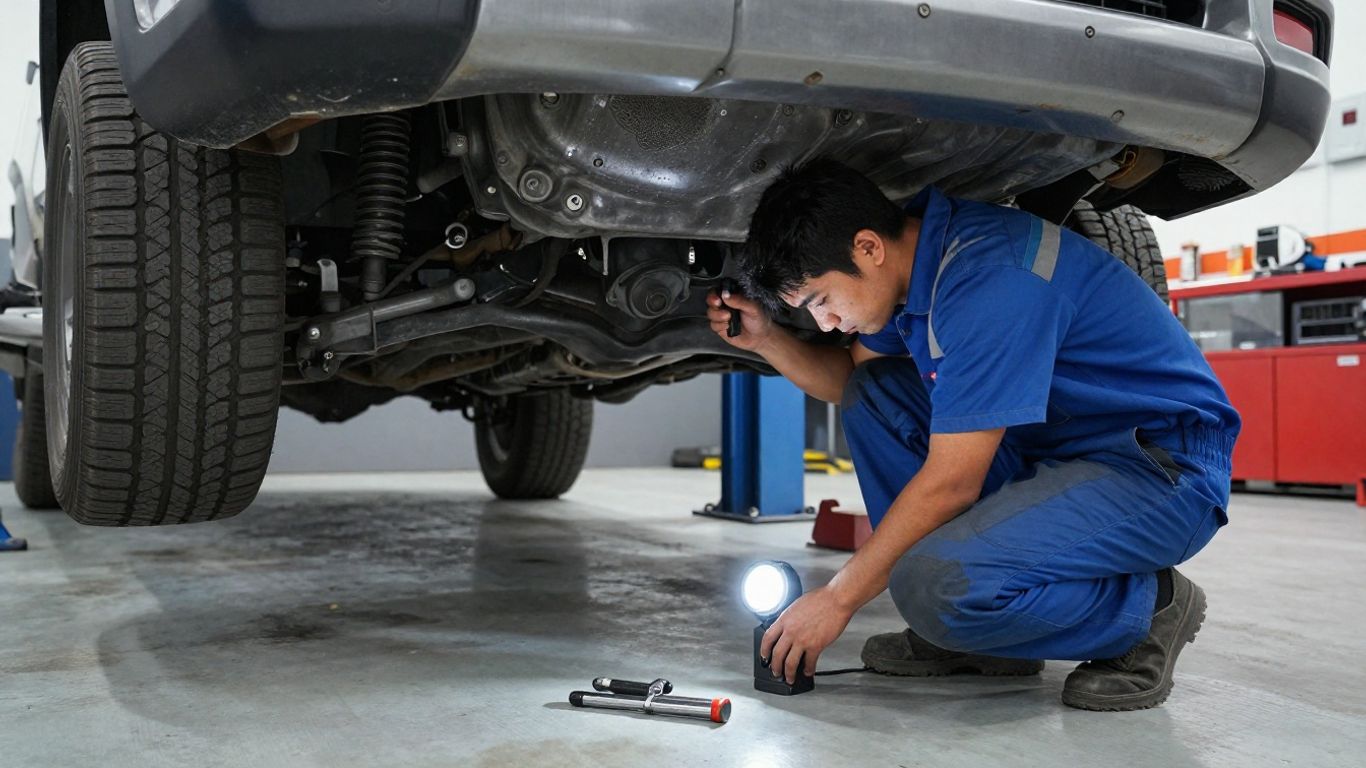
Transmission symptoms are often intermittent at first. A brief hesitation when selecting reverse, a flare in engine speed, or a new humming sound may be easy to dismiss, but the pattern can help a technician narrow the fault. Record when the symptom occurs, whether the vehicle is hot or cold, and whether it appears under load. The image below reflects the kinds of visual checks owners commonly make before booking an inspection.
Delayed engagement when selecting drive or reverse
A pause between selecting a gear and the vehicle moving can result from low fluid, hydraulic pressure problems, worn internal components, or an electronic control issue. It may be more noticeable after the car has been parked overnight or when the transmission is warm. Avoid repeatedly revving the engine to force engagement, since that can increase stress when the gear finally applies. Note the delay and whether it affects drive, reverse, or both.
Gear slipping, harsh shifting, or unexpected changes
Slipping can feel like the engine revs rise without a matching increase in road speed. Harsh shifting may feel like a thump, while unexpected changes can appear as hunting between ratios or a sudden move into a protective mode. These symptoms can involve friction material, pressure control, sensors, software, or the transmission’s mechanical parts. A symptom-focused transmission warning signs guide can help owners decide what details to report, but it cannot replace a vehicle-specific assessment.
Grinding, whining, humming, or clunking noises
Noise can reveal wear that is not yet obvious from the vehicle’s shifting behaviour. Grinding may suggest gear or bearing damage, while whining or humming can be associated with bearings, pumps, fluid condition, or other rotating components. A clunk may come from the transmission, mounts, driveshaft, differential, or suspension, so locating the sound matters. Do not continue driving normally if the noise is loud, rapidly worsening, or accompanied by loss of drive.
Fluid leaks, burning smells, and dashboard warnings
Fluid under the vehicle, a burnt odour, or a transmission-related warning deserves prompt attention. Fluid may escape from a seal, pan, cooler line, case, or another connection, and the colour alone is not enough to identify the source. Dashboard warnings can record an electrical or control concern even when the vehicle still drives normally. If a warning appears with slipping, overheating, or severe shifting, pull over safely and arrange advice rather than treating the light as a nuisance.
The most common automatic transmission problems
Automatic transmission faults can be hydraulic, electronic, mechanical, or a combination of all three. A vehicle may continue moving despite significant internal wear, which sometimes encourages owners to postpone an inspection. That approach can turn a repairable issue into a more extensive rebuild. The most useful clues are the exact shift affected, the conditions that trigger it, and whether the problem changes with temperature.
Worn clutch packs and slipping gears
Clutch packs apply and release inside an automatic transmission to hold selected gearsets. Friction material wears over time, particularly when the unit has operated with contaminated fluid, excessive heat, or repeated slipping. The driver may notice delayed acceleration, rising engine speed, or a flare during a particular shift. If wear is confirmed, changing fluid alone may not restore the lost friction material.
Solenoid, valve body, and electronic control faults
Solenoids regulate fluid flow, while the valve body directs hydraulic pressure through the transmission. Dirt, wear, wiring faults, sensor problems, or control-module issues can produce harsh shifts, delayed engagement, or an apparently incorrect gear choice. Fault codes can point toward a circuit or control concern, but they do not always identify the failed component. Testing pressure, wiring, connectors, and operating conditions helps prevent unnecessary parts replacement.
Torque converter shudder and vibration
A torque converter can produce shudder during lock-up, often felt as a vibration at a steady speed or light throttle. Similar sensations can come from an engine misfire, driveshaft, differential, tyres, or mounts. That is why the technician needs to reproduce the symptom and compare it with scan data and other checks. A torque converter diagnosis resource may offer useful background for owners of vehicles that tow, although each vehicle still needs its own testing.
Overheating and contaminated transmission fluid
Heat can accelerate fluid breakdown and damage seals, friction material, and other internal surfaces. Contamination may come from normal wear, water entry, clutch material, or a failed component, while low fluid can reduce cooling and hydraulic performance. A service may help when the fluid issue is identified early, but severely damaged fluid is a warning rather than a complete diagnosis. The source of heat and contamination must still be found.
Manual and CVT transmission issues
Manual and CVT systems have different operating principles, so a familiar automatic-transmission remedy may be inappropriate. Manual vehicles place more responsibility on clutch control and gear selection, while CVTs manage ratios continuously through pulleys and a belt or chain. Both can suffer when fluid, temperature, load, or driving habits are unsuitable. Careful description of the sensation is especially useful because terms such as shudder and slipping can mean different things across designs.
Clutch wear, shuddering, and difficulty changing gears
A worn manual clutch may slip under acceleration, engage close to the top of the pedal travel, or produce shudder when moving away. Difficulty selecting gears can result from clutch release problems, hydraulic faults, linkage issues, or internal transmission wear. Burning smells after repeated launches or hill starts suggest excessive friction. Continuing to drive with a slipping clutch can damage the flywheel and increase the eventual repair scope.
Synchro, gear, and bearing failures in manual transmissions
Synchros help match speed when a driver selects a gear, so worn synchros may cause baulking or grinding in one ratio. Gear teeth and bearings can also become noisy or difficult to engage as kilometres accumulate. A noise that changes when the clutch pedal is pressed provides a useful clue, though it is not conclusive by itself. Inspection may require checking the linkage first and opening the transmission only when the evidence supports internal work.
CVT belt, pulley, and judder problems
CVT faults can present as juddering, delayed response, unusual noise, or a rise in engine speed without the expected acceleration. Pulley surfaces, the belt or chain, bearings, fluid, sensors, and control software may all be relevant. Using the wrong fluid can be particularly harmful because CVT systems depend on specific friction and pressure characteristics. A CVT should be assessed according to the manufacturer’s service information rather than treated like a conventional automatic.
How driving habits influence manual and CVT wear
Repeated hard launches, resting a hand on the gear lever, holding a vehicle on a hill with clutch slip, and ignoring temperature or load limits can shorten component life. CVT drivers should avoid demanding acceleration while overloaded or towing outside the vehicle’s limits. Useful habits include:
- Letting the clutch engage cleanly instead of holding the vehicle on an incline with friction.
- Allowing the vehicle to come to a complete stop before selecting reverse or changing direction.
- Using the specified mode and procedure when towing or descending steep grades.
- Reporting judder, slip, or unusual noise before it becomes constant.
These habits do not eliminate normal wear, but they reduce avoidable heat and friction. They also make it easier to tell whether a new symptom is related to use or indicates an underlying fault.
Diagnosing transmission faults accurately
Good diagnosis is a process rather than a guess based on one noise or one dashboard code. The technician should establish the vehicle’s history, reproduce the symptom, and separate transmission behaviour from engine and drivetrain operation. A clear explanation of when the fault occurs can save time. It also helps the owner compare repair options on evidence rather than fear.
What a professional transmission inspection includes
An inspection may include a visual check, road test, scan of relevant modules, fluid assessment, leak tracing, and examination of mounts, linkages, wiring, and cooling components. The technician may compare cold and warm operation or test the vehicle under controlled load. If internal damage is suspected, pressure tests and further dismantling may be necessary. The scope should be explained before major parts are removed.
Using diagnostic scans without relying on fault codes alone
A scan can show stored, pending, or manufacturer-specific information and may reveal data from sensors and control systems. It cannot see every mechanical failure, and a code often identifies a circuit or condition rather than naming the part that must be replaced. Clearing codes without addressing the cause only removes useful evidence. The strongest diagnosis combines scan results with symptoms, live data, physical checks, and a road test.
Checking fluid condition, level, and leak sources
Fluid level must be checked using the correct procedure because some transmissions require a particular temperature, position, or inspection plug. Colour and smell can provide clues, but they should be interpreted with the service history and vehicle specification. A leak may be coming from a pan, seal, cooler line, case, or an adjacent component. Cleaning the area and tracing fresh fluid is more reliable than guessing from a single drip.
Distinguishing transmission faults from engine or drivetrain issues
A hesitation may be caused by an engine misfire, fuel problem, sensor fault, or transmission control issue. Vibration can come from tyres, driveshafts, mounts, differentials, or wheel components, while a clunk may be unrelated to the gearbox. Diagnostic work should test the whole powertrain instead of assuming every complaint belongs to the transmission. For broader vehicle support, readers may also find a practical computer repair guide useful as a general example of comparing diagnostic scope, although automotive faults require automotive testing.
Repair and replacement options
Repair decisions should reflect the confirmed fault, the vehicle’s age, service history, value, and expected future use. A minor external leak and a failed internal gearset are not equivalent jobs, even if both produce a warning light. Ask what was found, what remains uncertain, and what warranty applies to the proposed work. A written estimate should separate diagnosis, parts, labour, fluid, and any additional machining or programming.
When a fluid service or software update may help
A fluid service may improve operation when the fluid is degraded but internal components remain serviceable and the procedure suits the transmission. It is not a cure for destroyed clutch material, broken gears, or severe bearing damage. A software update or adaptation procedure may help when a documented control issue is involved, but it should follow diagnosis rather than serve as a guess. The correct fluid and process matter more than simply replacing fluid quickly.
Choosing between repair, rebuild, and replacement
A component repair may be sensible when the fault is localised and the rest of the unit is in good condition. A rebuild involves inspecting and replacing worn internal parts, while replacement may be considered when damage is extensive or a suitable tested unit is available. Each choice has trade-offs in cost, availability, compatibility, warranty, and future reliability. The cheapest initial quote is not always the lowest overall cost if it leaves the original cause unresolved.
Factors that influence transmission repair costs in Australia
Costs vary with the transmission design, vehicle access, parts availability, labour time, diagnostic complexity, and whether the job requires removal or rebuilding. Imported or uncommon units may have different parts lead times, while heavily damaged components can add machining and replacement costs. A local parts search can also involve comparing genuine, used, and aftermarket options through a managed IT services provider only in the abstract sense of comparing service scope; it is not a substitute for an automotive parts assessment. For vehicle work, the relevant questions remain compatibility, condition, warranty, and fitment.
When a specialist transmission workshop is the better choice
A specialist may be appropriate when the fault is recurring, intermittent, electronically complex, or difficult to reproduce. Specialist equipment and experience can be valuable for pressure testing, programming, rebuild assessment, and transmission-specific road tests. Owners should still ask for a clear explanation and confirmation of the proposed work. A useful service comparison should focus on diagnosis and warranty rather than confident promises.
Preventing common transmission problems
Prevention is mostly consistent maintenance and sensible use, not a single additive or quick fix. Keep records of services, repairs, fluid types, towing loads, and recurring symptoms. That history can reveal whether a problem follows heat, distance, or a particular driving condition. It also gives the technician a better starting point when the vehicle changes hands.
Following the manufacturer’s service schedule
Service intervals should be based on the manufacturer’s instructions and the actual way the vehicle is used. Severe service may include towing, dusty roads, frequent short trips, high temperatures, or extended stop-start traffic. Do not assume a transmission is maintenance-free simply because the service interval is long. Confirm what inspection, fluid, filter, adaptation, or cooling-system checks apply to the exact model.
Selecting the correct fluid and replacement parts
Transmission fluid is not interchangeable just because two products look similar or share a broad label. The specification, friction characteristics, viscosity, and procedure must match the transmission. Filters, seals, sensors, and replacement units also need correct fitment. A supplier that connects customers with quality used, genuine, and aftermarket parts can help make options easier to compare, but compatibility should always be verified against the vehicle and transmission identification.
Managing towing, hills, heat, and stop-start traffic
Use the vehicle within its towing and payload limits, follow the manufacturer’s guidance for towing modes, and avoid unnecessary aggressive acceleration when heavily loaded. Allowing cooling systems to remain clean and functional helps control temperature. On hills, choose an appropriate gear or mode rather than forcing constant hunting between ratios. Stop-start traffic may require more patience, especially when a vehicle is already showing delayed engagement or shudder.
Why early diagnosis can prevent major transmission damage
A small leak can become low fluid, heat, slipping, and internal wear if it is ignored. Likewise, an early electronic or pressure fault may be easier to correct before repeated harsh shifts damage clutch packs and gears. Owners comparing parts or repair pathways can read about credit repair transparency as an unrelated example of why clear scope, fees, and realistic outcomes matter; automotive estimates deserve that same plain communication. The practical lesson is simple: investigate changes early, keep records, and do not approve major work without understanding the evidence.
Conclusion
Transmission problems rarely become easier to understand when warning signs are ignored. Whether the vehicle is automatic, manual, or CVT, prompt attention to engagement, shifting, noises, leaks, smells, and warning lights gives a technician a better chance of finding the real cause. Regular servicing, suitable fluid, careful towing, and accurate diagnosis can protect both the vehicle and the repair budget.
Frequently Asked Questions
What are the most common transmission problems in Australia?
Common issues include slipping, delayed engagement, harsh shifting, fluid leaks, overheating, clutch wear, torque converter shudder, bearing noise, and electronic control faults. The likely cause depends on the vehicle, transmission type, usage, and service history.
Can low transmission fluid cause shifting problems?
Yes. Low fluid can reduce hydraulic pressure, lubrication, and cooling, which may lead to delayed engagement, slipping, harsh shifts, or overheating. The leak should be located and repaired rather than simply topping up the fluid repeatedly.
Is a transmission warning light always serious?
It should always be checked, even if the vehicle still drives normally. The warning may relate to a sensor or control issue, but it can also be an early sign of a mechanical problem. Continued driving depends on the symptoms and professional advice.
How long can a car drive with a slipping transmission?
There is no reliable distance estimate. Slipping creates heat and friction, so continued driving may rapidly increase damage. If the symptom is clear or worsening, limit use and arrange diagnosis instead of testing how long it lasts.
Does changing transmission fluid fix a failing transmission?
It can help when fluid condition is the main issue and internal components are still healthy. It will not repair broken gears, badly worn clutch packs, failed bearings, or other severe damage. Fluid service should follow the correct diagnostic and manufacturer procedure.
Are manual transmissions cheaper to repair than automatics?
They can be simpler in some cases, but repair cost varies widely. A manual clutch replacement, internal gear failure, or dual-mass flywheel job may still be substantial, while an automatic fault may be resolved through a smaller control or service repair.
When should a transmission be rebuilt or replaced?
Rebuilding or replacement may be considered when internal damage is extensive, the unit is contaminated, or a local repair cannot restore reliable operation. The decision should account for the vehicle’s condition, compatible parts, warranty, expected use, and the evidence from diagnosis.