

Key Takeaways
An automatic transmission that will not engage can have a simple fluid or linkage problem, but it may also signal electrical, hydraulic, or internal damage. Careful checks can help you decide whether the vehicle is safe to move or needs a tow.
- Check the fluid level, condition, and visible leaks before driving.
- Notice whether the fault affects reverse, drive, or every gear position.
- Scan for trouble codes instead of guessing at electronic causes.
- Avoid repeated shifting attempts when the vehicle will not respond.
- Get professional diagnosis when noises, burning smells, or slipping appear.
What it means when an automatic transmission will not engage
When an automatic transmission will not engage, the engine may run normally while the vehicle refuses to move after selecting drive or reverse. Sometimes the gear takes several seconds to connect; in more serious cases, the engine revs but the wheels receive no power at all. The pattern matters because it helps separate a fluid-pressure issue from a control or internal mechanical fault. A useful overview of common symptoms also covers automatic transmission problems such as slipping, unusual noises, and low fluid.
Common symptoms in park, reverse, or drive
The most obvious symptom is selecting drive or reverse and feeling no familiar change in engine load. The vehicle may remain still, move only after a delay, or engage with a harsh clunk. If reverse works but drive does not, or if one range behaves differently from the others, that detail is valuable rather than incidental. A car that moves in neutral-like fashion despite the display showing drive may also have a linkage or control problem.
The difference between delayed engagement and complete failure
Delayed engagement means the transmission eventually applies the selected gear, often after a pause of several seconds. Complete failure means there is no movement in any forward or reverse range, even though the engine speed changes when the accelerator is pressed. A delay can be caused by low fluid or slow hydraulic pressure, while total loss of engagement raises concern about a pump, valve body, clutch pack, or other internal component. Continued driving can turn a manageable issue into a larger repair.
How dashboard warnings and unusual noises provide clues
A check-engine or transmission warning light suggests that the control system has detected a condition worth scanning. Whining, humming, grinding, or a sharp clunk can add clues, although sound alone cannot identify the failed part. Burning smells and dark fluid are especially concerning because they can accompany overheating or friction material wear. The broader relationship between sensors, solenoids, fluid pressure, and the control module is explained in this guide to smooth shifting problems.
Why the problem may be hydraulic, electrical, or mechanical
Automatic transmissions depend on several systems working together. Electrical inputs tell the control system what the driver selected, hydraulic pressure applies the relevant circuits, and mechanical components transfer torque to the wheels. A fault in any one of those areas can feel similar from the driver’s seat. That is why replacing a sensor without testing pressure, fluid condition, and linkage can waste time and money.
Immediate checks before driving the vehicle
Before attempting to drive, treat the symptom as a potential safety issue rather than an inconvenience. Park on a level surface, apply the parking brake, and keep people clear of the vehicle’s path. Do not crawl beneath a vehicle supported only by a jack. These basic precautions make it easier to inspect the car without creating a second problem.
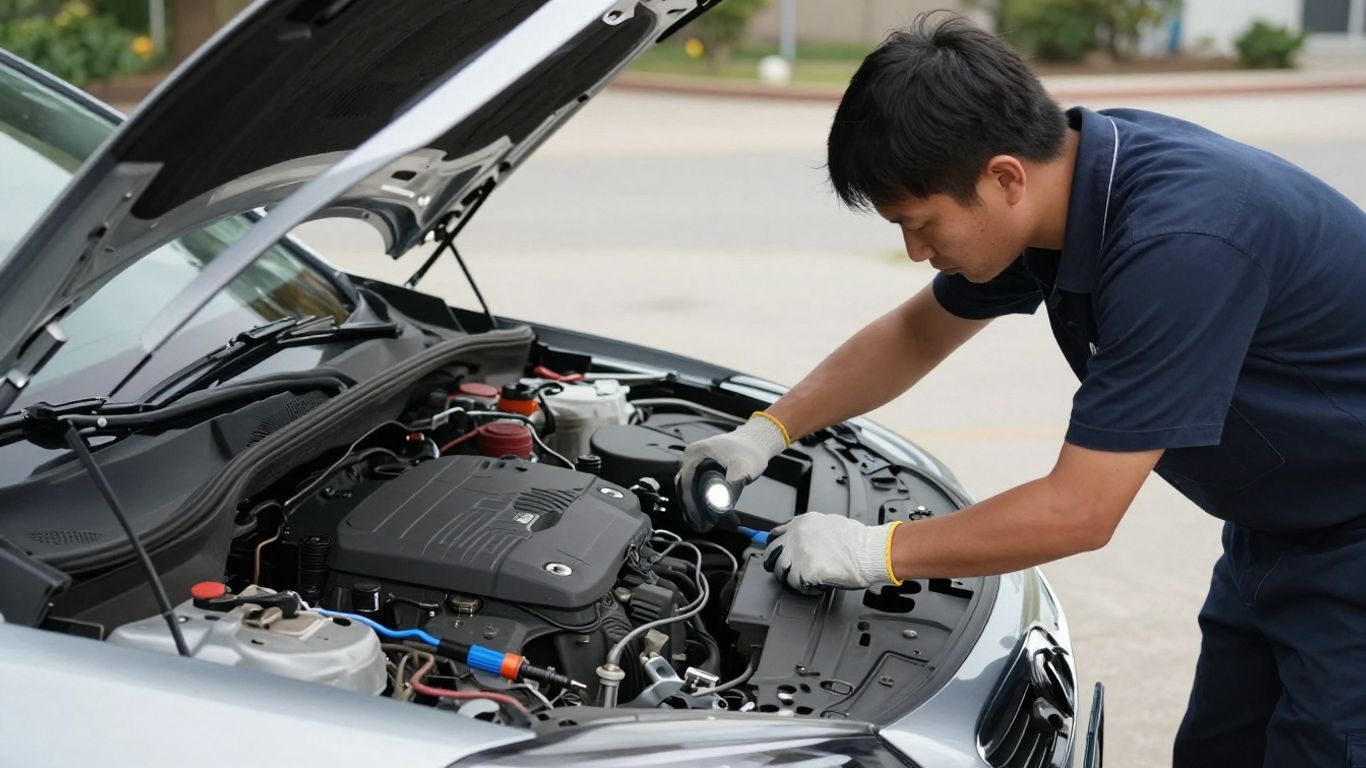
Confirming the transmission fluid level and condition
Use the owner’s manual to determine whether the transmission has a dipstick and what checking procedure applies. Some vehicles require a particular fluid temperature, an idling engine, or a specific selector position, while others have no dipstick and must be checked from beneath the vehicle. Fluid that is low, very dark, smells burnt, or contains visible debris deserves attention. Fluid level is only one clue, so a normal reading does not rule out a serious fault.
Looking for leaks beneath the vehicle
Inspect the ground after the vehicle has been parked for a while, looking for fresh red, brown, or oily fluid. Leaks may come from cooler lines, seals, a pan gasket, or a damaged housing, and the fluid can spread before it reaches the ground. Do not rely on color alone because age and contamination change its appearance. A transmission that has lost enough fluid to stop engaging should not be driven simply because topping it up seems easy.
Checking the shifter, brake switch, and instrument display
Confirm that the selector physically moves through its positions and that the dashboard display matches the selected range. A loose cable, damaged linkage, or faulty range sensor can leave the transmission in a different position from the one shown. On some vehicles, a brake-switch fault can also prevent normal selector operation. Before arranging parts, compare the displayed gear with the actual movement of the lever and the vehicle.
A short roadside check can include these observations:
- Whether reverse engages when drive does not.
- Whether the gear display changes as the shifter moves.
- Whether the brake lights operate when the pedal is pressed.
- Whether fluid appears beneath the transmission or cooler lines.
These observations do not replace diagnosis, but they give a technician a clearer starting point. They also help avoid ordering a part based only on the first assumption.
Knowing when towing is safer than continued driving
Towing is the safer choice when there is no engagement, severe slipping, a burning smell, loud grinding, or a substantial fluid leak. It is also wise when the vehicle engages unpredictably or cannot hold a selected gear. Trying to force movement can damage clutches and create a risk in traffic. Guidance on a car that will not shift into gear likewise points to fluid, linkage, and control faults as possibilities worth checking before continued use; see this shift-into-gear guide for another general reference.
Common causes of an auto transmission not engaging
The same driver complaint can come from several very different failures. Automatic transmissions need adequate fluid volume, usable pressure, accurate electrical commands, and sound internal parts. Age, heat, poor maintenance, impact damage, and incorrect previous repairs can all contribute. The goal is not to name a part immediately, but to narrow the cause through symptoms and testing.
Low, contaminated, or incorrect transmission fluid
Low fluid can prevent the pump from building the pressure needed to apply a gear. Contaminated fluid may interfere with valves and friction materials, while the wrong specification can produce poor shifting or clutch operation. Water intrusion, overheating, and neglected service can also change the fluid’s properties. Adding fluid without finding the leak or confirming the specification may only postpone the failure.
Failed shift solenoids, sensors, or wiring
Solenoids regulate hydraulic passages in response to electrical commands, and sensors provide information about speed, position, or temperature. A failed solenoid, damaged connector, corroded wire, or poor ground can make the transmission ignore a selected range or enter a protective mode. The engine computer may store a trouble code, but a code identifies a circuit or condition, not always the failed component itself. Testing remains necessary before replacement.
A worn transmission pump or damaged valve body
The pump creates the fluid pressure used to operate the transmission, while the valve body directs that pressure through the appropriate circuits. Wear, debris, sticking valves, or damage can produce delayed engagement, slipping, harsh shifts, or complete loss of drive. Pressure testing is usually more useful than guessing from a sound or warning light. If the pump cannot maintain pressure, replacing an external sensor will not restore operation.
Broken linkage, clutch packs, or internal components
A broken shift cable or linkage can make the selector appear to work while the transmission remains in another position. If the controls are correct, worn clutch packs, damaged gears, a broken input component, or other internal failures may be responsible. High engine speed without corresponding vehicle movement is a warning sign of slipping or lost torque transfer. At that stage, disassembly may be required to confirm the cause.
How to diagnose the engagement problem
Diagnosis should move from the least invasive checks to tests that reveal what is happening inside the transmission. A scan, fluid inspection, linkage check, and pressure test each answer a different question. No single result should be treated as proof without comparing it with the vehicle’s symptoms. This is also where a transmission shifting diagnosis can help frame issues such as delayed engagement, limp mode, and harsh shifts.
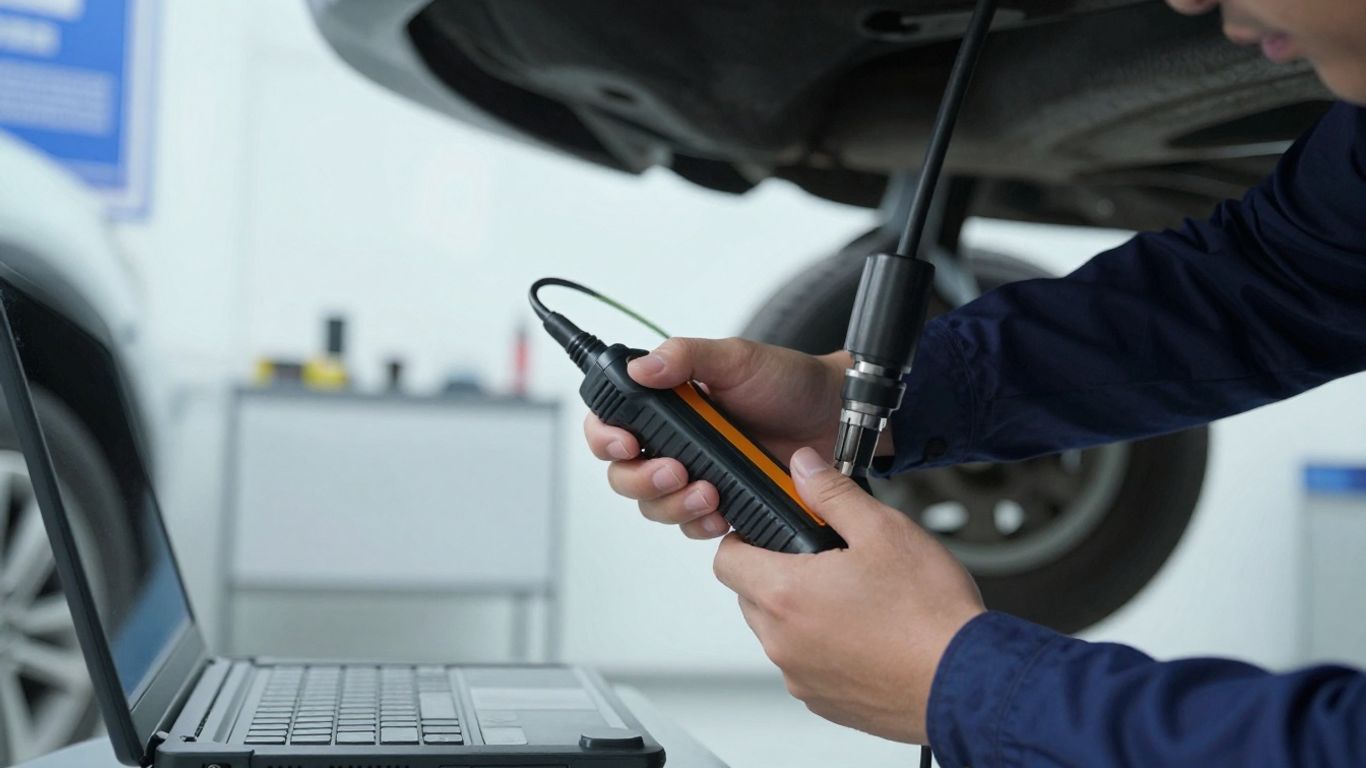
Scanning for transmission trouble codes
A compatible scan tool can retrieve codes from the transmission control system and related modules. Record the codes and freeze-frame information before clearing anything, since the conditions present when the fault occurred may be useful. A code for a solenoid circuit, speed sensor, or communication fault narrows the investigation, but it does not automatically condemn that part. Wiring, power supply, grounds, and mechanical restrictions can create similar electronic symptoms.
Testing fluid pressure and hydraulic operation
A technician can compare line pressure with the manufacturer’s specified values at appropriate test points and operating conditions. Low pressure may point toward low fluid, a worn pump, a clogged filter, or internal leakage. Normal pressure with no engagement shifts attention toward linkage, control commands, or mechanical components. Pressure testing is more informative when carried out alongside fluid inspection and a road-symptom history.
A simple symptom comparison can help organize the first diagnostic direction:
| Observation | Possible area to investigate | Why it matters |
|---|---|---|
| Reverse works, drive does not | Forward clutch or valve circuit | The fault may affect one hydraulic path |
| Neither reverse nor drive works | Fluid pressure, pump, or major internal fault | Both primary ranges are affected |
| Delayed engagement in several ranges | Low fluid or pressure loss | Application may be slow across circuits |
| Displayed range does not match movement | Linkage or range sensor | The selected command may not reach the transmission |
The table is only a starting map, not a diagnosis. Pressure readings, scan data, fluid condition, and physical inspection must be interpreted together before repair decisions are made.
Inspecting electrical connections and ground circuits
Inspect connectors for moisture, bent terminals, oil contamination, and loose locking tabs. Check relevant fuses, battery voltage, harness routing, and ground circuits, especially where wiring passes near heat or moving components. A continuity check with the circuit disconnected may reveal an open wire, but voltage-drop testing under load can expose a poor connection that looks fine at rest. Electrical tests should follow the vehicle’s wiring information rather than a generic pinout.
Comparing symptoms across park, reverse, neutral, and drive
Record exactly what happens in each position: a clunk, a delay, a rise in engine speed, movement in one direction, or no response. Neutral should not propel the vehicle, while park should hold it on a safe, level surface; unusual behavior in either position deserves caution. Comparing ranges can indicate whether the fault is selective or affects the transmission as a whole. Do not repeatedly shift between ranges to reproduce a failure if engagement is harsh or unpredictable.
Repair options based on the root cause
The right repair depends on what testing finds, not on how dramatic the symptom sounds. A fluid service may solve a low-level problem, while a failed pump or damaged clutch pack requires much more extensive work. Parts compatibility matters, especially when choosing used, genuine, or aftermarket replacement components. Confirm the exact transmission and vehicle specification before ordering anything.
Servicing fluid, filters, and external leaks
If the fluid is low because of an accessible leak, the repair should address the leak before the fluid is refilled. A filter and fluid service may be appropriate when maintenance is overdue and internal damage has not been found. The fluid type, level, and filling procedure must match the vehicle’s requirements. A service cannot restore worn clutch material or a failed pump, so expectations should remain realistic.
Replacing solenoids, sensors, or damaged wiring
A confirmed solenoid, sensor, connector, or harness fault may be repaired without removing the entire transmission. Some components are accessible externally, while others sit inside the pan or valve-body area. After repair, the system may need code clearing, adaptive relearning, or a road test according to the manufacturer’s procedure. Replacing a part solely because its code appeared is risky when the circuit has not been tested.
Repairing the valve body or transmission pump
Valve-body work may involve cleaning, replacing worn valves, renewing seals, or fitting a remanufactured assembly. A pump repair can require substantial disassembly because access and alignment are internal. The estimate should explain whether the unit will be removed, what parts are being replaced, and how the shop will verify pressure afterward. Debris in the pan can also influence whether a limited repair is sensible.
Deciding between rebuilding and replacing the transmission
A rebuild may be reasonable when the case and major hard parts are usable and the shop can stand behind the work. Replacement may make more sense when internal damage is extensive, parts availability is limited, or a suitable tested unit is available. Compare warranty terms, included components, programming, fluid, and installation rather than looking only at the headline price. The vehicle’s age and overall condition should be part of the decision.
When professional transmission service is necessary
Some checks are safe for an owner, but engagement failure quickly reaches the limits of driveway diagnosis. The transmission contains pressurized fluid, rotating parts, electrical controls, and components that may require special tools. A professional assessment is particularly valuable when the symptom is intermittent or when several systems could be responsible. Arriving with accurate observations can make that visit more efficient.
Warning signs of serious internal damage
Grinding, persistent whining, a burnt smell, metal debris in the fluid, and total loss of forward and reverse are all reasons to stop driving. Repeated slipping or a sudden loss of movement after a loud bang also suggests more than a simple sensor issue. These signs do not prove that rebuilding is necessary, but they justify prompt inspection. Continuing to operate the vehicle can spread debris through hydraulic passages and increase the damaged area.
Why repeated shifting attempts can increase repair costs
Each attempt to force a non-engaging transmission can generate heat and friction without moving the vehicle. Selecting drive and reverse repeatedly may also shock damaged components or circulate contaminated fluid. If the vehicle is stuck, secure it and arrange appropriate towing instead. A clear record of what happened before the failure is more useful than another risky test.
Questions to ask a transmission shop
Ask what tests were performed, what evidence supports the diagnosis, and whether the transmission needs to be removed. Request a written explanation of parts, labor, fluid, programming, taxes, and warranty coverage. It is also reasonable to ask whether the estimate could change after disassembly and what approval process will be used. Clear answers help separate a measured repair plan from a guess.
How diagnostics, parts, and labor affect the estimate
Diagnostic time may be charged separately from repair labor, especially when the fault is intermittent or requires pressure and electrical testing. Parts pricing varies with availability, condition, warranty, and whether the repair uses an individual component or a complete assembly. Labor rises when the transmission must be removed, rebuilt, programmed, or road-tested extensively. A lower initial estimate is not necessarily cheaper if important work is excluded.
How to prevent future transmission engagement problems
Prevention begins with following the vehicle maker’s service information and responding to small changes early. Heat, low fluid, contamination, and incorrect parts can all shorten transmission life. Towing and heavy loads add stress, particularly when cooling capacity and service intervals are ignored. Good records make it easier to identify whether a later fault is new or related to earlier work.
Following the manufacturer’s fluid service intervals
Service intervals differ by vehicle, transmission design, use, and operating conditions. Follow the schedule in the owner’s manual and ask whether frequent towing, stop-start driving, heat, or dusty conditions change the interval. A service should use the specified procedure rather than relying on a generic flush recommendation. Keep receipts and note the fluid specification used.
Using the correct transmission fluid specification
Automatic transmission fluids are not interchangeable simply because they look similar. The wrong formulation can affect friction, pressure control, seal behavior, and shift quality. Confirm the specification from the manual or a reliable vehicle-data source before topping up. If the fluid already in the transmission is unknown, a technician should assess the safest service approach.
Addressing overheating and towing-related stress
Excessive heat accelerates fluid degradation and can damage friction materials and seals. Use the vehicle’s approved towing equipment and stay within its rated limits, especially on long grades or in hot weather. Watch for leaks, slipping, delayed engagement, or a new burning odor after demanding use. Cooling-system and transmission-cooler problems should be addressed before they become engagement failures.
Recognizing early shifting symptoms before failure
A brief delay, flare in engine speed, harsh shift, shudder, or new noise is worth recording even if the vehicle still moves. Early diagnosis may reveal a low-fluid condition, wiring problem, or control issue before internal damage develops. Do not wait for complete failure simply because the symptom disappears temporarily. A timely automatic transmission warning-sign guide can help organize what you notice before booking service.
Conclusion
An auto transmission not engaging should be approached methodically: protect the vehicle, check the obvious conditions, record the symptoms, and arrange professional testing when movement is absent or unsafe. Fluid, linkage, electrical controls, hydraulic pressure, and internal parts can all produce similar behavior, so a confirmed diagnosis is the best route to a sensible repair.
Frequently Asked Questions
Can low transmission fluid stop an automatic transmission from engaging?
Yes. If the fluid level is low enough, the pump may not create the pressure needed to apply the selected gear. The underlying leak still needs to be found and repaired, and adding fluid alone may not solve the problem.
Why does reverse work but drive does not?
Different ranges use different hydraulic circuits and clutch components. A fault affecting a forward clutch, solenoid, valve passage, or control command may leave reverse functioning while drive is unavailable.
Is it safe to drive when the transmission engages after a delay?
A delayed engagement can worsen and may leave the vehicle unable to move at an unsafe time. Avoid unnecessary driving, especially if there is slipping, a burning smell, a warning light, or a fluid leak, and seek diagnosis promptly.
Can a bad battery cause an automatic transmission not to engage?
Low voltage or poor electrical connections can interfere with transmission controls on some vehicles. Testing the battery, charging system, fuses, grounds, and transmission circuits is more reliable than assuming the battery is the sole cause.
What does it mean if the engine revs but the car does not move?
The engine may be producing power without the transmission transferring it to the wheels. Low fluid pressure, worn clutch packs, a broken driveline component, or another internal failure can cause this symptom.
Should transmission fluid be changed after a failure?
The correct service depends on the fluid condition, transmission design, maintenance history, and diagnosed fault. A technician should inspect the fluid and debris before recommending a drain-and-fill, filter service, flush, or more extensive repair.
How long can a transmission repair take?
A fluid or wiring repair may be completed relatively quickly, while valve-body work, transmission removal, rebuilding, or replacement can take considerably longer. Parts availability, diagnosis, programming, and post-repair testing all affect the timeline.